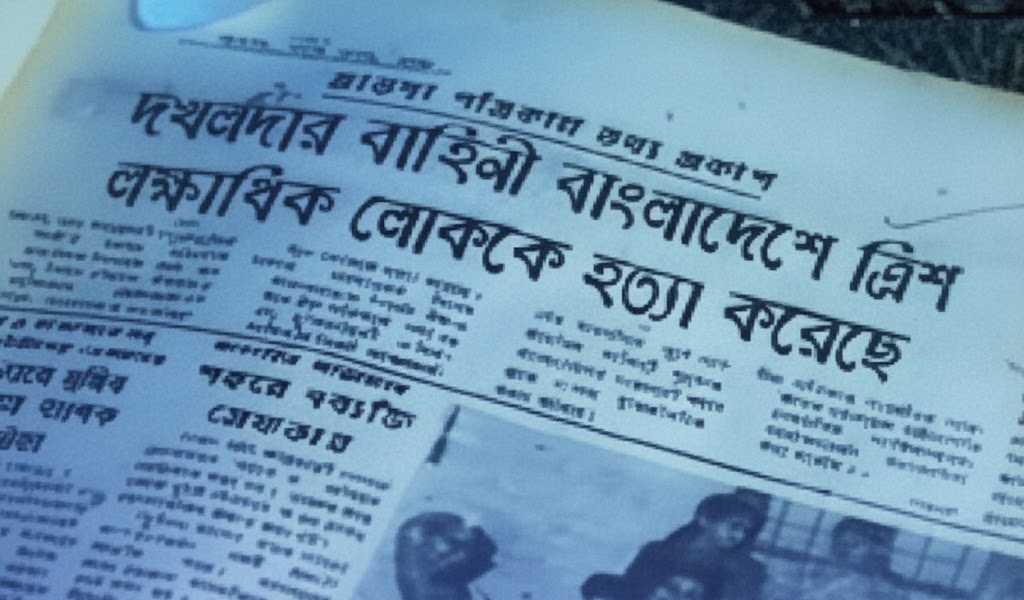
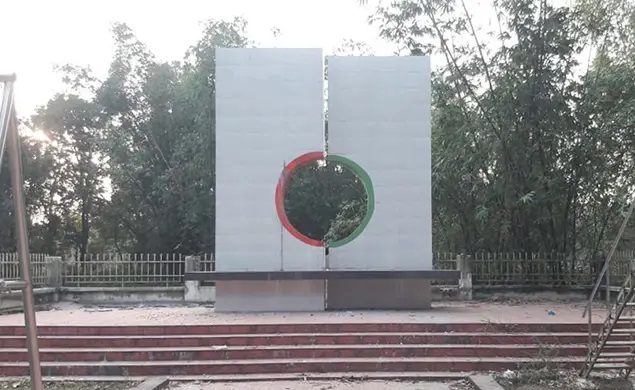
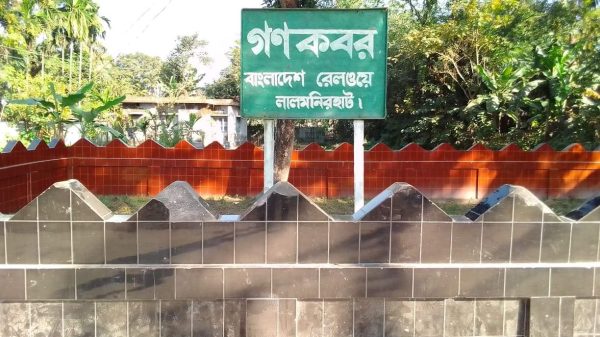
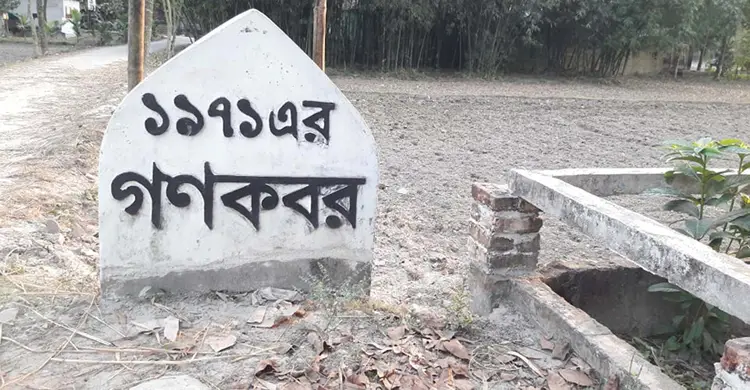
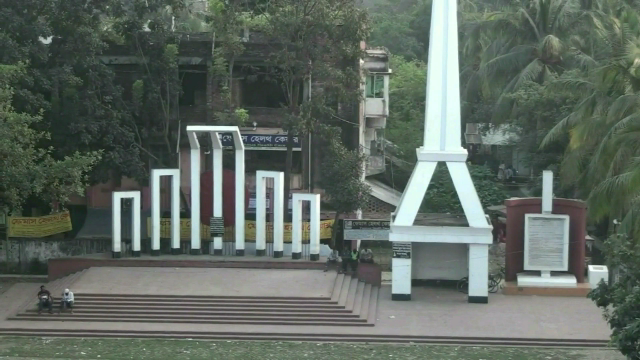
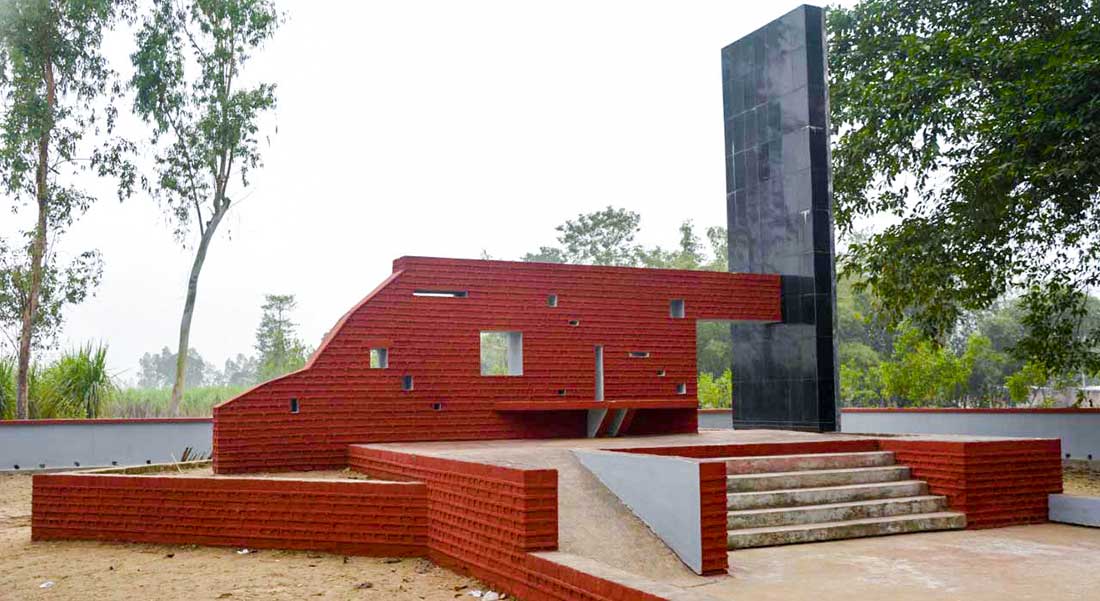
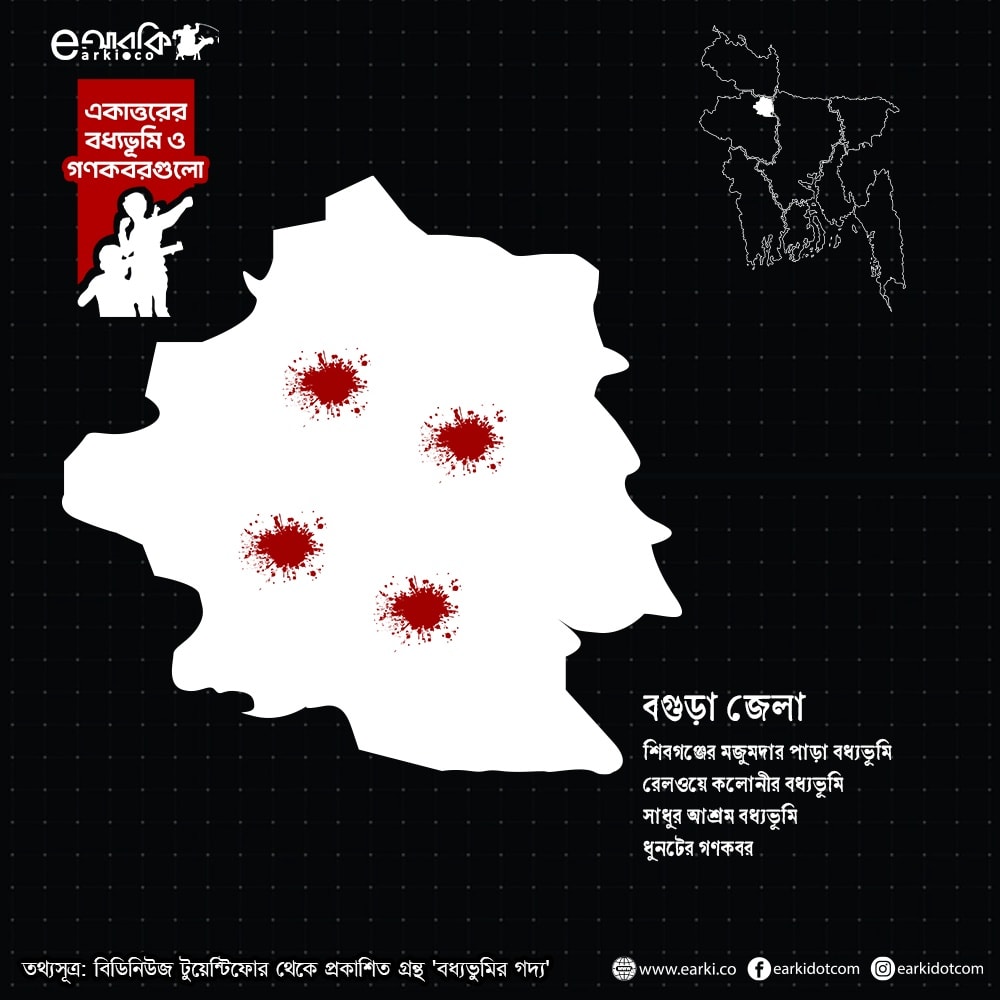
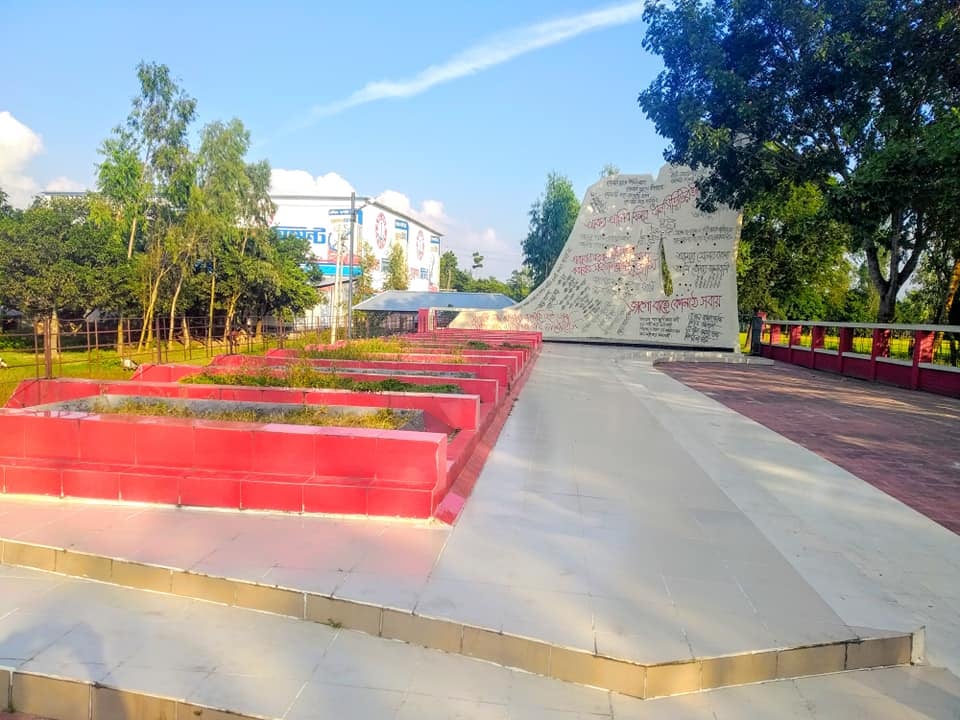
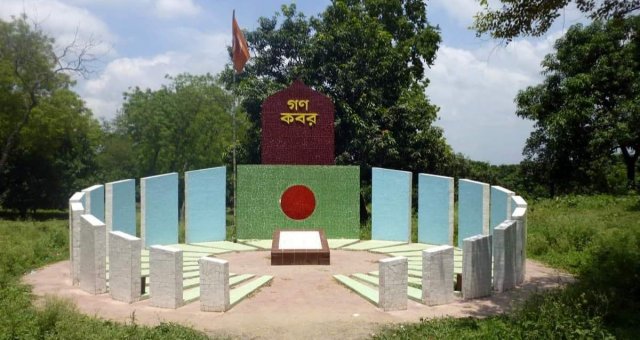
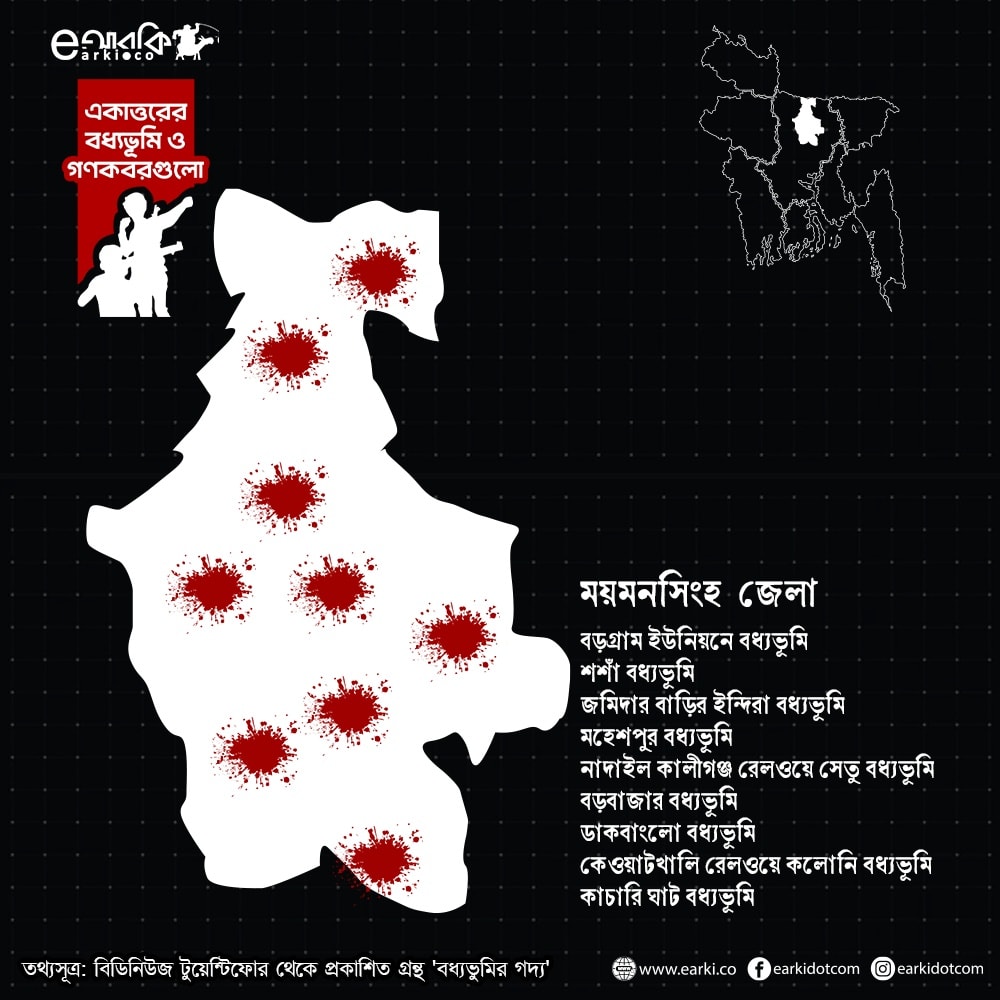
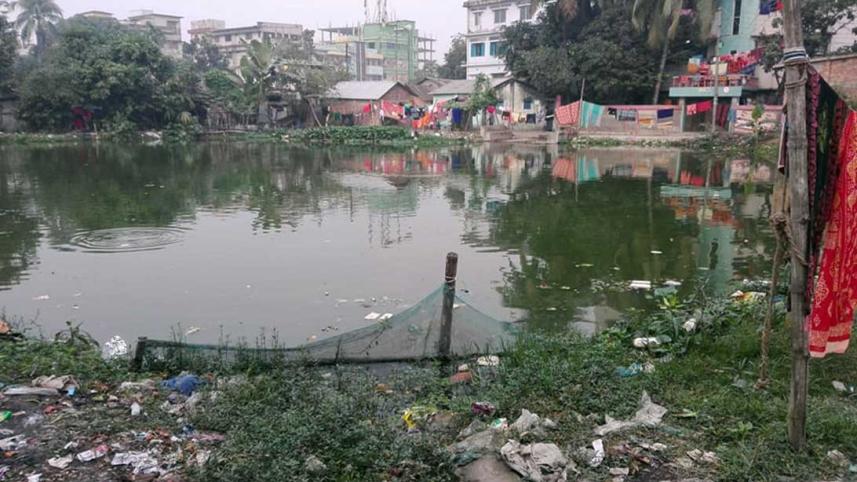
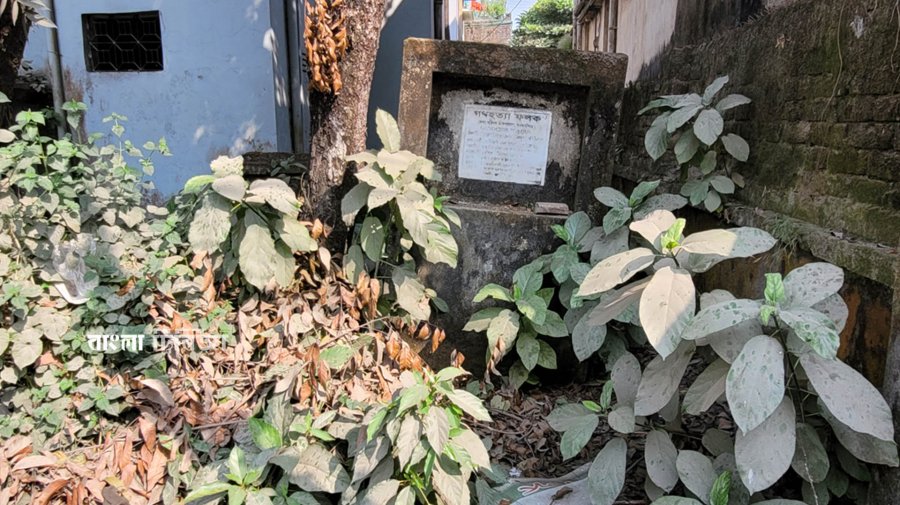
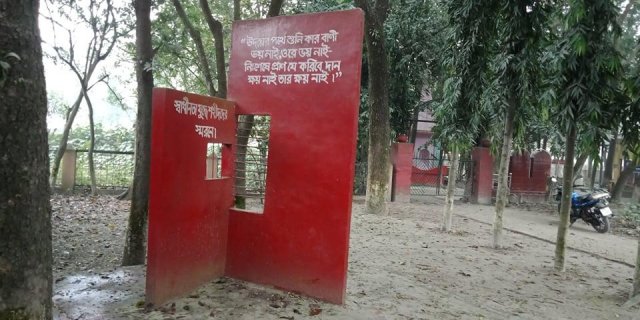
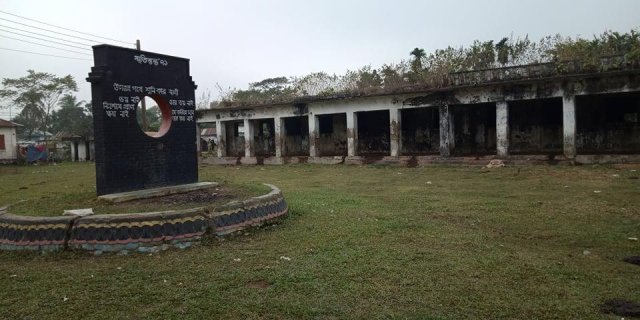
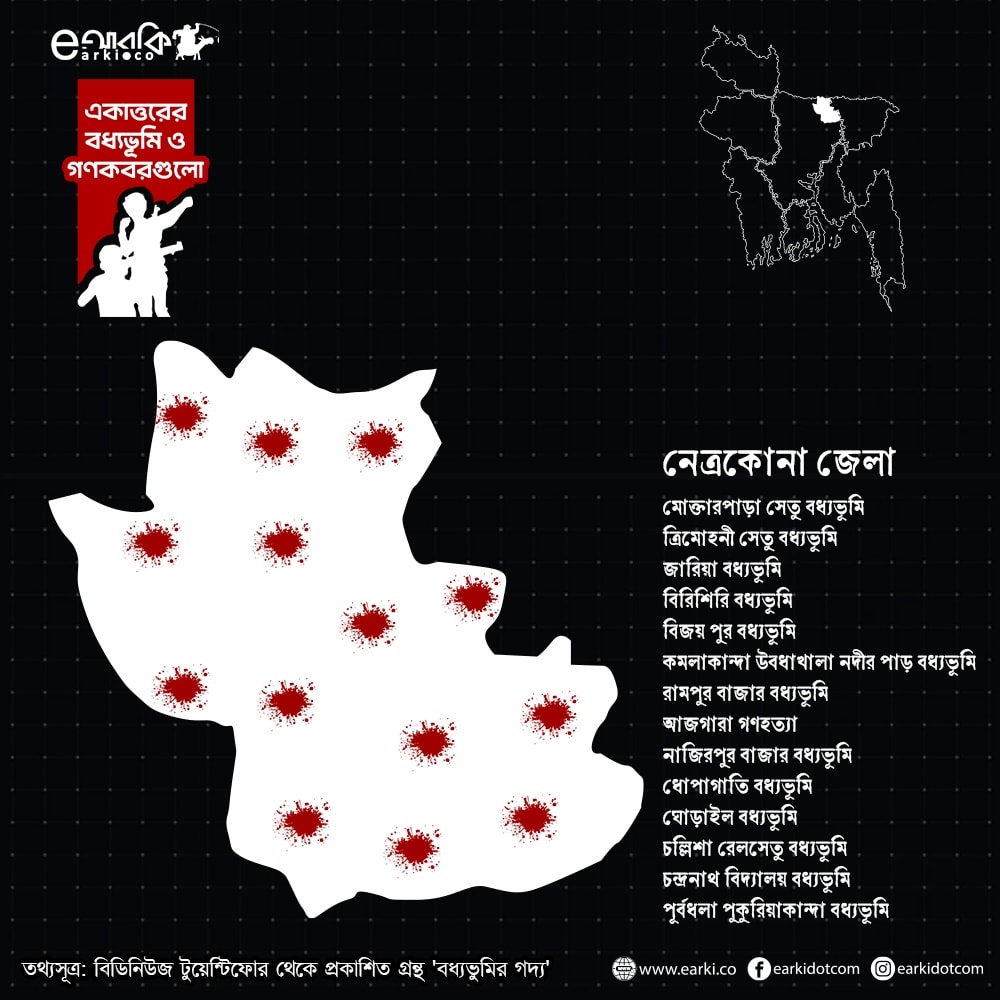
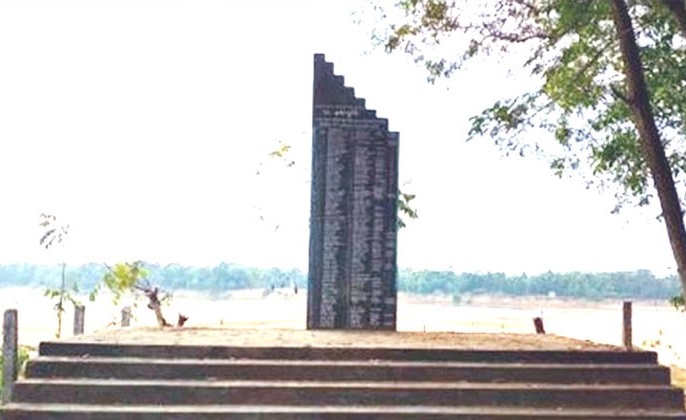
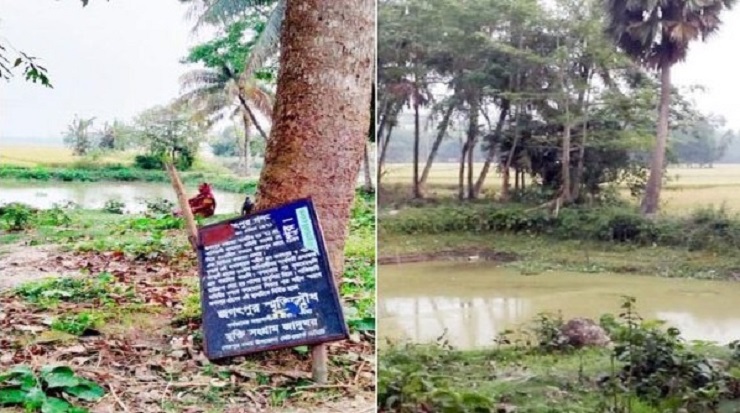
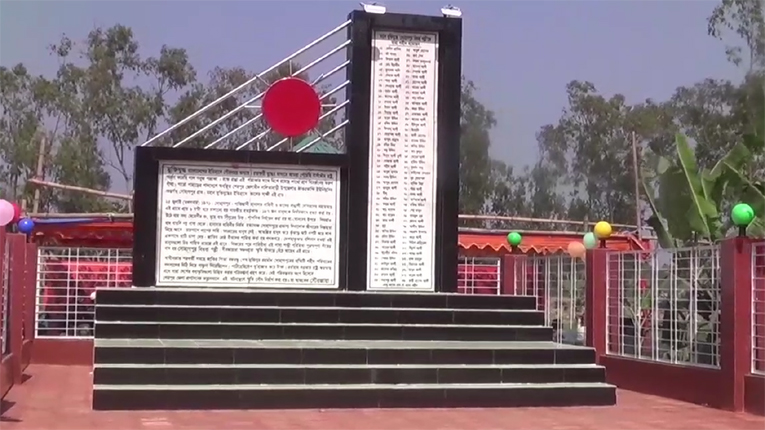
Feature by local newspapers based on a report published by the Russian newspaper Pravda regarding the number of people killed in the Liberation War.
The 1971 Genocide in Bangladesh: Massacres and Killing Fields
The 1971 Liberation War was more than a fight for independence. It was a struggle for the survival of the Bengali people and their right to live freely in their own country. The Pakistani military and its local collaborators, including the Razakars, Al-Badr, and Al-Shams, carried out widespread killings against the Bengali population. Civilians were murdered, women and children were subjected to sexual violence, villages were burned, and entire families were torn apart. In the final days of the war, intellectuals and educators were deliberately targeted and killed.
Bangladesh's official historical account puts the number of people killed during the war at around three million. Millions more were forced from their homes, and nearly ten million sought refuge in India. The killing of intellectuals, the Jalladkhana Killing Field in Mirpur, the Chuknagar massacre, Gomdandi, and numerous other sites remain reminders of the violence of 1971. These events were not isolated incidents. They formed part of a wider campaign of mass killing and persecution during the struggle for Bangladesh's independence.
Background of the Genocide
The Awami League won a clear majority in Pakistan's 1970 general election, giving it the democratic mandate to form the government. The Pakistani military leadership, however, refused to transfer power. On the night of March 25, 1971, the military launched Operation Searchlight, a crackdown aimed at crushing the Bengali nationalist movement. Students, political activists, intellectuals, and members of the Hindu community were among those targeted. The attacks spread across Dhaka, including Dhaka University, Rajarbagh Police Lines, Pilkhana, and the city's Old Town.
Newspaper headlines during the Liberation War.
The killings continued throughout the nine-month war. Intellectuals, journalists, teachers, government and private-sector employees, farmers, labourers, and ordinary civilians all became victims. The Pakistani occupation forces and their local collaborators carried out killings in towns, villages, riverbanks, abandoned buildings, and other locations. Many sites were used repeatedly to execute people and dispose of their bodies. These places became known as killing fields.
Since independence, numerous killing fields have been identified across Bangladesh. Records compiled by the Liberation War Museum list sites in different parts of the country. The figures cited in those records include 86 sites in Dhaka Division, 147 in Rajshahi Division, 87 in Chattogram Division, 67 in Khulna Division, 22 in Barishal Division, and 57 in Sylhet Division. These figures illustrate the geographical spread of the killings, although the number of documented sites may change as further research and investigations are carried out.
Scale of the Genocide
The full extent of the violence is difficult to establish because many victims were never identified, records were incomplete, and countless incidents went undocumented. The commonly cited figures in Bangladesh's historical account of the Liberation War include:
Approximately 3 million people killed during the war.
More than 200,000 women subjected to rape and sexual violence.
Nearly 10 million people forced to flee to India as refugees.
Countless villages burned, homes destroyed, and communities displaced.
Human remains recovered from a mass grave.
The scale, pattern, and targets of the killings point to organised violence driven by political and ethnic persecution. The consequences reached far beyond the immediate loss of life: families were shattered, communities were displaced, and the country suffered the loss of people who would otherwise have helped shape its future.
Nomadic Bangladeshi · Video · Bangladesh · History · Liberation War · 1971
The Genocide of 1971: A Nation's Darkest Chapter
Remembering the lives lost, the suffering endured, and the struggle for freedom during Bangladesh's Liberation War. A historical account of the atrocities of 1971 and the birth of an independent Bangladesh.
00:00 / 00:00
This video is the intellectual property of The Post. All rights reserved to the original creator. We have shared the video for informational/educational purposes only.
Keyboard shortcuts: Space = play/pause · ←/→ = seek
5 seconds · ↑/↓ = volume · M = mute · F = fullscreen
Notable Killing Fields
Many sites across Bangladesh bear witness to the mass killings carried out during the 1971 Liberation War. Some of these places have since been preserved as memorials. Among the most notable are the following:
1. Rayerbazar Killing Field (Dhaka)
Rayerbazar Martyred Intellectuals Memorial.
On December 14, 1971, members of the Al-Badr force, which collaborated with the Pakistani occupation army, abducted and murdered intellectuals across Dhaka. Many of their bodies were later found at Rayerbazar and Mirpur. The victims included university teachers, journalists, doctors, writers, engineers, and other professionals. With defeat approaching, the Pakistani military and its collaborators sought to deprive the newly independent country of some of its brightest minds. The killings were part of a deliberate effort to destroy the nation's intellectual and cultural leadership.
Bodies of martyred intellectuals at the Rayerbazar killing field.
December 14 is observed in Bangladesh as Martyred Intellectuals Day. Today, the Rayerbazar Martyred Intellectuals Memorial stands as one of the country's principal memorials to those killed in the final days of the war. Among the intellectuals murdered during this period were:
Martyred Intellectuals from the University of Dhaka
A. N. M. Munir Chowdhury: Professor, Department of Bengali.
Dr. Gobinda Chandra Dev: Professor, Department of Philosophy.
Mofazzal Haider Chowdhury: Professor, Department of Bengali.
Anwar Pasha: Professor, Department of Bengali and writer.
Dr. Jyotirmoy Guhathakurta: Professor, Department of English.
Abdul Mukhtadir: Professor, Department of Chemistry.
S. M. Rashidul Hasan: Professor, Department of English.
Dr. N. M. Fayzul Mahi: Professor, Department of Physics.
Fazlur Rahman Khan: Professor, Department of Physics.
Dr. Sirajul Haq Khan: Professor, Department of Physics.
Dr. Shahadat Ali: Professor, Department of Bengali.
Dr. Anwarul Azim.
Other Distinguished Martyred Intellectuals
Shahidullah Kaiser: Journalist and writer.
Selina Parvin: Journalist.
Altaf Mahmud: Composer and musician.
Dhirendranath Dutta: Politician and lawyer.
Zahir Raihan: Filmmaker and writer.
Dr. Fazle Rabbi: Cardiologist.
Dr. A. F. M. Alim Chowdhury: Ophthalmologist.
Syed Nazrul Islam: Journalist.
Abul Hasnat: Journalist.
List of martyred intellectuals.
This list is not complete. Many victims were never officially identified or documented, and some remain unknown. Information compiled by the Liberation War Museum and other sources indicates that more than 1,000 intellectuals may have been killed during the war. They came from many professions, including teaching, medicine, journalism, writing, engineering, and the arts.
The loss went far beyond the lives taken. These people represented a large part of the country's knowledge, creativity, and future leadership. Their deaths were intended to leave an independent Bangladesh without many of the people who could help shape its future. Their contributions, however, remain part of the nation's history.
Martyred intellectual Selina Parvin.
Rayerbazar remains a reminder that Bangladesh's independence came at a tremendous human cost. The victory of December 1971 was preceded by the deaths of countless ordinary people and some of the country's most respected intellectuals. Remembering them means more than recalling their names; it means understanding what they stood for and what their loss meant for the country.
2. Killing Fields of Mirpur (Dhaka)
Mirpur Martyred Intellectuals Memorial.
Mirpur was one of the areas of Dhaka where large-scale killings took place during the 1971 Liberation War. Throughout the nine-month conflict, the Pakistani occupation army, along with its collaborators from Al-Badr, Al-Shams, and local groups, carried out killings, abductions, and torture in different parts of the area. Violence continued into the final days of the war. Several locations in Mirpur became known as killing fields.
a. Killing Fields near the Mirpur Embankment
People were shot or killed with other weapons, and their bodies were dumped in areas near the embankment.
Human remains were later found scattered along nearby riverbanks.
b. Mirpur Ceramic Area and Pump House Killing Field
These locations were used for killings and the disposal of victims' bodies.
Abandoned buildings and structures provided places to conceal evidence of the mass killings.
c. Killing Fields in Mirpur Sections 11 and 12
Armed groups carried out raids, abducting people from their homes and killing them.
Victims included supporters of the freedom fighters, professionals, teachers, students, and members of minority communities.
d. Other Killing Sites around the Mirpur Embankment
Armed collaborators used parts of the area as bases for detention and torture.
Many detainees were tortured before being taken to Jalladkhana and other killing sites.
e. Areas near the Mirpur Botanical Garden
Remote, undeveloped, and wooded areas were reportedly used for secret killings and the burial of victims in mass graves.
Mirpur killing field.
3. Jalladkhana Killing Field (Mirpur)
The Jalladkhana Killing Field in Mirpur is one of the country's best-known sites associated with the mass killings of 1971. During the Liberation War, the site was used for the torture and killing of unarmed people by the Pakistani occupation forces and their local collaborators. Victims were brought here from different areas and killed. The site was part of a wider pattern of organised violence against the civilian population.
For years after independence, the site remained neglected and largely unmarked. In 1999, the Liberation War Museum, with assistance from the Bangladesh Army, began excavation work there. Investigators recovered 70 human skulls and 5,392 bones of various kinds from a well inside an abandoned pump house. The remains were believed to belong to men, women, and people of different ages, offering physical evidence of the killings that had taken place there.
Jalladkhana Martyred Memorial and killing field in Mirpur.
Excavation also uncovered personal belongings left behind by the victims. These objects offer a glimpse into the lives of people who were caught up in the violence and never returned home. Today, the Jalladkhana memorial preserves the memory of those killed there and provides a place to reflect on the human cost of the 1971 genocide.
4. Chuknagar Massacre (Khulna)
The Chuknagar massacre, carried out on May 20, 1971, was one of the deadliest mass killings of the Liberation War. Chuknagar, in present-day Khulna Division, was near a route used by people trying to reach the Indian border for safety. As the war spread, thousands of civilians from different areas, particularly Khulna and Bagerhat, gathered there after crossing the Bhodra River. Some estimates put the number of people assembled in the area at more than 100,000.
At around 11 a.m. on May 20, Pakistani army personnel arrived by truck and jeep at Kautola, near the northern edge of Chuknagar Bazaar. They opened fire around Pathkhola Bazaar and then moved towards Chuknagar Bazaar, shooting at people as they went. The killings continued until about 3 p.m. According to eyewitness accounts, approximately 13,000 or more people were killed that day, although the exact number remains uncertain.
Chuknagar Martyred Memorial.
The number of dead was so large that local residents struggled to deal with the bodies. Many victims' remains were thrown into the river, including bodies disposed of by local people under the circumstances that followed the massacre. Accounts describe people being shot at close range, attacked with bayonets and other weapons, and subjected to other forms of violence. Women were also victims of brutal abuse.
The Chuknagar massacre remains one of the darkest episodes of the Liberation War. The people gathered there were largely civilians seeking safety, yet they became targets of a mass killing. The massacre stands as evidence of the violence inflicted on ordinary people during the Pakistani military campaign in 1971.
5. Pahartali Killing Field (Chattogram)
The Pahartali Killing Field in Chattogram is another site associated with the mass killings committed during the 1971 Liberation War. Historical accounts describe the area as a place where the Pakistani occupation army and its collaborators killed Bengali civilians over an extended period, from April to December 1971.
During the war, people were brought to Pahartali from different locations and killed. Historical accounts and research also report that hundreds of people were killed there on November 10, 1971 alone. The violence was not confined to a single day; killings took place at different times throughout the conflict.
Pahartali Martyred Memorial and killing field.
The site is also known locally as a Jalladkhana, a term associated with places where people were tortured and killed. Human skulls and bones were reportedly discovered in the area after the war. According to accounts of these discoveries, around 1,100 human skulls were recovered from a particular part of the site. These remains serve as a grim reminder of the scale of the killings associated with Pahartali.
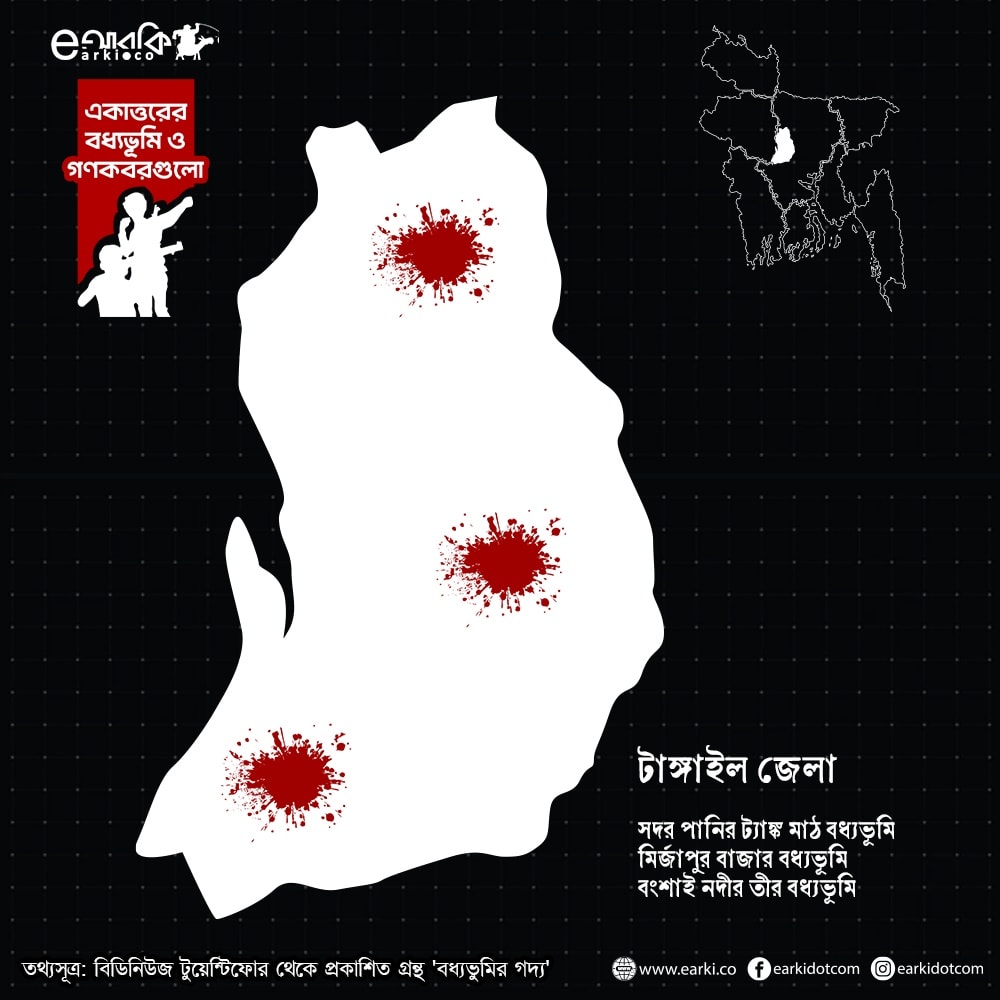
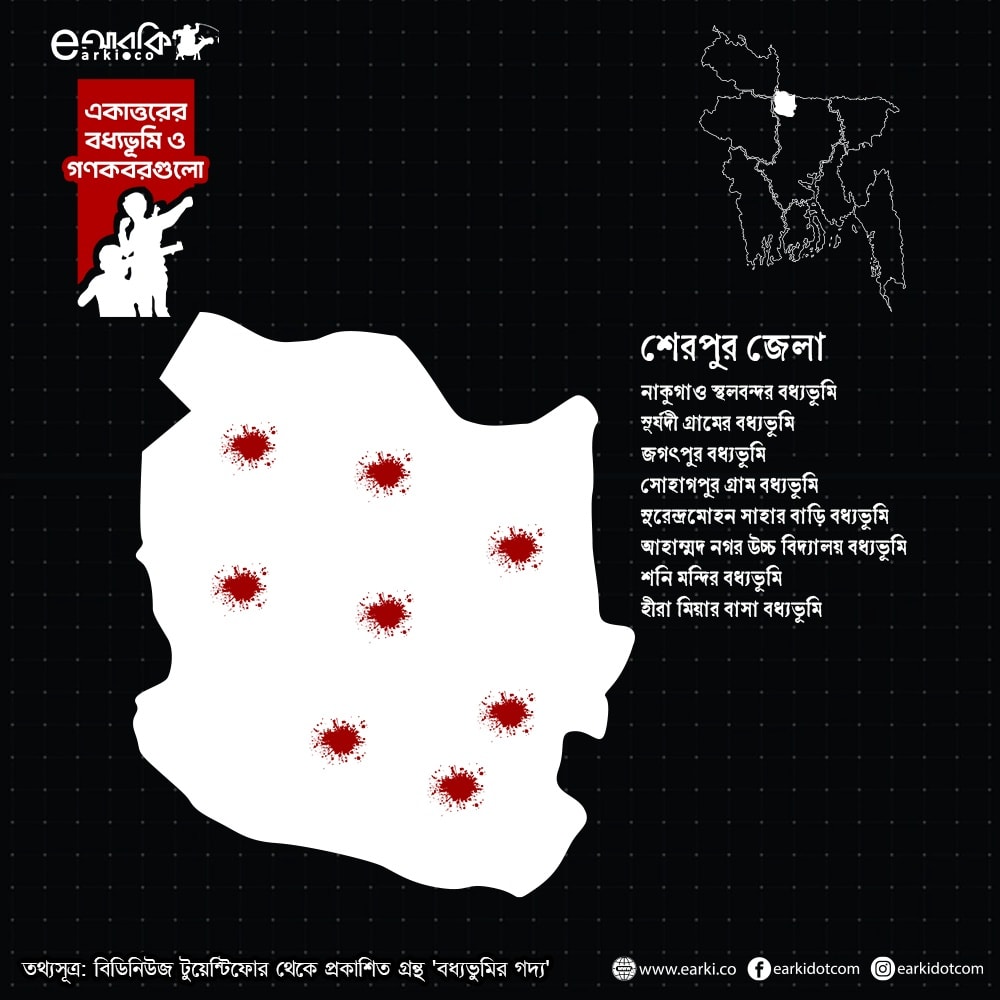
Next, let's look at the killing fields identified across Bangladesh, district by district and locality by locality.
Newspaper headline reporting killings by the Pakistani occupation forces.
Genocide and Killing Fields in Panchagarh and Thakurgaon Districts
Panchagarh
Aloyakhoya Genocide
In Bamonkumar village of Aloyakhoya Union, Panchagarh, the Pakistani occupation forces and their collaborators attacked the home of Dr. Hafez and killed several innocent people. Around June, they carried out another killing in broad daylight in Sukhati village, shooting dead Khoyer Muhammad and his son, Ashir Uddin.
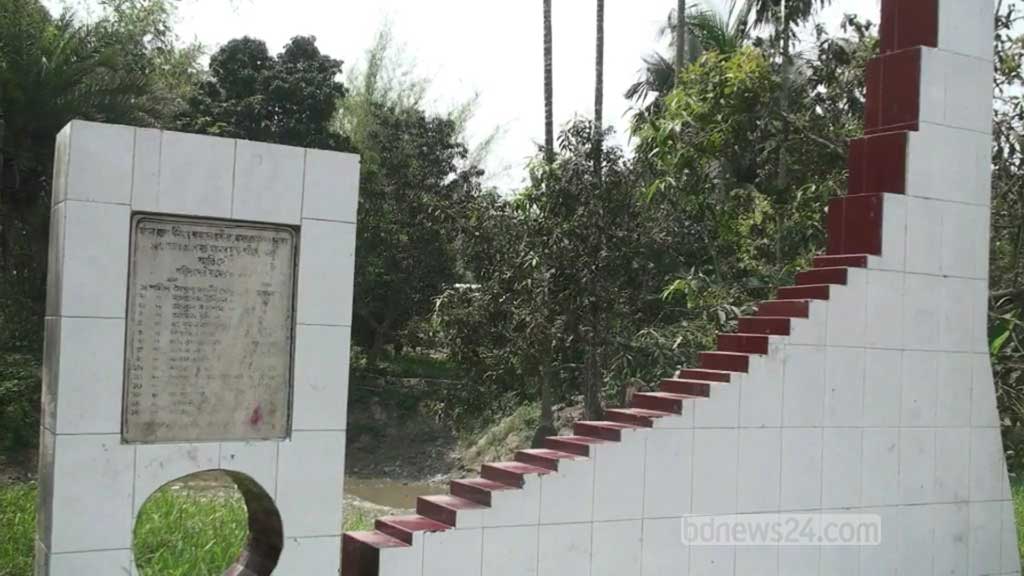
Dangirhat mass grave, Panchagarh.
Boda Genocide
On April 17, Pakistani soldiers entered the Boda area, killed three people, and tortured many others. In the second week of October, another 17 people were arrested and taken to the then Baliyadangi Police Station in Thakurgaon. They were shot dead there.
Amar Khana Genocide
Amar Khana was a major camp of the Pakistani occupation forces. People from different areas were brought there, interrogated, and tortured before being killed. Many never returned home.
Genocide in Mirzapur and Surrounding Villages
On the afternoon of the 24th of Kartik in the Bengali year 1378, a group of 11 people from Mirzapur village were arrested before iftar and taken to the bank of Nayadighi, where they were shot dead.
Newspaper headline reporting torture by the Pakistani occupation forces.
Mirgarh Genocide
On July 21 and 22, Pakistani forces, assisted by Razakars and Bihari collaborators, launched a major attack in Mirgarh. They moved from house to house, pouring petrol on homes and setting them on fire. Prominent businessman Ashir Uddin was burned alive. College student Mintu, primary schoolteacher Shamsul Huda, Meru Mohammad, and many others were also killed.
Atwari Genocide
On August 4, 1971, collaborators of the Pakistani forces arrested around 20–25 people from Dhamor Union in Atwari Upazila and took them to the Pakistani camp at Dangirhat. After subjecting them to severe torture, the captors killed them all.
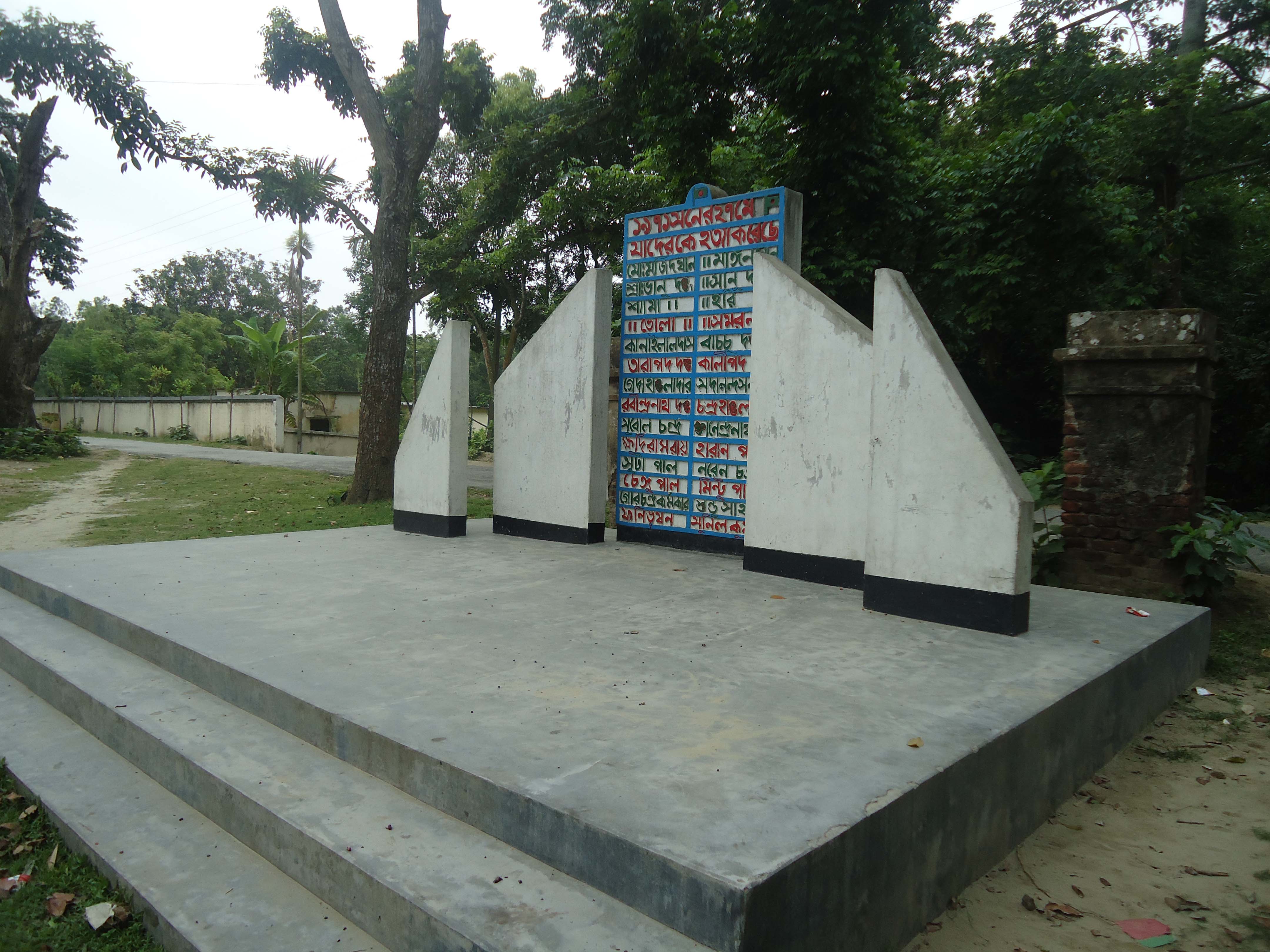
Memorial pillar commemorating the Atwari genocide.
Thakurgaon
Gobindonagar Temple and Mass Grave
Near Satypir Bridge, at the entrance to Thakurgaon town, the Pakistani occupation forces established a major base at the EPR camp, which later became associated with the BDR and is now the BGB Thakurgaon Sector Headquarters. During the war, countless civilians were brought to this camp, tortured, and killed.
One of the most painful accounts associated with the mass grave beside Gobindonagar Temple concerns a man named Yasin Ali. According to the account, the Pakistani forces kept him alive and shot his five children one by one in front of him. Their bodies were then buried in the ground. Unable to bear the loss and the trauma of what he had witnessed, Yasin Ali later died as well.
The Islamnagar area was a stronghold of the Awami League at the time. Student leaders Ahammad Ali, Yakub Hossain, Mozaffar, Dabirul Islam, Nuruzzaman, and Siraj Uddin were arrested and killed with bayonets by the Pakistani army and its local collaborators. Their bodies were thrown into the Tangon River. The river, which runs through Thakurgaon town, thus became associated with the killing and disposal of victims during the war.
Ranishankail Killing Field
At the Ranishankail camp, the Pakistani army, working with Razakars and members of the Peace Committee, arrested and killed the parents and close relatives of freedom fighters. The victims were buried secretly in the area. Over time, many of these mass graves have nearly disappeared because they were never properly marked or protected.
Neglected Ranishankail killing field.
Jathibhanga Killing Field and Genocide
The Jathibhanga massacre is remembered as one of the largest mass killings in Thakurgaon during the Liberation War. Jathibhanga village, in Kismat Sukanpukuri mouza of Balia Union, Thakurgaon Sadar, is now known as Bibahpalli. In 1971, however, it became the site of a massacre in which approximately 2,500 people were reportedly killed on April 23.
Following the declaration of independence, the Pakistani occupation army and its collaborators, including Razakars, Al-Badr, and Al-Shams, carried out killings, looting, and torture across the district. Thousands of minority families from villages such as Balia, Sukanpukuri, Jagannathpur, Chokhaldi, Singia, Chandipur, Basudebpur, Milanpur, Gauripur, and Khamar Bhopla tried to escape to India with their families. People also fled from Palashbari in Dinajpur's Birganj Upazila and several villages in Debiganj Upazila, Panchagarh.
Jathibhanga killing field.
On April 23, 1971, collaborators of the occupation forces gathered the displaced people near the Jathibhanga River. Acting on information supplied by Razakars, Pakistani soldiers surrounded the crowd. They then opened fire and attacked people with sharp weapons. Around 2,500 men were reportedly killed, and many bodies were thrown into the river. The massacre left hundreds of women widowed and countless families devastated.
A memorial has since been built at Jathibhanga to remember those who were killed and to preserve the history of the massacre.
Genocide at Thakurgaon Police Lines
Seven paired graves beside the Thakurgaon Police Lines are linked to killings during the Liberation War. A madrasa once stood in a hut in this area and served as a local centre for religious education. During the war, Pakistani soldiers raided the surrounding area, searched homes, arrested civilians, and killed them.
Among those killed were Samir Uddin, Habibur Rahman, Saiful Islam, Aminul Islam, Abdus Samad, and Shamsul Islam. Their remains were buried at the site. The seven paired graves have not been adequately identified or preserved, and the site remains a neglected part of the district's wartime history.
Thakurgaon Sugar Mill Genocide
Jahur Hossain, a guard at the sugar mill, and Asgar Ali, a senior electrician, were shot dead by Pakistani forces. They were buried side by side near the mill's main gate.
Boyendha Chowdhuripara Genocide
In Boyendha Chowdhuripara, Pirganj Upazila, Pakistani soldiers killed seven members of the same family. Bihari collaborators assisted the forces in the area, where raids, arrests, and killings of civilians became part of the violence inflicted on local communities.
Farabari Hat Killing Field
A well at Farabari Hat in Thakurgaon is associated with the killing of at least 18 civilians during the war. With help from Bihari collaborators from nearby villages, Pakistani soldiers arrested the victims and shot them dead before throwing their bodies into the well. The site has remained neglected, with little effort made to preserve it.
Mass Grave at Ramnath Hat, Ruhia
During the war, Ruhia was part of the area administered under Thakurgaon Sadar Thana. Six members of the family of Nurul Islam of Kanikshalgaon village, near Ramnath Hat, were arrested and killed. They were Rafiqul Islam, known as Abul; Azim Uddin Ahmed; Azim Uddin Ahmed's grandson, Md. Belal, known as Belu; Belal's younger brother, Md. Jalal; Md. Rezaul; and Delowar. The mass grave associated with their deaths has not been properly preserved.
Tetultala Farm Genocide
Pakistani soldiers arrested seven political leaders from the then Pirganj Upazila, including Awami League leader Dr. Sujauddin, Ataur Rahman, Abdul Jabbar, and Mozaffar Ali. They were taken to Tetultala Farm, beside the paved road connecting Pirganj and Thakurgaon, and killed.
Among the victims was Professor Golam Mostafa, acting principal of Pirganj College, who is remembered as the district's only martyred intellectual in the account cited here. His grave near the Pirganj railway crossing has not been adequately preserved. A small memorial at Tetultala has also fallen into neglect. The Bangladesh Postal Department issued a commemorative postage stamp in honour of Professor Golam Mostafa.
Deshiapara Killing Field
In Deshiapara, Bhomeradah Union, Pirganj Upazila, the Pakistani occupation forces arrested and killed more than a hundred local women, men, and children, according to accounts of the massacre. The victims were buried together in a large pit. No memorial has been built at the site, and no substantial effort has been made to protect it.
Baliadangi Killing Field
Pakistani soldiers called Akbar Ali out of his home and killed him before setting his body afloat in a river. He was the father of Dabirul Islam, a Liberation War organiser and six-time Member of Parliament, and former Upazila Chairman Mohammad Ali.
In another incident, soldiers arrested 25 people from their homes in Jhikargacha village, took them to the Baliadangi camp, lined them up, and shot them dead. Mass graves at various locations across the upazila remain without adequate protection.
Khuniadighi Killing Field
Khuniadighi in Ranishankail is one of the best-known massacre sites in Thakurgaon. During the Liberation War, the Pakistani army operated a camp in the area. With assistance from Razakars and members of the Peace Committee, soldiers arrested civilians, tortured them, killed them, and dumped their bodies into Khuniadighi pond.
According to eyewitness accounts, more than 3,000 Bengalis were killed and thrown into the pond. Some victims were buried in pits, while others were dumped in the Tangon River. The exact number is difficult to establish, but the accounts describe killings on a large scale. The Ranishankail Upazila administration has since taken steps to preserve Khuniadighi and establish a memorial at the site.
Khuniadighi killing field.
Pirdangi Killing Field
In 1971, Pirdangi in Pirganj Upazila became the site of mass killings by the Pakistani occupation forces. After independence, human remains—including skulls, rib cages, and the bones of hands and feet—as well as bloodstained clothing were found across an uninhabited area beside the Lachhi River.
Accounts of the killings describe people being burned alive with petrol, shot, stabbed with bayonets, and killed by having their throats cut. Some reports also describe acts of extreme cruelty against victims before their deaths.
The mass grave remains neglected, and no comprehensive excavation or identification effort has been carried out, according to local accounts. Journalist Azam Rehman estimated that around 200 people were killed there. Alauddin, from a neighbouring village, reported that eight members of his family, including his father Jamaluddin, were among the victims. He also identified four brothers—Jamaluddin Ahmed, Latifur Rahman, Hasan Ali, and Azizur Rahman—who were killed at the site. The lack of preservation means that this part of the district's wartime history remains poorly documented.
Islamnagar (Khanka Sharif) Killing Field
In May 1971, Pakistani soldiers surrounded Islamnagar, an area also known as Khanka Sharif. Captains Afzal and Harun ur Rashid questioned residents about how they had voted in the previous election. Some openly admitted voting for the Awami League. When the soldiers asked why, local physician Dr. Mostafa Ahmed reportedly answered on their behalf.
A military officer then produced a list of names and ordered the people listed to report to the camp by 10 a.m. the following morning. The soldiers threatened to destroy the entire locality if they failed to comply.
Khanka Sharif killing field.
After discussing what to do through the night, the residents decided to send the named individuals to the camp. Because no one had been killed that day, some believed the soldiers intended only to question them. With no suitable transport available, seven men travelled by bullock cart to report to the EPR camp the next morning.
They were Ahmed Hossain, 19, a student and youngest son of the late Pir Sahib of Khanka Sharif, Md. Shamsuzzoha; SMA Islamul Haque, 55, a prominent businessman and younger brother of Dr. Mostafa Ahmed; Md. Mahadi, also known as Dabiruddin, 32; Sirajuddin Ahmed, 55; Yakub Hossain, 45; Mazharul Islam, 45; and Md. Nuruzzaman, 36.
Their families could not determine what had happened to them for some time. Later accounts indicated that on May 24, they were taken by truck to a killing site near the old bridge over the Tangon River and shot dead alongside eight other people. The additional victims had reportedly been brought from Baliadangi, but their identities remain unknown. Other accounts describe large numbers of people being killed and thrown into the Tangon River during the war. The Khanka Sharif site has since been identified and enclosed as a memorial.
Sylhet and Sunamganj Districts: Genocides and Killing Fields
Sylhet
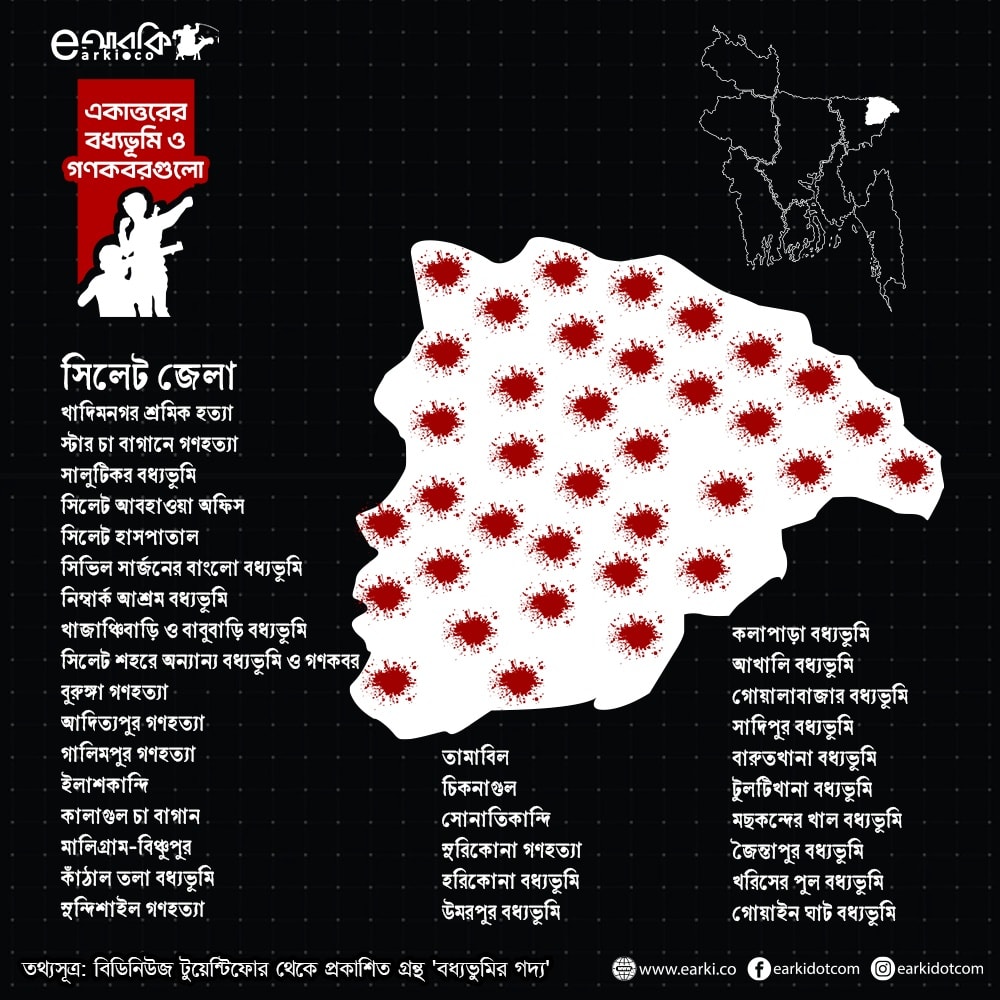
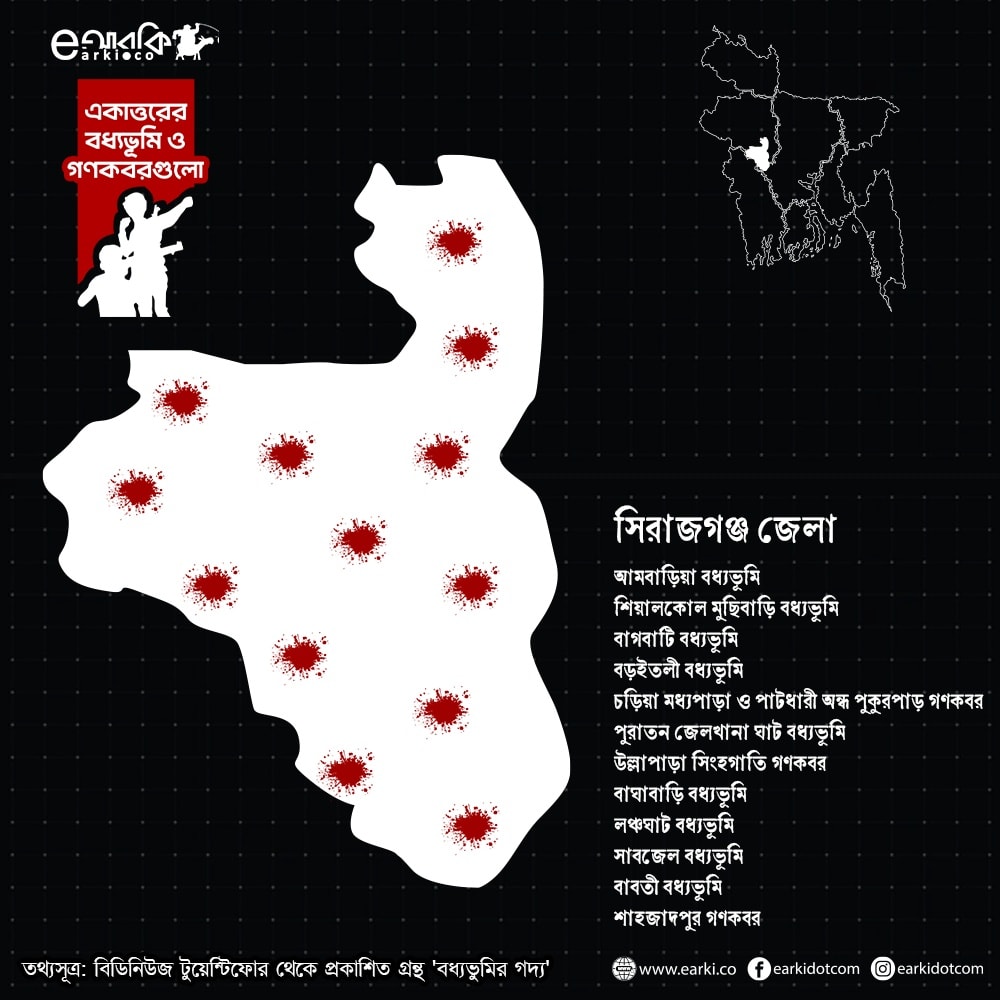
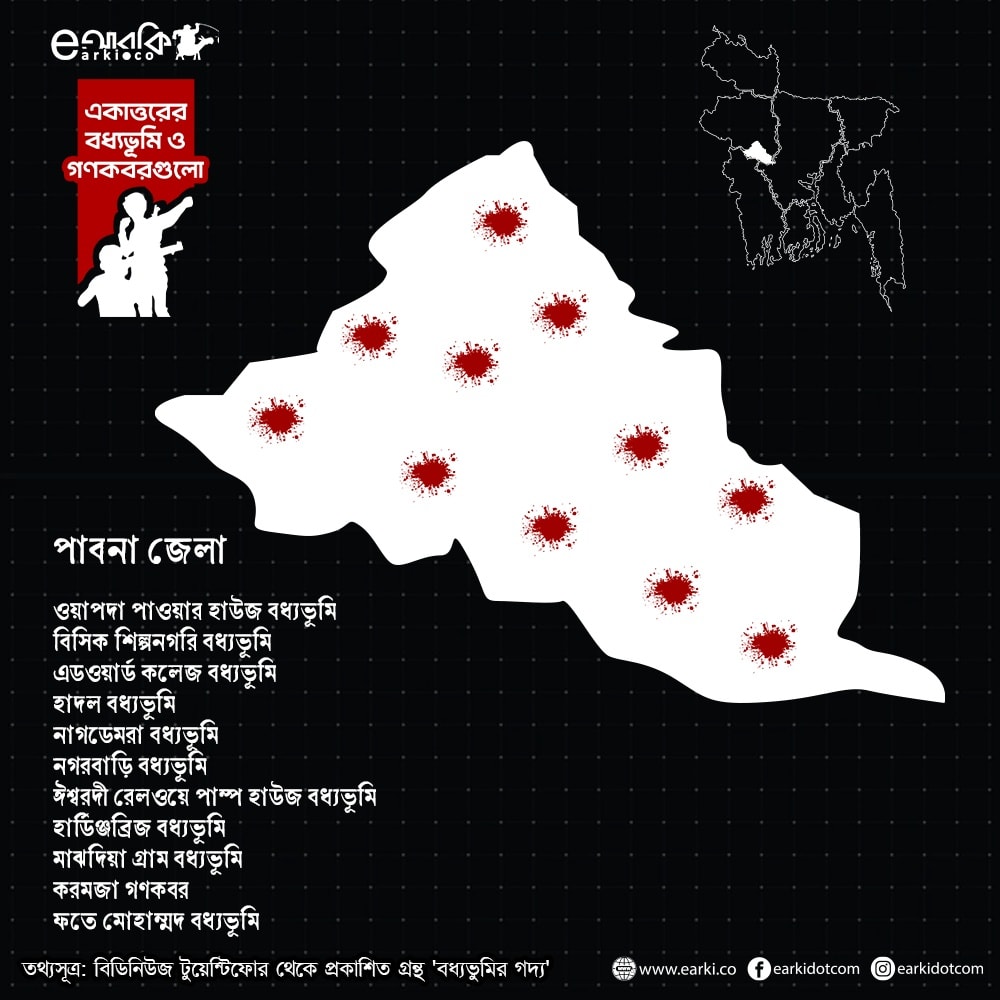
Map of district killing fields.
Salutikor Killing Field
One of the largest and most brutal killing fields in Sylhet, located around the Salutikor area. During the 1971 Liberation War, the Pakistan army used the local Sylhet Cadet College as a military camp, which quickly turned into a center of torture and murder. Freedom fighters and innocent Bengalis were brought here from different areas, subjected to inhuman physical and mental abuse, and interrogated.
Salutikor (Cadet College) Killing Field.
After torture, many were killed publicly or in secret. Instead of proper burials, the bodies were thrown into mass graves behind the cadet college. According to various sources, these mass graves hold the remains of over two hundred martyrs. Salutikor stands as a grim testimony to the Pakistani military's planned genocide and crimes against humanity, remaining a haunting memorial in the history of Sylhet.
Sylhet Hospital Killing Field
In the first week of April 1971, the Pakistani army launched severe attacks across Sylhet with heavy shelling, mortar fire, and machine guns, killing countless people. Dr. Shamsuddin Ahmed took on the immense responsibility of treating and saving the wounded who took shelter at the Sylhet Hospital. On the morning of April 9, led by Major Riaz, Pakistani troops surrounded the hospital. Soldiers entered the wards and took Dr. Shamsuddin Ahmed, Dr. Shyamalkanti Lala, driver Kurban Ali, Mahmudur Rahman, and seven other patients to the southeast corner of the hospital, where they were shot dead one by one. Their bodies lay there for three days before local residents gathered the courage to bury them on the spot.
Mirza Jangal Killing Field
On March 27, 1971, occupation troops attacked the Nimbark Ashram in Mirza Jangal, brutally killing Rasbihari Dhar and Panchu Babu. The next day, March 28, they raided the ashram again and abducted Surti Dhar and Narendra Dey, who were never seen again. On April 10, failing to capture Principal Krishnakumar Pal Chowdhury, Captain Karam Khan killed his brother Byomkesh Chowdhury for sheltering him. In December, the army attacked the home of Dr. Digendrakumar End in Mirza Jangal with mortar shells, killing Dr. Digendrakumar End, his wife Suniti Bala End, Pushpa End, Dibyendu End, Sikha End, Apu End, Shibani End, and Gopesh Das. The troops also shot and killed four others, including local businessman Khorsruzzaman.
Kalapara Killing Field
Around 3 p.m. on April 6, 1971, a large Pakistani military convoy entered the Kalapara slum and ordered all men and women to report to their tents. When no one responded, the troops grew furious, rounded up the villagers in front of a house, and subjected them to brutal torture. They separated the captives into Hindus and Muslims. The Muslims were released, while the Hindus were taken to a hill and shot in a row. Among the martyrs were Kalia Uria, Nakul Uria, Sadhya Uria, Bir Uria, Beni Uria, Nitai Uria, Raman Uria, and Chhaku Uria.
Akhalia Killing Field
On March 28, 1971, Pakistani forces entered Akhalia, set up a military camp at Madina Market, and began their massacre by opening fire on unarmed crowds. Manik Mia, a rickshaw puller, an elderly man, and several others were killed. On April 10, Abdus Sattar and Abdur Razzaq from Noapara village were shot dead. Sushil Chandra Ghosh from Arikhai village was killed on April 23, and Pulin Chandra Deb from Kalapara was killed on April 25. The army carried out widespread looting, killings, and abuse in Akhalia during the war.
Kalagul Tea Garden Killing Field
In late April 1971, the Pakistani army entered the Kalagul Tea Garden and set up camp in the manager's bungalow. Hearing of their arrival, tea garden workers tried to flee. Many were caught, gathered near the jackfruit grove of the garden, lined up, and shot. Victims included Kaloguna Lohar, Kosh Lohar, Lalban Khatuar, Sadhu Bauri, Tufan Lohar, Golok Lohar, Bhuban Lohar, Bhim Lohar, and Mithai Lohar—at least 15 workers in total, whose bodies were left scattered around.
Star Tea Garden Killing Field
On April 18, 1971, Pakistani forces entered the Star Tea Garden, owned by Rajendra Lal Gupta. Under the pretext of distributing identity cards, they gathered workers in front of Rajendra Lal Gupta's house and took them near a hill at the adjoining Malnicherra Tea Garden. Splitting them into three groups—owners, staff, and workers—three separate squads led by three subedars surrounded the hill on three sides and opened fire, killing 39 people. Victims included Rajendra Lal Gupta, Rabindranath Gupta, Jaharlal Gupta, Kshitis Chandra Dey, Naresh Chandra Deb, Fatik Roy Haldar, Bharat Bhallar, Mahendra Koramodi, and Palesh Koromodi. The army returned on May 5 and 6 to shoot four more people.
Goalabazar Killing Field
Abdul Mannan Chowdhury, general secretary of the Awami League's Goalabazar Union, Abdul Manaf from Gadiarchar village, and Tota Miah from Moroldash village were detained and brutally murdered by the Pakistani army. Troops also shot and killed two unidentified individuals, Tapesh Lal and Nayan Shukla Baidya, in the haor east of Goalabazar.
Sadipur Killing Field
On April 8, 1971, Pakistani troops entered Sadipur village and carried out an indiscriminate killing spree. A young man named Masuk Ahmad was shot dead. Anyone captured in the village was taken to the Sadipur ferry terminal, tied with ropes, and ruthlessly shot. Ali Box, Betu Miah, Tenai Miah, Taroni Chandra Baidya, Khoyer Uddin Chowkidar, and Ladai were among the martyrs. Villagers trying to flee were also shot on sight, including Tenai Ullah, Sultan Ullah, Sadhu Miah, Syed Ansar Ali, and Karam Ullah.
Other Killing Fields
In addition to these, Sylhet has numerous other killing fields where Pakistani forces and their local collaborators committed massacres, including the Weather Office killing field, Surikona, Barutkhana, Tooltickor, Moshconder Khal, Jaintiapur, Khoriser Pul, the Gowain River, Model School, Gyan Babu's house, Khazanchi Bari, Mahajan Patty, MC College, and the Sylhet Airport killing field.
Sunamganj
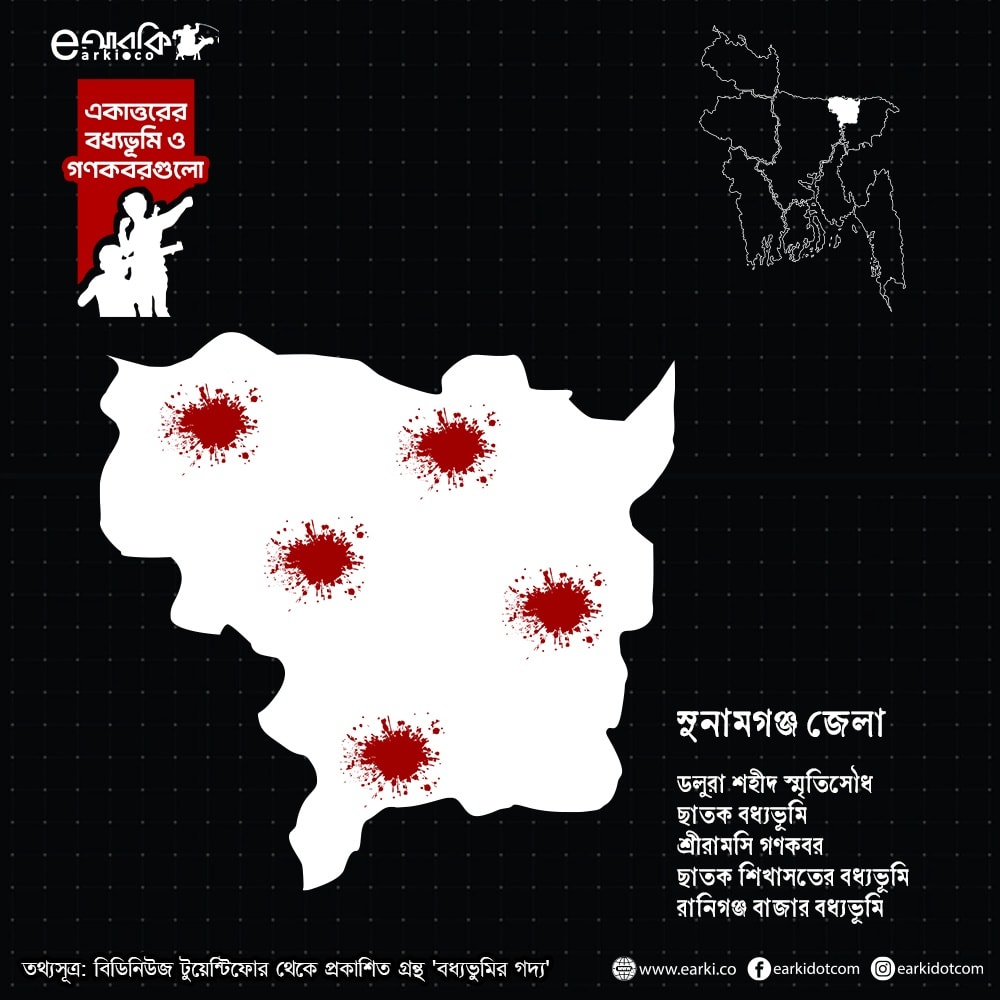
Map of district killing fields.
Sunamganj district currently has 11 identified killing fields across eight upazilas. Due to a lack of proper state initiatives, research, and exploration, many other sites remain officially unidentified, leaving numerous war-time massacre spots hidden from history. Yet, these sites bear silent witness to the sacrifices, bravery, and glorious struggle of our Liberation War.
Shriramshi Killing Field
On August 31, 1971, the Pakistani army and local collaborators carried out a sinister conspiracy under the guise of forming a peace committee in Shriramshi village. Villagers were summoned to the school field under the promise of peace and safety, believing it to be a routine administrative meeting or briefing.
Shriramshi Killing Field Memorial, Jagannathpur, Sunamganj.
Instead, upon gathering, men and women alike were lined up, and troops immediately opened fire with machine guns. Teachers, tahsildars, and respected community members were among the dead. The survivors carry the agonizing memories of that day to this day. Shriramshi stands as a stark reminder of wartime deception and brutality.
Raniganj Bazar Killing Field
On September 1, 1971, Pakistani troops surrounded Raniganj Bazar. Caught completely by surprise, people in the market were trapped. Without warning, soldiers rounded up over two hundred innocent people, tied their hands, and lined them up to be gunned down in cold blood.
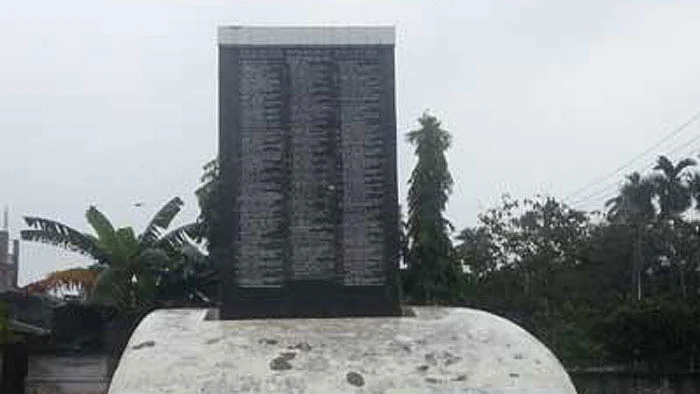
Raniganj Bazar Killing Field Memorial, Sunamganj. Photo collected from Bangla Tribune.
Shoppers, day laborers, traders, and passersby alike perished in this sudden massacre, turning the market into a ghost town. Those who survived carry deep scars from the horrific event.
Chhatak Killing Field ("Shikha Satero")
In August and September 1971, 18 enthusiastic young men from different parts of the country gathered to join the Liberation War. While crossing the Betura area of Noarai in Chhatak, Sunamganj, on their way to India for training via the Surma River, they ran into a notorious local collaborator and former chairman, Matchir Ali alias Fakir Chairman. Posing as a helper, he offered to shelter them at his home while they waited. Instead, he betrayed them to the Pakistani military.
Tied up and taken to Chhatak police station, they were later brought to a lonely spot on the Chhatak-Gobindganj road near Lalpul. Forced to dig a trench, the young men were brutally tortured and then shot into the pit, where they were buried alive. The next night, local villagers came forward to cover the bodies with more soil.
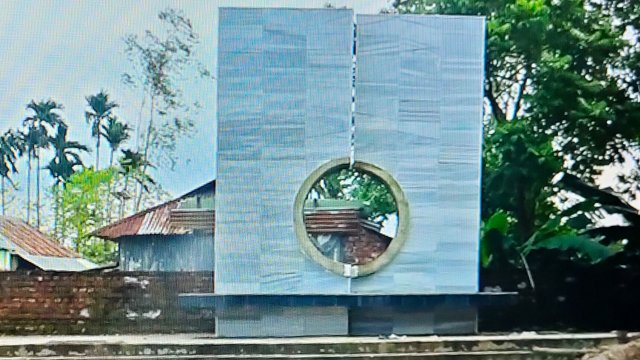
Shikha Satero Memorial, Sunamganj.
This living grave of 17 young souls remains deeply etched in national memory as "Shikha Satero" (Flame of Seventeen).
Sagardighi Killing Field, Gazipur
On May 2, the banks of the pond in Gazipur village became a silent witness to a horrific massacre. Pakistani forces and local collaborators brought 20 to 22 innocent workers from the nearby Naluya tea garden, tortured them, and killed them simply for being Bengali. Their bodies were dumped straight into a well near the Sagardighi banks to hide the evidence.
It is deeply unfortunate that even these identified killing fields have not been properly preserved. Lacking state attention, many are deteriorating and losing their historical value. While locals have put up nameplates in some places, most remain in utter neglect, risking the loss of history for future generations.
Dinajpur and Nilphamari Districts: Genocides and Liberation War 1971
Dinajpur
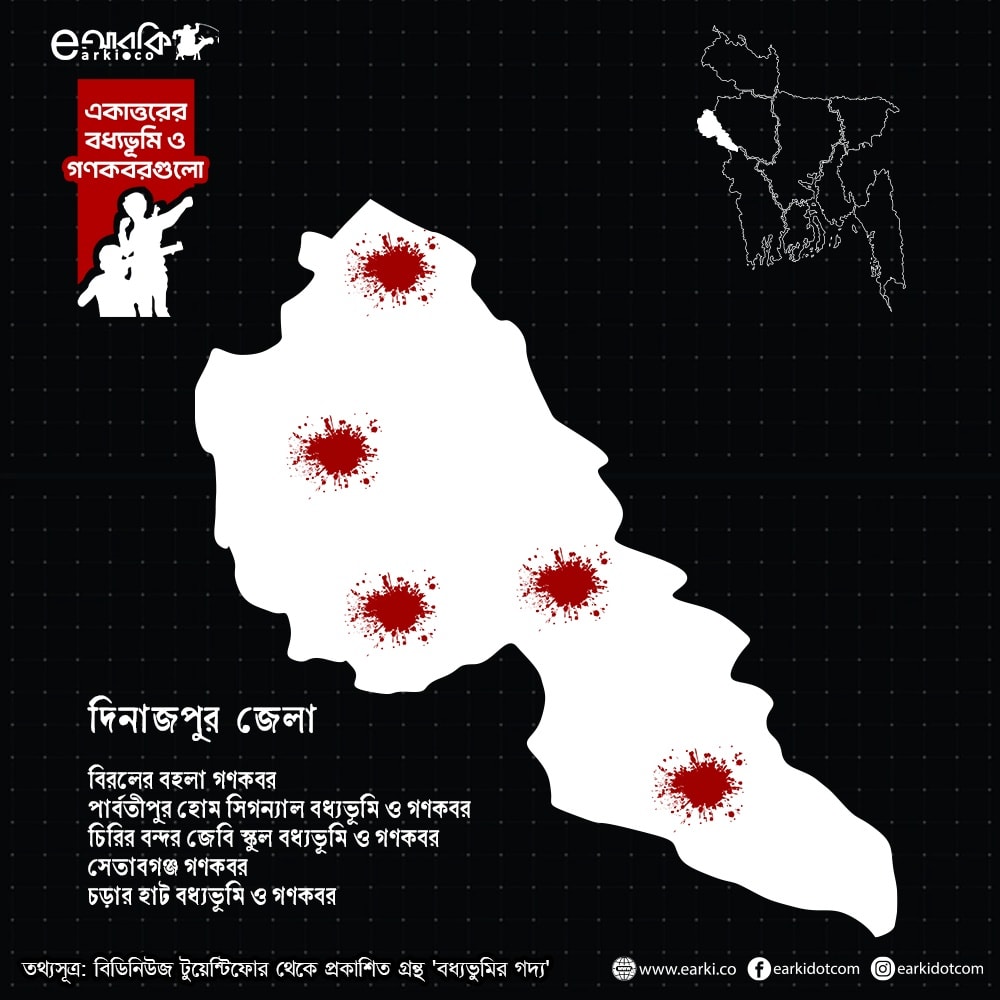
Map of district killing fields.
Across its 13 upazilas, Dinajpur saw roughly 1,726 individual massacres, 32 killing fields, 34 mass graves, 10 freedom fighter graves, and about 65 torture cells—most of which remain unprotected.
Home Signal Killing Field, Parbatipur
Located a few hundred yards north of Parbatipur railway station, this site holds a large mass grave dating back to the early days of the war. Pakistani forces brought freedom-seeking men and women from Parbatipur and nearby villages here, tortured them, and buried them near the railway tracks.
Notable victims included renowned singer Satish Sarkar (Monuda), bank official Sajiruddin, Dinajpur Government College professor Wahidur Rahman, WAPDA engineer Obaidul Haque, and physician M. A. Jabbar, alongside many unnamed citizens.
Station Area Killing Field, Parbatipur
Because of its crucial railway junction, Parbatipur station area served as a massive torture and killing center where an estimated 20,000 innocent Bengali civilians, political workers, intellectuals, and ordinary citizens were killed, often under the cover of night, and buried near warehouses and tracks.
Setabganj Thana Killing Field
Centered around the Setabganj Sugar Mill and the local Thana Development Center, this facility was used by the army and local agents to detain, torture, and execute mill workers, staff, and villagers from Biroj, Kaharol, and Birganj.
Barai Akhira Village Killing Field, Fulbari
On April 17, 1971, Pakistani troops opened fire on more than a hundred unarmed villagers trying to cross the border into India to escape persecution, killing men, women, and children indiscriminately. The victims were later given a community mass burial.
Nawabganj and Chorarhat Mass Graves
Around 250 martyrs rest in a large mass grave in the Chokdulu area of Nawabganj. Furthermore, on October 10, 1971, troops opened fire in Chorarhat and Andolan villages, killing at least 157 innocent villagers, including women, children, and the elderly.
Chorarhat Mass Grave, Dinajpur.
These sites stand as direct evidence of war crimes and remain central to preserving local history.
Other Killing Fields (Dinajpur)
Other noted locations include Behala (Biroj), Chirirbandar, Hili, Ramsagar, Godagari, the Telephone Building area, Tikrampur, the banks of the Kanchan River, the Parbatipur boiler area, and Palpara village.
Nilphamari
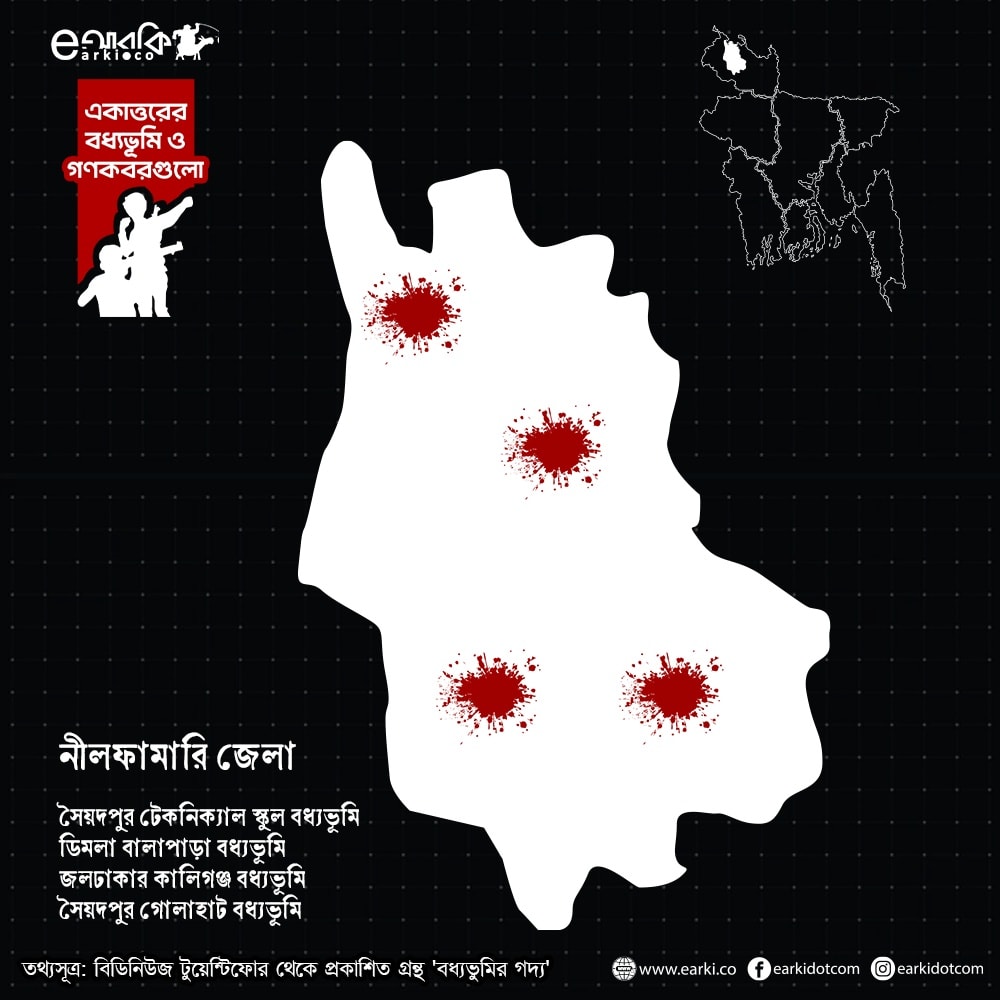
Map of district killing fields.
Saidpur Golahat Killing Field, Nilphamari
Starting April 7, 1971, the Pakistani army and local collaborators (Razakars/Biharis) rounded up wealthy businessmen, landlords, and minority residents of Saidpur and kept them at the cantonment for over two months of brutal torture. On June 13, under the pretense of sending them to India by train, they were brought to Golahat near the railway station.
Saidpur Golahat Killing Field Memorial and Plaque, Nilphamari.
The train stopped, and soldiers and militia massacred everyone inside using guns and swords, shouting "Khorchakhata"—the operation name for the planned purge. Over 450 minority Marwari community members and other locals lost their lives here. A Shahid Minar was built here on December 16, 2011.
Technical School Killing Field, Saidpur
Beginning April 1, 1971, under officers Major Gul, Major Javed Bakhtiar, and Colonel Shafi, the Saidpur Technical School was converted into a notorious torture and execution site. Engineer Fazlul Rahman, his brother Rafiqul Islam, nephew Anwar Hossain, and Ruhul Amin were killed here.
Additionally, around 600 to 700 women, including Fazlul Rahman's wife, were detained and subjected to unspeakable abuse, marking it as one of the darkest sites of violence against women during the war.
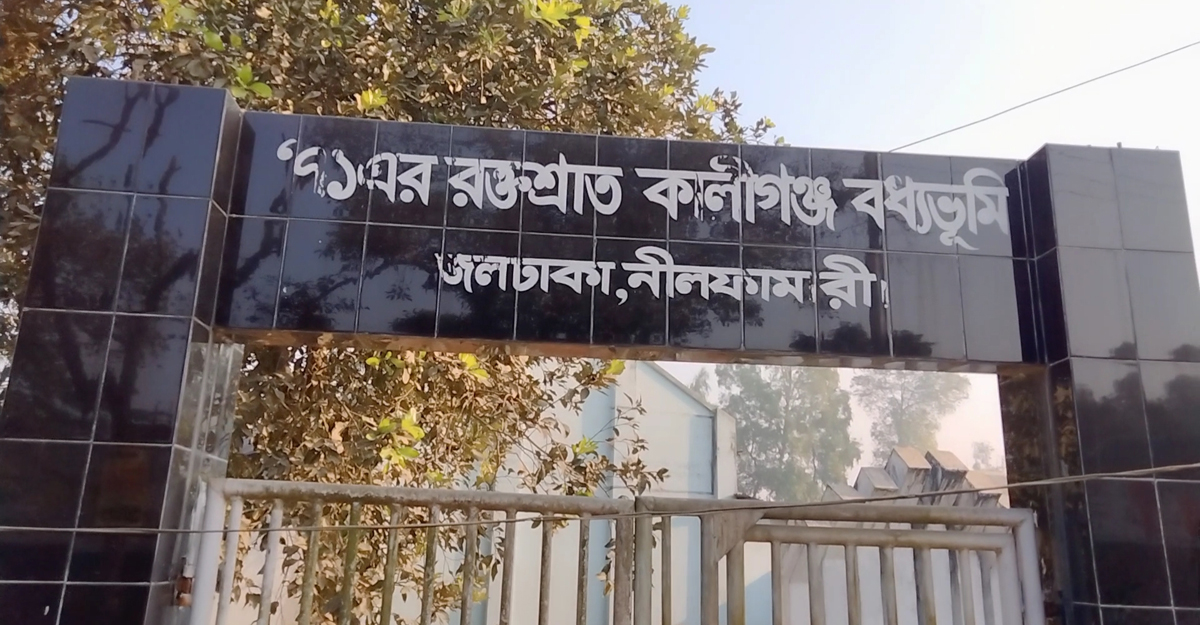
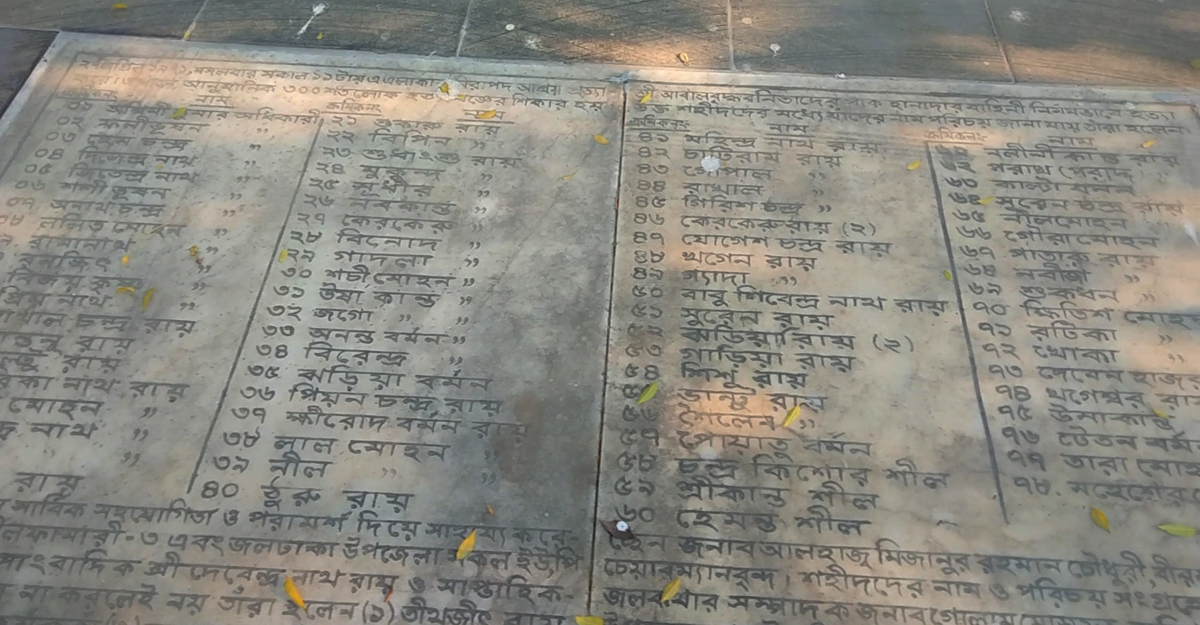
Jaldhaka Massacre (Kaliganj Killing Field)
Kaliganj Killing Field Arch, Nilphamari.
On April 27, 1971, innocent villagers from Balagram Union fleeing toward India reached the Kaliganj area of Golna Union, Jaldhaka, where Pakistani forces ambushed them, killing about 300 Hindu villagers.
Kaliganj Killing Field Plaque, Nilphamari.
This ambush remains a tragic milestone in the history of local wartime atrocities.
Saidpur Railway Workshop Massacre
Over three days—April 14, 15, and 16, 1971—about 350 railway workers, local residents, and villagers were brutally murdered inside the Saidpur Railway Workshop. Led by non-Bengali employees like Matin Hashmi, Md. Habbu, and Md. Zahid, the killers used a horrific method: throwing living people straight into giant iron-melting boilers and furnaces used in the workshop, reducing their bodies to ashes without a trace.
Saidpur Railway Workshop Furnace and Shed used in the massacre, Nilphamari.
This horrifying act remains a symbol of extreme cruelty during the Liberation War (Source: Daily Vorer Kagoj, March 12, 2017).
Killing Fields and History of Rangpur District
Map of killing fields in the district.
Ghaghat River Bank Killing Field
During the Great Liberation War in 1971, Rangpur city served as an important headquarters for the 23rd Brigade of the Pakistani occupation forces. Due to this military presence, the scale of oppression, persecution, and violence in this region was extremely severe from the very beginning. Triggered by the death of Lt. Abbas on March 23, extreme tension arose in and around Rangpur city, which quickly escalated into genocide.
In the wake of this incident, thousands of unarmed people gathered near the banks of the Ghaghat River on March 28, 1971. They had assembled there primarily to register their stance amidst protest and panic. However, without any prior warning or provocation, Pakistani soldiers opened indiscriminate fire on the gathering.
Countless men, women, and youths lost their lives in this ruthless attack. According to eyewitness accounts, the waters of the Ghaghat River turned red with the blood of the victims—serving as a symbol of the horrifying scale of this carnage. Following the firing, many bodies were either set afloat in the river or left abandoned along the banks, turning the banks of the Ghaghat River into a vast killing field.
Nabirhat Killing Field
During the 1971 Liberation War, the Nabirhat area in the Rangpur region became marked as a key center for brutal murders committed by the Pakistani occupation forces. In this area, Pakistani troops launched indiscriminate attacks on innocent and unarmed civilians, killing numerous people.
According to local eyewitnesses and post-war investigations, people rounded up from Nabirhat and surrounding villages were brought here to be executed. The victims included villagers, working-class people, and suspected freedom-seeking individuals. In many cases, bodies were left in open spaces nearby or secretly buried after execution.
Area adjacent to Nisbetganj Killing Field near the Ghaghat River, Rangpur.
Rangpur Cantonment Mass Grave
The area adjacent to the Rangpur Cantonment turned into a nightmarish execution ground during the 1971 Liberation War. Here, the Pakistani occupation forces brutally murdered and mass-buried about 200 patriotic soldiers and unarmed people, including members of the Bengal Regiment and Bengali EPR personnel. Following independence, based on local information and investigations, a large number of mass graves were discovered in this area, and it is known that the remains of nearly 10,000 martyrs were recovered from various sites. On April 12, after rounding up and killing numerous Marwari citizens from the Saidpur area, their bodies were also buried here. This mass grave stands today as a silent witness to that brutality.
Rangpur Cantonment Killing Field Memorial Monument, Rangpur.
Zafarganj Bridge Killing Field
Zafarganj Bridge turned into a horrific execution site for the Pakistani forces during the war. Taking advantage of the secluded environment surrounding the bridge, the occupation forces brought detainees here to kill them. According to local accounts, at least 10 innocent people were shot dead near this bridge within a span of just two days. The gruesome history of this place came to light from local testimonies in 1972 after independence.
Nisbetganj Killing Field
During the Liberation War, this single village had not just one or two, but 18 killing fields. The largest intellectuals' massacre in a single day in the history of the Liberation War took place at a place called Balairkhal in this very Nisbetganj village of Rangpur. The area adjacent to the Nisbetganj bridge was another grim reminder of a bloody carnage. On the night of April 12, 1971, more than 50 intellectuals were lined up and gunned down in a brushfire after being tortured continuously for 18 days. Among them were people from various professions, including physicians, school teachers, professors, politicians, engineers, artists, literary figures, actors, and social workers. After independence, human skulls and skeletons were seen scattered across this area, proving the extent of barbarity committed here. Ahmad Ali, a Tahsildar from Pirganj, stated that he witnessed many people being killed here firsthand. Testimony also reveals that, specifically around 11:00 PM on April 1, 12 people were shot dead consecutively.
Bairagiganj Killing Field
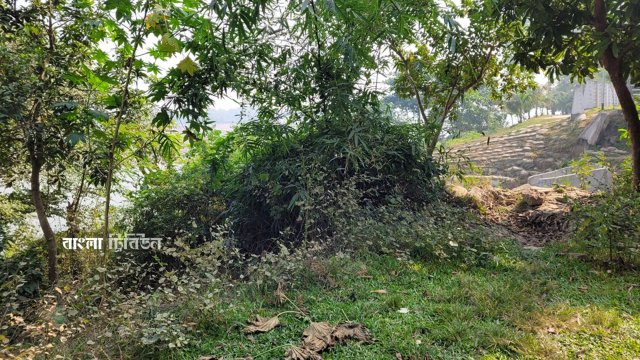
The Bairagiganj area was also not spared from the massacres carried out by the Pakistani forces and their local collaborators. Many innocent villagers were rounded up and killed here. Although the exact number of casualties for this location is unknown, it is recognized as a significant killing field based on local recollections and evidence.
Damdama Bridge Killing Field
Located about two miles southeast of Carmichael College, a killing field developed under the Damdama Bridge during the war. Bengalis were regularly brought here and executed. On April 30, numerous educated and common people—including teachers Ramkrishna Adhikari, Kalachand Roy, Sunil Baran Chakraborty, and Chittaranjan Roy—were ruthlessly murdered. The place was like a permanent death trap, where killings took place almost daily.
Damdama Bridge Killing Field, Rangpur.
Baldipukur Killing Field
The Baldipukur area also fell victim to the barbarity of the Pakistani forces. Numerous unarmed people were killed here, and their bodies were discarded or secretly buried. In popular local memory, this place is marked as a mournful execution ground.
Dokiganj Smashanghat Killing Field
Dokiganj Smashanghat (cremation ground), once known as a site for final funeral rites, turned into an execution ground during the war. On April 3, 10 people were brought here from two messes of the Rangpur Cantonment and killed. Several eyewitnesses, including Dr. Montu, have testified to this brutal event.
Dokiganj Smashanghat Killing Field, Rangpur.
Sahebganj Killing Field
Eleven detained EPR members brought from the Rangpur jail were brutally murdered in the Sahebganj area. Later, their bodies were secretly buried, which was subsequently identified as a mass grave. This site stands as glowing proof of the occupation forces' vindictiveness towards freedom fighters and Bengali soldiers.
Modern Cinema Hall Killing Field
The area behind the Modern Cinema Hall in Sahebganj was a horrific torture and execution center. On the night of May 1, 19 Army officers and soldiers were brought here, killed, and buried. At the same time, about 300 detainees were tortured inhumanely for 13 days before being killed. Only a single rickshaw puller managed to miraculously survive and return from this nightmare.
Debipur, Kukurun Bil, and Shibganj Killing Fields
Massive massacres were also carried out by the Pakistani forces in Debipur, Kukurun Bil, and Shibganj regions. Innocent people were rounded up under the guise of village searches and killed. Locals believe numerous unmarked mass graves are scattered across these areas.
Town Hall Killing Field
The Rangpur Town Hall was one of the main torture centers of the occupation forces. Alongside men, women were also brought here and subjected to inhumane torture. Women were segregated, held captive, tortured, and then killed, with their bodies buried in the agricultural field behind the Town Hall. This site is considered one of the largest and most brutal killing fields in the Rangpur region.
Killing Fields and Genocide in Kurigram District
Map of killing fields in the district.
Circuit House Killing Field
After entering Kurigram town on April 7, 1971, the Pakistani occupation forces quickly transformed the Circuit House area into a military control center. Stationing themselves here, they began torturing innocent people rounded up from various parts of the town. On that day, at least five jail guards and numerous ordinary citizens were killed in indiscriminate gunfire.
On April 14, the Pakistani forces returned to the area and launched genocide, arson, crackdowns, and torture on an even larger scale. According to locals, the sounds of gunfire echoed throughout the night around the Circuit House premises and surrounding areas, and detainees were never seen returning alive. Consequently, the Circuit House area turned into one of Kurigram's most terror-stricken execution centers during the war.
Food Office Killing Field
The area adjacent to the Kurigram Food Office was also a prominent site of the April 7 massacre. According to local eyewitnesses, people were lined up and shot here. Efforts were made to quickly remove or bury bodies after executions.
Locals claim that human skeletons and bones have been discovered in the area at various times after independence. Based on these findings, researchers consider the site a prospective mass grave.
Judge Court Pond Killing Field
The pond bank situated in front of the Kurigram Judge Court turned into a brutal execution site during the war. Pakistani forces and their collaborators brought people from various areas and shot them to death here. Many corpses were secretly buried beneath the soil of the pond bank.
Following independence, the nightmarish history of this place came to light through the testimonies and investigations of local elders, remaining deeply embedded in the memory of Kurigram residents to this day.
Riverview High School Killing Field
Kurigram Riverview High School and various other educational institutions in the town turned into temporary camps for the Pakistani army. In these places, ordinary people—especially youths and suspected freedom fighters—were detained and tortured under the guise of interrogation.
Many were killed after torture, and their bodies were disposed of under the cover of night. Thus, places of education and knowledge-seeking once turned into horrific torture centers.
Bhurungamari CO Office Killing Field
The Bhurungamari CO Office building (currently the Upazila Parishad Office) was a terrifying symbol of war crimes committed against women. This building was used as a detention and torture center. Numerous women and young girls were forcibly detained here and subjected to prolonged rape and physical abuse.
After independence, over a hundred persecuted women were rescued from the second floor of the building. This site stands as a heartbreaking memorial to the sexual violence committed during the Liberation War.
Dagarkuti Killing Field, Ulipur
In November 1971, the Pakistani forces carried out a horrific massacre in the Dagarkuti area of Ulipur. Local accounts state that approximately 764 people lost their lives in this massacre, which took place during the holy month of Ramadan.
Dagarkuti Killing Field, Ulipur, Kurigram.
Hundreds of people were lined up and shot within the span of just an hour. The bodies of the victims were buried in large mass graves. This site is still remembered as one of the largest genocide locations in the Kurigram region.
Molerhat Killing Field, Ulipur
Indiscriminate killings were also carried out by the Pakistani forces in the Molerhat area. According to locals, at least 21 innocent people were brutally murdered here. The incident generated long-lasting panic among the local residents.
Dakbanglo Mass Grave, Ulipur
The Ulipur Dakbanglo was a notorious torture center where both men and women were detained. Numerous women suffered rape and physical abuse here.
At the end of the war, 8 to 10 mass graves were discovered in the area, proving that extensive killings had taken place at this site.
Char Berubari Killing Field, Nageshwari
Razakars and Epicap members allied with the Pakistani forces attacked Char Berubari village in Nageshwari. After setting fire to and looting about 150 houses, villagers were rounded up and shot. At least 18 people were killed behind the local primary school.
Nageshwari Police Station School Killing Field
The Nageshwari police station school building was also used as a temporary detention center. Locals state that detainees were tortured and subsequently killed here.
Kodalkathi Killing Field, Roumari
In the Kodalkathi area of Roumari, the Pakistani forces and their collaborators carried out widespread massacres targeting freedom fighters. It is estimated that 200 to 300 freedom fighters were killed and mass-buried here.
Nilur Khamar Killing Field, Nageshwari
On November 18, in the Nilur Khamar area of Nageshwari, Pakistani forces set fire across the village and opened fire on fleeing people. At least 79 people were killed, and the entire village was reduced to ruins.
Belgacha Massacre
On April 14, Pakistani forces carried out a massive massacre in the Belgacha area. Chairman Dr. Shofor Uddin, Alhaj Shojor Uddin, and many other prominent figures and ordinary people were killed.
Chanmari Killing Field
The Chanmari area was also a victim of genocide. According to local sources, numerous people were killed and mass-buried here.
Bepari Para Killing Field
In Bepari Para of Kurigram's new town area, the Pakistani forces established a camp and brought in people from surrounding areas to execute them.
Thatmari Bridge Killing Field
The area adjacent to the Thatmari Bridge and the Teesta-Kurigram railway line was another center of torture and murder. People, regardless of gender, were brought here, tortured, and killed. The entire area turned into a terrifying killing field.
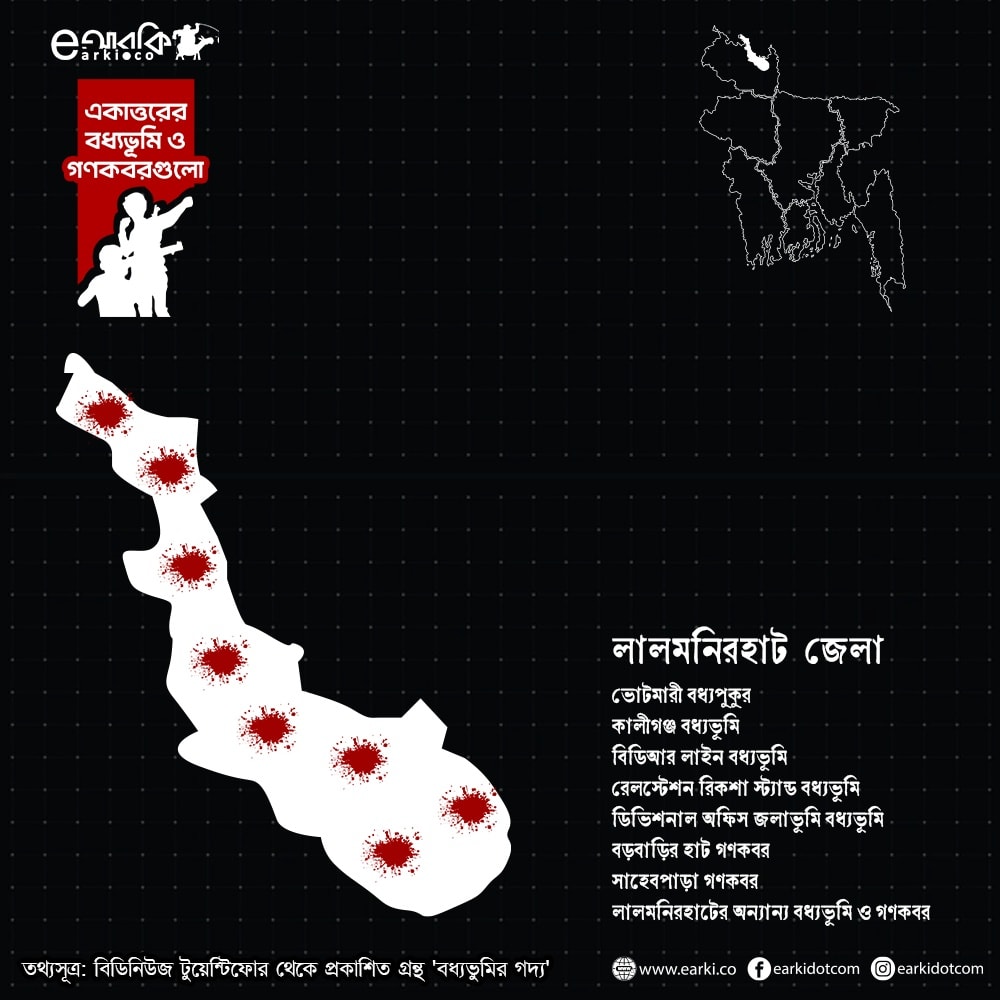
Killing Fields of Lalmonirhat District
Map of killing fields in the district.
Kaliganj Killing Field, Kaliganj
During the Great Liberation War of 1971, Kaliganj Upazila became a horrifying witness to the brutal oppression and persecution by the Pakistani occupation forces. Terror was a constant companion in the villages of this region. Hundreds of innocent Bengalis from various surrounding communities were rounded up and systematically killed in the secluded area of Votmari. The largest killing pond in Lalmonirhat district, known as the Votmari Baddhopukur, is located in Votmari of Kaliganj Upazila. Walking for a few minutes along the earthen path from Votmari railway station towards the northeast leads to that death trap. Situated in front of freedom fighter Sirajul Haq Master's house, surrounded by bamboo groves and thickets, it is a small, abandoned pond—one would never guess by looking at it that it was once a silent stage for brutal genocide. Yet, this neglected pond carries the silent history of the supreme sacrifice of countless martyrs of the Liberation War. When the war of independence intensified across the country, blood was mixing into the waters of this pond every single day.
According to local elders, during the war, around 15 to 20 men and women were slaughtered like animals and thrown into this pond almost daily. One corpse after another would float in the water—a sight so horrific that it is hard to express in words. Terrified, many residents had fled the villages, but whenever they got the chance, they would secretly come and witness the nightmarish scene at the pond's bank. Later, they conveyed news to the freedom fighters' camp. Investigations revealed that the mastermind behind this carnage was a local Razakar named Osman Moulvi. Every dawn, accompanied by a few cohorts, he would come to the killing field and take part in the executions.
To put an end to this brutality, freedom fighters launched a planned operation. An 11-member team led by Freedom Fighter Commander Abdus Salam lay in wait near the Modati Rabbaniyah Government Primary School, about four hundred meters east of the killing pond. One morning, when Osman Moulvi arrived at the scene, the freedom fighters launched an attack. Bulu's sten gun fire killed Osman Moulvi. Following his death, it became impossible to carry out further massacres in that killing pond. According to locals, many freedom fighters including Amjad Hossain, Zobed Ali, and Manik from Kakina were also slaughtered and thrown into this pond.
Kaliganj Killing Field Memorial Monument, Lalmonirhat.
Following the liberation of Lalmonirhat on December 6, 1971, people gradually returned to their homes. People from far and wide rushed to see this killing pond. Upon arrival, they found human bones and skulls scattered all around the pond banks and nearby areas—bearing grim testimony to that brutality.
Freedom fighter Sirajul Haq Master returned to his home after the war and witnessed this pathetic sight. He collected the scattered human skeletons and bones, built a mass grave, and buried them properly. He was the first to name this place "Baddhopukur"—a name that remains a witness to history.
Regrettably, despite carrying such monumental history, the Baddhopukur remains improperly preserved or marked to this day. The pond still lies neglected as before. Out of a mixed feeling of reverence and fear, locals still avoid stepping into it, and nobody even catches fish from the pond. Additionally, the existence of a large mass grave is reported beside the Kaliganj UP Degree College. Post-war investigations and local testimonies mention that the remains of numerous martyrs were found there. The entire area continues to cast the shadow of the brutality of 1971—silent yet profound, standing as an indelible historical document.
BDR Line Killing Field, Kashiganj
A major killing field was discovered near the BDR Line in the Kashiganj area of Lalmonirhat town. During the war, Pakistani soldiers brought rounded-up innocent Bengalis here and brutally murdered them. According to local sources, at least 32 people were shot dead in a single day and their bodies were left behind.
For a long time following the incident, the area carried the memory of terror. After independence, based on local testimonies and investigations, it was identified as a notable killing field.
Railway Station Rickshaw Stand Killing Field
Located beneath the overpass on the west side of Lalmonirhat railway station, the paved rickshaw stand turned into one of the town's main killing fields during the war. Despite being a crowded area, the Pakistani forces and their collaborators openly executed people here to spread an atmosphere of fear.
Railway Station (Rickshaw Stand) Killing Field, Lalmonirhat.
The bodies of many victims were quickly removed and dumped into a wetland located south of the Divisional Office. Consequently, the rickshaw stand and surrounding area became a tragic chapter of bloody history.
Divisional Office Wetland Killing Field
After killings were carried out in various parts of Lalmonirhat town, numerous corpses were brought and dumped into an expansive wetland situated south of the Divisional Office. Submerged in water or buried under mud, these remains remained unidentified for a long time.
Following independence, based on local information, it is believed that the remains of countless martyrs lie buried beneath this wetland. It is regarded as one of the town's silent mass graves.
Borobari Hat Mass Grave
Multiple scattered mass graves were discovered in the Borobari Hat area. Locals report that the Pakistani forces and their collaborators killed at least 100 innocent Bengalis and buried them separately in these locations.
Bones and skeletons are said to have been unearthed by digging the soil at various times after the war, marking this place as an important mass grave area.
Sahebpara Mass Grave
Multiple mass graves are also scattered across the Sahebpara area. During the war, many people were killed sporadically here and buried secretly. According to local recollections, at least 50 martyrs are buried in this very area.
Sahebpara Mass Grave, Lalmonirhat.
Although not all graves could be identified, Sahebpara is still considered an important site in the history of the Lalmonirhat genocide.
Hatibandha Mass Grave
Hatibandha Upazila also did not escape the massacres of the Pakistani forces. People rounded up from various villages and localities were killed and mass-buried here. It is estimated that around 150 to 200 people were buried across different locations.
Memories of these events remain alive by word of mouth among locals, proving that the Hatibandha region also turned into a sorrowful killing field during the war.
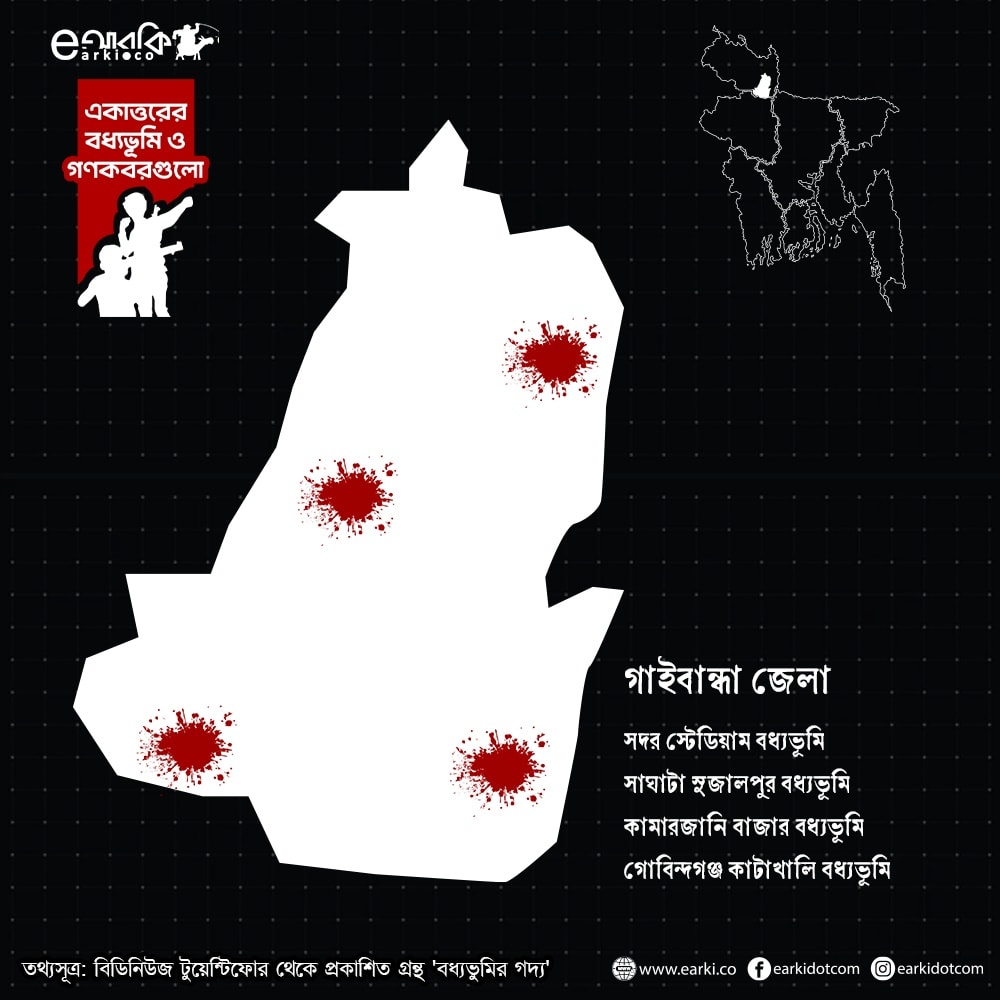
Killing Fields of Gaibandha District
Map of killing fields in the district.
During the Great Liberation War in 1971, Gaibandha district became known as a grim field of organized barbarity committed by the Pakistani occupation forces and their local auxiliary forces—the Razakars, Al-Badr, and Al-Shams. Strategically important due to its communication routes, railway lines, and waterways in the northern region, this geographically vital area was heavily militarized. Consequently, the Pakistani army established strong bases here and unleashed a reign of terror across surrounding settlements. Their objective was to suppress Bengali aspirations for independence, instill fear in the common people to break resistance, and destroy the social foundation of freedom fighters.
To achieve this goal, they conducted operations in towns, ports, railway stations, educational institutions, market areas, and remote villages. Suspected freedom fighters, students, teachers, farmers, and laborers—none were spared from their cruelty. People were dragged from their homes and detained in military camps, subjected to inhuman torture, and many were subsequently shot dead or secretly buried. Countless women fell victim to rape and sexual violence, which served as a planned weapon of war. Numerous people went missing, and the locations of their graves remain unknown to this day.
The killing fields and mass graves scattered across Gaibandha district stand today as silent witnesses to the harsh realities of that era. Whether pond banks, railway tracks, school grounds, or abandoned fields—these places once turned into death traps. Post-war local recollections, eyewitness accounts, and recovered human skeletons have clarified the history of these sites. To this day, these places are not only symbols of grief but also historical documents—reminding future generations of the horrific genocide committed against humanity and, simultaneously, the depth of the Bengali people's sacrifice for freedom.
Helal Park Killing Field
During the Liberation War, the Helal Park area in Gaibandha town became a notorious killing center for the Pakistani occupation forces. Relatively secluded and controlled within the town, this location was used by the army for detention and execution. Innocent Bengalis rounded up from various areas—including students, businessmen, laborers, and suspected freedom fighter sympathizers—were brought here, tortured, and killed.
According to statements from local eyewitnesses and post-war investigations, several Pakistani army officers were directly involved in this carnage. Among them, the names of Major Mahmud, Major Afzal, Lt. Newaz Rizvi, Major Tehsin Mirza, and Major Sher Khan have been locally cited. Under their leadership, after subjecting detainees to physical and mental torture, many were lined up and shot. Efforts were made to quickly remove bodies or bury them secretly so that direct evidence of the incidents could be erased.
An important eyewitness account of this nightmarish event came from a student named Shahin, who miraculously survived. Severely injured, he managed to escape, and his subsequent accounts brought to light many unknown details of the Helal Park massacre. His testimony played a special role in preserving local post-war history. Today, the Helal Park area is not just a geographical location—it is a mournful memorial in Gaibandha's liberation history, bearing silent witness to the sacrifice of innocent people and the brutality of the Pakistani forces.
Kafil Shah Godown Killing Field
During the war, the vast open field adjacent to Kafil Shah Godown in Gaibandha town became a vital killing center for the Pakistani occupation forces. Innocent people rounded up from the town and surrounding rural areas were detained, tortured, and subsequently killed here. According to local descriptions, new detainees were brought here almost every day, many of whom never returned alive.
Following independence, searches conducted with the assistance of locals proved the existence of a mass grave at this site. Human bones, used clothing, blood-stained handkerchiefs, torn saree pieces, and even women's hair were unearthed from beneath the earth—bearing grim testimony to the barbaric torture committed here. In particular, incidents of sexual violence against women left deep scars in local memory. The Kafil Shah Godown area is thus not merely a killing field, but a tragic monument to war crimes and crimes against humanity.
Kashiabari Killing Field, Palashbari
Kashiabari village in Palashbari Upazila fell victim to horrific atrocities by the Pakistani occupation forces and their collaborators in 1971. Raids on the village, arson in homes, looting, and indiscriminate rounding up of people became routine. According to locals, the entire village was attacked in several phases, with around 700 families directly or indirectly caught in this violence.
One of the most tragic incidents took place on the grounds of Kashiabari High School. According to eyewitnesses, numerous villagers were gathered there and killed with bayonets and firearms. Many were killed after torture, while the bodies of others were left in mass graves. Rape and physical abuse were inflicted upon women, creating lasting scars on the village's social and psychological fabric. Today, Kashiabari is not just a village—it stands as a poignant memorial of genocide and human rights violations committed during the Liberation War.
Kashiabari Killing Field, Palashbari, Gaibandha.
Bharatkhali Killing Field
The Bharatkhali area of Gaibandha district turned into a brutal execution site during the war. Choosing secluded regions beside the railway tracks, many innocent people were brought there and shot dead. According to eyewitnesses, bodies were quickly buried after execution so that no trace of the events remained. When searches were initiated with local initiatives after independence, proof of mass graves was discovered here.
Among the victims, the names of Ekram Uddin, Bijoy Chandra Moitra, and several others are preserved in local memory. Their family members searched for their loved ones in vain for a long time; following the discovery of the mass graves, this site became permanently linked with the memory of the martyrs. The Bharatkhali killing field stands as a silent witness to that brutality to this day.
Old Fulchhari Killing Field
The old settlement area of Fulchhari turned into an important torture and killing center during the war. According to local accounts, countless people brought from various parts of the country were detained here and killed after severe physical and mental torture. It is estimated that over a thousand people lost their lives at this site.
Following independence, locals and freedom fighters identified the mass grave and built a monument there in memory of the martyrs. This memorial still compels passersby to pause and reminds them of the brutal history of those dark times.
Nayaghat Killing Field
The Nayaghat area under Saghata police station turned into a site for covert executions during the war. Freedom fighters and suspected pro-independence civilians were brought here, killed, and secretly buried, locals state.
Post-war local searches and elders' testimonies gradually brought the history of this place to light. Nayaghat is known today locally as an important killing field where the memories of numerous unidentified martyrs lie hidden beneath the soil.
Bonarpara Railway Junction Killing Field
Bonarpara Railway Junction was a strategically important area occupied by the Pakistani forces during the war. According to locals, detainees were subjected to unspeakable torture here before being brutally killed. Among the most horrific details is the incident of burning people alive using the fire of coal-fired railway engines.
After executions, bodies were secretly buried near the railway tracks. When post-war searches revealed human remains, the nightmarish history of this site was exposed. The Bonarpara Junction is thus a hair-raising memorial of war atrocities.
Trimohoni Ghat Killing Field
Multiple clashes and killings occurred in the Trimohoni Ghat area during the war. In a frontal battle on October 24, 12 freedom fighters and Forek Ali were martyred. When their bodies lay on the battlefield, local courageous villagers risked their lives to retrieve them.
Later, the bodies of the martyrs were buried in the graveyards of Ramnagar and Muktinagar villages. Trimohoni Ghat is thus not merely a battlefield, but a unique monument of supreme sacrifice and local civilian courage.
Kamarjani Dam Killing Field
The area adjacent to the Kamarjani village dam turned into a mass graveyard during the war. According to locals, at least seven martyrs were killed here and buried together. For a long time, this place silently carried the memories of the martyrs.
However, due to severe erosion by the Brahmaputra River, the visible signs of this killing field have currently vanished. Yet, the place remains alive in local memory as a sacred and sorrowful monument.
Sundarganj Killing Field
The area adjacent to the Sundarganj police station Shahid Minar turned into a major killing center for the Pakistani forces during the war. According to local accounts, at least 18 UP chairmen and members along with over a hundred people were rounded up and killed here. Many were shot after torture and given a common mass burial.
Following independence, the area was identified as a mass grave, and commemorative markers were established in honor of the martyrs. The Sundarganj killing field remains a solemn monument of grief, respect, and history for local residents.
Sundarganj Killing Field, Gaibandha.
Katakhal Bridge Park Killing Field
The Katakhal Bridge Park area under Baliabari police station is known as a horrific center of brutality by the Pakistani forces. During the Liberation War, particularly brutal torture was inflicted upon women here, and countless innocent people were killed. According to local estimates, over 500 people lost their lives here during the nine months of the war.
On the southern side of the park, there is a large mass grave where the bones of the victims lie concealed beneath the earth. This killing field still stands in silence as a witness to that horrifying history, firmly established in local memory as an integral part of grief, sorrow, and unforgettable history.
The killing field adjacent to Abdul Hamid Stadium in the district town, Gaibandha, left unprotected.
Joypurhat District Killing Fields
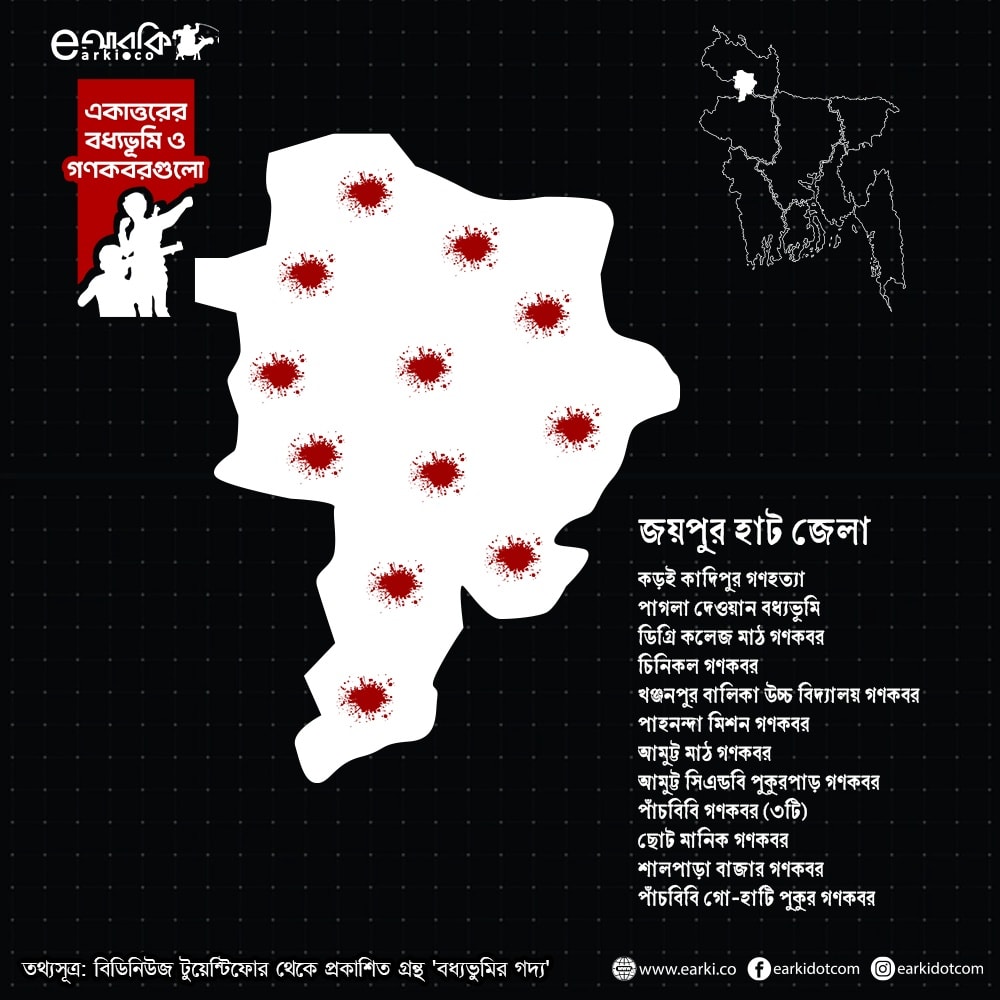
Map of the district's killing fields.
During the 1971 Liberation War, Joypurhat district turned into one of the main killing grounds for the Pakistani occupation army and their local collaborators. Thousands of innocent people—children, women, and the elderly—were murdered across the district and surrounding areas. Even though many refugees tried to escape to India through Joypurhat (then a sub-division of Bogura district), Pakistani troops carried out a nine-month campaign of slaughter, looting, and destruction, burying many refugees in mass graves.
A total of 52 killing sites have been identified in Joypurhat, with four specifically marked and preserved by the government. Memorials have been built with government funding at these sites to honor the martyrs, standing as enduring symbols of the nation's wartime suffering and the public's courage against oppression.
Places like the Kuthibari Bridge in Sadar upazila, the east side of the sugar mill pond, the Khetlal upazila parishad premises, and the banks of the Choto Jamuna River in Panchbibi upazila bear witness to how Pakistani forces and their accomplices wiped out thousands of innocent lives in mass graves. These spots still stand as silent witnesses to the ultimate sacrifice of the martyrs and remain a vital piece of local liberation history.
Korai-Kadipur Killing Field
Roughly 5 kilometers from Joypurhat town, two small villages named Korai and Kadipur in Sadar thana's Bombu union became horrifying centers of brutality by the Pakistani army and local Razakars and Al-Badr collaborators during the 1971 war.
On Monday, April 26, at around 10 AM, the occupiers lined up about 371 Hindu potters living in these two villages and opened fire on them indiscriminately. Alongside the mass killings, they set fire to the houses, turning that terrifying day into a lifelong nightmare for the village.
Korai-Kadipur killing field memorial, Joypurhat.
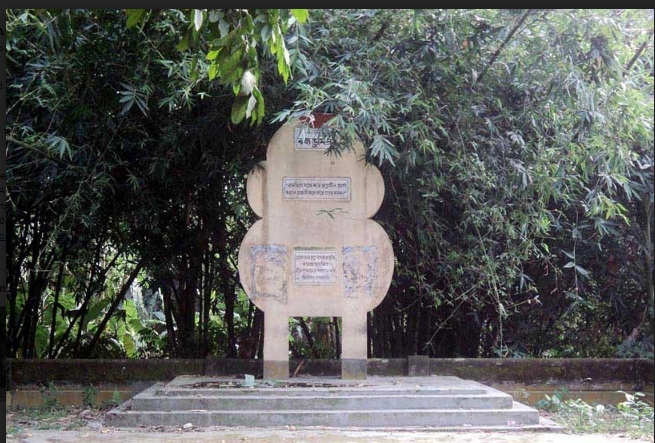
According to locals, while many of the martyrs' families survived, the stories of this massacre have been passed down through generations. After the war, a memorial monument was built here, which still stands as a silent witness, reminding people of the horrors of the war and the supreme sacrifices of the martyrs through its trail of death.
Pagla Dewan Killing Field
Pagla Dewan village is about 10 kilometers east of Joypurhat town, surrounded by border-adjacent villages like Chok Borkot, Khas Pahanonda, and Chirla. The occupation forces started keeping an eye on these villages from April '71. Abu Salem Mia from Chirla village, a spirited young man during the war, recalled: "We thought if we could kill a few occupiers or blow up their vehicles with bombs, they’d be too scared to come into our area. So we planted dynamite along the Pakistani army's patrol route." On a Monday afternoon, when a Pakistani military truck passed over it, the dynamite exploded and blew the vehicle apart. Four or five Pakistani soldiers died instantly, and another 14 were wounded.
Mozammel Haq, Abed Ali—who survived the mass grave—and other residents explained that following that incident, on Friday, June 18, soldiers and Razakars rounded up 150 to 200 people returning home from Friday prayers at the mosque, along with officials from the fields. Following orders from the peace committee, villagers were told to stand in two lines without fully understanding why. Spared as peace committee members in one line, the other group of 40 to 45 men was subjected to brutal torture. First, they were forced to walk over a pile of toxic, thorn-filled brush (locally known as "kata khura"). Anyone who fainted was dragged by the feet to an abandoned house nearby.
Selim Mia from Chirla village, who survived the mass grave, shared that he and 5 to 7 others were ordered to dig a trench. Once a pit about 4 or 5 arms long, 10 to 12 arms wide, and 4 or 5 arms deep was ready, the men who had passed out from the thorn poison were slaughtered and thrown in. Selim said he and the other trench-diggers were eventually killed the exact same way and tossed into the pit. "Then it started raining, so the Pakistani soldiers went back to their camp. Darkness fell after evening. When I regained consciousness in the rainwater, eight of us managed to escape the mass grave with our injuries."
Another independent report states that Pakistani forces and their accomplices killed 4,000 people in Pagla Dewan, violated the honor of 1,000 women, and destroyed countless homes. Evidence of Pakistani brutality remains visible in Pagla Dewan and nearby villages like Chok Borkot, Namuzanidhi, Punonda, Nopara, Chirla, Rupanarayanpur, Jogodishpur, Bhutiyapara, and Mollikpur. A killing field was discovered about 25 paces away from the shrine, where countless people were murdered and buried. The brick-lined well on the west side of the shrine was packed with corpses. Hundreds of Bengalis lost their lives to Pakistani troops while trying to flee to India. Sometimes, 70 to 80 bullock carts loaded with passengers fleeing toward India were intercepted and shot dead. Every single day, women from the villages were dragged to bunkers built around the shrine and raped repeatedly for days. After independence, saris, blouses, and other items were found scattered nearby.
(Source materials collected by the Liberation War Museum: Juddhoporadh Gonohottya o Bicharer Onneshon by Dr. M. A. Hasan, p. 424; Liberation War Encyclopedia, Vol. 2, ed. Muntassir Mamoon, pp. 352–353; Ekattorer Bodhyabhumi o Gonokobor by Sukumar Biswas, p. 102; Daily Sangbad, April 16, 1994)
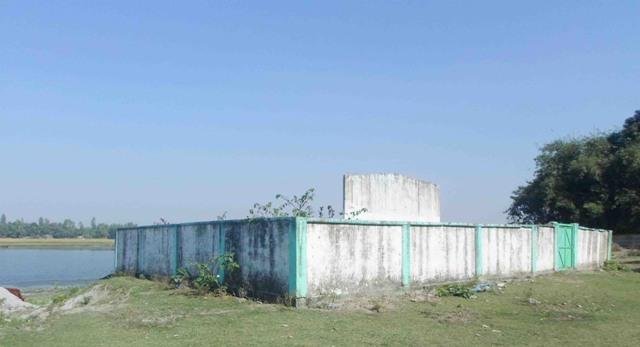
Pagla Dewan killing field, Joypurhat.
Selim Mia, the survivor from Chirla village, noted, "Right here in Pagla Dewan, within about 100 yards of that mass grave, there is another one." When the war broke out, thousands of Hindu men and women fleeing toward India through the Pagla Dewan corridor from Pabna, Sirajganj, Natore, and other parts of the country were gunned down by the Pakistani army. Eyewitness Emdadul Hossain from Khas Pahanonda village and Freedom Fighter District Unit member Afsar Ali stated that back then, 200 to 300 Hindu women riding in bullock carts toward India were seized by the occupiers, locked up in abandoned village houses to be gang-raped through the night, and shot dead in the morning. Stray dogs and jackals scavenged on the bodies. Those semi-composed bodies and skeletons were collected and placed in this mass grave. Two mass graves are preserved at Pagla Dewan.
Amutt Killing Field
Located right by the railway gate playground in Akkelpur upazila, the Amutt killing field turned into a site of brutal slaughter by the Pakistani army and local Razakars and Al-Badrs during the 1971 Liberation War. At least 20 freedom fighters and countless innocent freedom-seekers were shot dead here indiscriminately, with many suffering throat slitting and extreme torture. On top of that, Razakars used to stop trains here to loot belongings and drag away young men to be killed, creating an atmosphere of sheer terror across the entire area.
Officially, the names of eight martyrs are recorded for this mass grave, though many others remain buried anonymously. The eight remembered individuals are Sabers Zowardar (Gopinathpur), Mokleshar Rahman, Nobir Uddin (Bandighor), Nojer Ali Pramanik, Noshir Pramanik, Acher Pramanik, Dr. Bumchan, and Tofazzal Hossain (Tofa).
Renowned filmmaker and Akkelpur freedom fighter Montazur Rahman Akbar noted, "Many of the fallen martyrs were buried together inside a single mass grave. For many years after the liberation war, this place remained isolated and neglected. Later, in 1996, the Upazila Nirbahi Officer of Akkelpur and freedom fighter Noor Hossain Talukdar took the initiative to build a memorial on top of this mass grave, which still stands as an unmistakable monument to the martyrs' sacrifice for locals and visitors alike."
Nandoil Killing Field
Situated in Nandoil village within Dharanji union of Panchbibi upazila, the Nandoil killing field tells the story of the indigenous community of this area who fell victim to Pakistani brutality right at the start of the 1971 war. When Pakistani troops began their rampage in the village starting in April, local indigenous residents fought back to defend themselves using bows and arrows.
Because of the bravery of local indigenous youth, several enemy soldiers were injured. While fighting for independence, these brave souls were targeted and shot by Pakistani troops, resulting in several martyrdoms. Furthermore, villagers who got captured were brutally murdered and dumped into a pit.
Since no proper eyewitness accounts were fully documented, the exact number of martyrs or mass graves remains unconfirmed. However, local figures—such as former Dharanji union chairman and Awami League leader Golam Mostafa and cultural activist Aminul Haque Babul—estimate that at least eight indigenous people were martyred.
The Nandoil killing field remains a silent witness to that terrifying era. It serves as an important local reminder of the martyrs' sacrifices and plays a key role in preserving the memory of the liberation war.
Bogura District Killing Fields
Map of the district's killing fields.
Ramshahar Mass Grave
Marking a brutal massacre that took place in early December 1971 in the Ramshahar area, this mass grave holds 11 martyrs. According to local accounts and eyewitnesses, late at night on December 6, the Pakistani army—aided by local collaborators Motiur Rahman, Jabed Ali, and Osman Maulana—grabbed three freedom fighters and members of their families. They subjected them to unspeakable torture before shooting them dead. Locals noted that women and children were among the victims. Early the next morning, villagers took the risk of collecting the bodies and burying them together. This mass grave testifies to the brutality of the Pakistani forces even at the very end of the war.
Babur Pukur Killing Field
Babur Pukur in Bogura is deeply intertwined with the memories of 1971. Located roughly 12 kilometers south of Bogura town in Khorna union, Shahjahanpur upazila, this spot is a sorrowful yet proud monument to the country's liberation struggle. On November 11, 1971, the Pakistani army carried out a heinous massacre here, marking a profoundly painful chapter in Bogura's history.
Prior to the incident, the Pakistani army issued a "red alert" in Bogura town's Thanthania, Shahpara, Tentultala, Hajipara, and Pasharipara areas. Their local lackeys and so-called peace committee members helped identify and arrest local freedom fighters and pro-independence individuals based on pre-made lists. During the calculated sweeps, freedom fighters were rounded up step by step and hauled in military convoys to the secluded, date-palm-surrounded area of Babur Pukur.
Abstract Ribs, Babur Pukur killing field, Bogura.
Just before the Fajr call to prayer, the prisoners were lined up and gunned down in a firing squad. Even after they collapsed onto the ground, the occupying forces didn't stop—they made sure the victims were dead by stabbing them with bayonets. This cruelty was part of the occupying force's strategy to break local resistance and spread fear among the public.
Among the brave sons of Bogura martyred in this brutality were Mahfuzur Rahman, A. Mannan Pashari, A. Hannan Pashari, Wajed Rahman Tuku, Jalal Mondal, Montu Mondal, Abdul Sobur, Saiful Islam, Altaf Ali, Fazlul Haque Khan, Badshah Mia, Abul Hossain, telephone operator Nurjahan Laxmi, and one unidentified patriot. Their sacrifice remains etched forever in Bogura's liberation history.
Virginia Tobacco Mill Mass Grave
The Virginia Tobacco Mill in Bogura was an industrial facility that turned into a temporary camp and torture center for the Pakistani army in 1971. Workers, passersby, and suspected freedom fighters were dragged into the mill compound, tortured, and killed. Traces of mass graves have been found at the southwest corner, the east-south corner of the soap factory, in front of the warehouse near the power section, and next to the boiler. Local researchers estimate that over 100 people were killed here. Converting an industrial plant into a killing center exemplifies the calculated barbarism of the occupying forces during the war.
Circuit House Killing Field
The Bogura Circuit House served as a control center for the Pakistani military in 1971. Countless men and women were dragged here and subjected to torture under the guise of interrogation. Many died from the abuse, while others were shot dead and secretly buried. Because the Circuit House was a vital administrative location, seizing it allowed the Pakistani army to terrorize the local population and strip them of leadership.
Talora Killing Field
Talora port in Bogura district was a major military outpost for the Pakistani army. Innumerable innocent people were killed in various spots, including the banana orchard pond, Durgadaha's Padma Pond, and Kotpitlapur pond. Locals report that people picked up from various villages were lined up by riverbanks or ponds and shot from behind—a standard execution method of the Pakistani forces. Reportedly, 14 people, including a father and son, were killed in a single night at Padma Pond. The Talora killing field proves how the occupation army methodically used communication hubs and ports to enforce terror and slaughter.
Memorial built by locals at Talora (Padma Pond) killing field, Bogura.
Police Lines Killing Field
The Bogura Police Lines served as yet another torture and execution center. Various studies and memoirs mention that Pakistani forces and their collaborators killed massive numbers of people in Bogura and secretly buried them across different locations. While local references point to roughly 25,000 killings, exact statistics are still being researched. Many individuals detained at the Police Lines were never seen alive again.
WAPDA Killing Field
In the secluded area of WAPDA (then the Water and Power Development Authority), numerous people were brought in, tortured, and killed before being buried. The area was relatively quiet, making it convenient for hiding executions. Locals later marked the site as a killing field.
Santahar Killing Field
The Santahar railway junction was a key communications hub in the northern region. On April 22, 1971, Pakistani forces torched Santahar town and surrounding villages and launched a massive slaughter. Numerous homes were burned down, and hundreds of innocent people were killed. The Santahar massacre ranks among the largest atrocities in the northern region.
Sukhan Pukur Killing Field
In Sukhan Pukur village, the Pakistani army and their collaborators shot and killed 110 innocent villagers. People were also rounded up and murdered from surrounding villages like Kamuil, Ghona, Gokul, and Madla. This mass killing served as an example of village-level genocide intended to shatter civilian resistance through terror.
Gabtali Killing Field
Multiple mass graves have been discovered across Gabtali upazila. The Pakistani army ran operations across rural areas, killing many people and burying them covertly. It is believed that many sites still await full investigation.
Sonatala Killing Field
Sonatala upazila also features multiple killing fields and mass graves. Local information indicates that many people were killed during operations there throughout the war. Preserving and studying these sites is essential.
Shibganj Killing Field
Many people went missing during Pakistani army operations in the Shibganj area. Locals believe that conducting proper searches would uncover countless skeletons and mass graves. Due to long-term neglect, many of these sites remain unmarked.
Ghona Killing Field
In Ghona village, the Pakistani army slaughtered numerous innocent people. Locals report that mass graves are scattered throughout the village, and the site is thought to be linked to the Sukhan Pukur massacre.
Chelopara Shanti Nursery Killing Field
People pulled from Chelopara, Norioli, Ichhaidaha, Akashtara, and other villages were brought near the Shanti Nursery and killed. Mentions of roughly 130 deaths exist here. It was a well-organized massacre, with local collaborators heavily implicated.
Chelopara Well Killing Field
Eyewitness accounts note that people were slaughtered and thrown into four or five covered wells near the Chelopara well. Human skeletons were later found inside these wells according to local lore.
Railway Station Killing Field
The Bogura railway station and surrounding areas practically turned into a "slaughterhouse" in 1971. Wells and abandoned structures at the station were used to dispose of the bodies of detained individuals who were executed. According to local sources, the station's sweeper, Dashin Jamadar, dumped 400 to 500 bodies into a well. Because of the railway's strategic importance, the Pakistani military commandeered the spot to carry out executions and make bodies disappear.
Railway station killing field monument, Bogura.
Ganguli Bagan Killing Field
Ganguli Bagan is recognized as one of the most horrific killing fields in Bogura town. The Pakistani army regularly brought prisoners here to be killed. Descriptions from Sadhu Baba Jugal Kishore Goswami reveal that even the sadhus of the ashram were not spared after Bogura was captured. Sundar Sadhu, Mangal Sadhu, and Monindranath Sarkar were shot dead, and numerous bodies were dumped into a covered well near the ashram. Eyewitnesses reported that human skeletons and skulls remained visible in the well for a long time. The Ganguli Bagan killing field stands as a tragic record of urban-scale slaughter during the war.
Naogaon District Killing Fields
Map of the district's killing fields.
Taj Cinema Hall Killing Field
The area adjacent to Taj Cinema Hall in Naogaon Sadar upazila turned into a secret torture and execution center during the 1971 Liberation War. Passing the old veterinary hospital northward, a small mosque and the adjacent building—where a Bihari businessman named Idris lived—are identified by locals as a killing field. According to eyewitnesses, evidence of brutal killings was found in two rooms of the house; hanging ropes in one room and bloodstains in another remained visible for a long time. It is alleged that the Pakistani occupation army and their local collaborators brought captured Bengalis here to torture and slaughter them. Bloodstains on the windows and memories of bodies dumped in the nearby unpaved well are widely recounted by locals. After independence, local residents reported finding the remains of numerous unidentified Bengalis there. The site still stands as a silent witness to brutality.
Ataikula Mass Grave
Ataikula village, situated by the Choto Jamuna River about 16 kilometers away from Naogaon town, fell victim to a horrific massacre on April 25, 1971. The Pakistani army surrounded the village and lined up about 80 villagers in the courtyard of Jogendranath Pal's house. When firing squads opened fire in two waves at noon, many died on the spot. Reportedly, 28 people survived with severe injuries. The next day, on April 26, locals including Bhabeshwar Pal took the initiative to complete a mass burial of 52 martyrs. The Ataikula mass grave stands as one of the documented genocide memorials of the Naogaon region.
Ataikula mass grave, Naogaon.
Pathshala School Killing Field
The area near Paar Naogaon Pathshala School in Naogaon Sadar is a tragic example of atrocities committed against women in 1971. According to local sources and memoirs, the bodies of many young women aged 14 to 30–35 were found here. The area had a large water well, in the adjacent room of which young women were detained, tortured, and raped day after day. It is alleged that many were subsequently slaughtered or thrown alive into the well. Locals reported that human remains were recovered from the well after independence. This killing field stands as a burning testimony to the organized sexual violence of the war.
Rauf Miah's Garden Killing Field
Located to the east of Mordula Girls' High School, Rauf Miah's garden is also known as a site of mass slaughter in 1971. Being a secluded garden area, locals recount that the Pakistani army and their collaborators brought detained individuals here to execute them in secret. Signs of a mass grave were reportedly found here after independence. Although the site has changed significantly due to a lack of proper exploration and preservation, it remains important as a historical witness.
Dr. Hasan's House Killing Field
The abandoned land situated at the east-south corner of Dr. Hasan Ali's house gained attention in the post-independence period when locals reported finding countless bodies there. It is believed that the Pakistani army and their collaborators killed many people in this secluded spot and buried them secretly. Although human settlement has developed there now, this site bearing the memories of the liberation war warrants proper preservation and research.
South Para Killing Field, Dogachi Village
South Para in Dogachi village of Naogaon district was known as a major execution center in 1971. The Pakistani army dragged countless Bengalis from surrounding areas—including Pirojpur, Khidirpur, Chandipur, Trimohoni in Raninagar upazila, and Bolirghat, Shimulia, Ilishbari, and Sultanpur in Naogaon upazila—and brutally killed them here. According to locals, many mass graves are scattered here, the complete cataloging and preservation of which have yet to be completed.
South Para killing field, Dogachi, Naogaon.
Bolihar Union Killing Field
Signs of wartime genocide are found in various parts of Bolihar union in Naogaon. It is locally recounted that the Pakistani army carried out raids in rural areas, killing many people and burying them covertly. Initiatives to identify and preserve these killing fields are necessary so that history is not distorted and future generations can learn the accurate facts.
Pakuria Killing Field
According to local sources, on August 28, 1971, the Pakistani army and their collaborators killed 128 freedom-loving people in the Pakuria area of Manda upazila in Naogaon district. The incident was a planned massacre intended to spread terror across the area. Many bodies were reportedly buried in mass graves.
Pakuria killing field, Naogaon.
Halimnagar Killing Field
A mass grave of 36 indigenous people is locally recognized in the Halimnagar area of Patnitala upazila in Naogaon district. In 1971, the Pakistani army did not spare the indigenous community either; villages were attacked under the pretext of sheltering suspected freedom fighters, and many innocent people were killed. The Halimnagar mass grave is an important document of the multinational and universal character of the liberation war.
Natore District Killing Fields
Map of the district's killing fields.
Fruit Garden Killing Field
During the 1971 Liberation War, Natore town turned into a major military base for the Pakistani army. It is locally recounted that their Sector 2 military operations were directed from here. Since the fruit garden area of Natore town was a secluded and strategic location at the time, the Pakistani army used it as a killing field. Freedom-seeking people and suspects were dragged from various districts across North Bengal—Rajshahi, Pabna, Bogura, Naogaon, and surrounding regions—and brutally murdered here. Many were shot, while others were killed after torture and buried in mass graves. The fruit garden stands today as a silent witness to wartime atrocities.
Bhagar Killing Field
The Bhagar area of Natore is known as another execution site of the Pakistani army in 1971. According to eyewitnesses and local researchers, detained Bengalis from various parts of North Bengal were brought here and killed. Because the area was relatively secluded, it was easy to bury bodies secretly. The existence of multiple mass graves is known locally, though a complete list of all of them has yet to be compiled. The Bhagar killing field is an important document of organized genocide committed in the northern region.
Riverside Graveyard Killing Field
The riverside graveyard in Natore town was also used as a killing field during the war. According to local accounts, the Pakistani occupation army brought people detained from various areas here to kill them, hiding the bodies under the cover of the graveyard. Since it was a cemetery, digging new graves or finding elevated earth seemed normal—taking advantage of this to conceal executions. After independence, the area was identified as a memorial site of genocide.
Shatani Village Killing Field
Shatani village in Natore fell victim to a devastating massacre on June 3, 1971. According to local accounts, the Pakistani army, led by non-Bengali Hafeez Abdur Rahman, surrounded the village late at night. The operation began around 2 AM; villagers, regardless of men and women, were tied up and gathered together. Indiscriminate shooting and torture were carried out from 5 AM to 9 AM. According to elderly witness Nalinikant, the death toll was roughly 442. This is recognized as one of the largest massacres in the Natore region, leaving a permanent scar on local life.
Shatani village killing field, Natore.
Rampura Canal Killing Field, Bonpara
The area adjacent to the Rampura canal in Bonpara turned into a horrifying site of genocide in 1971. On May 2, many destitute men, women, and children took shelter at a nearby mission. On May 3, they were attacked under the leadership of Pakistani Punjab Regiment Major Sherwani and local collaborator Hafeez Abdur Rahman. Local sources note that about 157 people were killed that very night. Bodies were left by the canal or buried. The Rampura canal is a poignant memorial to the wartime genocide in North Bengal.
The Gopalpur North Bengal Sugar Mill area in Lalpur upazila witnessed a brutal massacre on May 5, 1971. The Pakistani army lined up about 50 officers and employees of the sugar mill and opened fire; 46 of them were martyred. The bodies of the victims were buried by the pond adjacent to the sugar mill. Many more people were killed here at various times up until December 16. After independence, numerous skeletons of martyrs were recovered from the pond and surrounding areas. Later, the pond was renamed "Shaheed Sagar," which today stands as a historical site intertwined with the memories of the liberation war.
Gopalpur Sugar Mill killing field, Natore.
Baora Railway Bridge Killing Field, Lalpur
Situated between Ajimnagar and Abdulpur, the Baora railway bridge became known as a "vast cremation ground" during the war. Mass detainees captured from Abdulpur, Malanchi, Arani, Lokmanpur, Yasinpur, Gopalpur, Ishwardi, and Natore were brought here and executed. Locals report that many were shot with their hands and eyes bound, while some bore bayonet wounds or throat-slitting marks. Although bodies washed away in the river currents, some remained trapped on the banks. The Baora bridge is a terrifying symbol of planned genocide committed in the northern region.
Sirajganj District Killing Fields
Map of the district's killing fields.
Horinagopal and Bagbati Village Killing Fields
On May 31, 1971, Horinagopal and Bagbati villages fell victim to a coordinated attack by the Pakistani army. According to the account of eyewitness Mongol Malakar, the Pakistani army, with the help of local collaborators, first opened fire from a spot near the Bagbati Union Parishad office, then entered the villages to indiscriminately shoot and torture sleeping people. Incidents of abuse and rape of women also occurred. Numerous houses were burned down. Although initial information regarding about 80 martyrs was found, it is believed the actual number could be higher. This massacre created terror across the entire region and shattered many families forever.
Bagbati killing field monument, Sirajganj.
Launch Ghat Killing Field
During the 1971 Liberation War, the Sirajganj Launch Ghat was a strategic position for the Pakistani occupation army. Since the Jamuna river route was one of the primary communication mediums for the northern and southern regions, holding the launch ghat was part of their military plan. They used this location as a suitable center to carry out executions after detention and torture. Freedom-fighter supporters, students, political activists, and suspected ordinary people dragged from various areas were brutally slaughtered or shot here. In many cases, victims were thrown into the river with their hands and feet tied to erase evidence. Instances of bodies floating down the river and being recovered in downstream areas are also preserved in local memories. Thus, the launch ghat became known to locals as a "slaughterhouse" and stands as a poignant memorial to genocide in the Sirajganj region.
Sub-Jail Killing Field
The Sirajganj Sub-Divisional Sub-Jail turned into a torture center for the Pakistani army during the war. They used the administrative building as a temporary prison and interrogation center. Political activists, students, freedom-fighter supporters, and progressive individuals were detained and brought here. Torture methods included beatings, electric shocks, starvation, and other forms of physical abuse. Many prisoners were never seen returning alive. Locals believe bodies were secretly buried inside and around the sub-jail. Accounts of human remains being recovered at various times after independence are widespread. The sub-jail killing field proves that the occupying force transformed administrative infrastructure into an instrument of terror.
Baboti Killing Field
Baboti village in Sirajganj Sadar upazila fell victim to a devastating massacre in May 1971. The Pakistani army surrounded the village and opened fire indiscriminately. According to local sources, about 170 villagers were killed. Many were dragged from their homes, lined up, and shot. Countless houses were burned down through arson, leaving villagers destitute. Women and children were not spared from this brutality either. Attempts were made to erase the marks of the massacre by burying bodies quickly or dumping them in secret locations. The Baboti killing field is an important document of planned village-level genocide.
Boroitala Killing Field
The Pakistani army carried out widespread arson and genocide in Boroitala village of Kazipur upazila. According to local accounts, about two hundred houses were torched, and roughly 200 innocent people were killed. The nature of the killings was extremely brutal—many were pulled out of houses and shot, while others burned to death in the fires. This incident not only caused a humanitarian catastrophe but also devastated the area economically. The Boroitala killing field is one of the memorials of wartime brutality committed in the Kazipur region.
Shahjadpur Mass Grave, Garadah Village
A mass grave was discovered after independence on the west side of Garadah Girls' High School in Garadah union under Shahjadpur upazila. While digging soil on the land of owner Azim Pramanik's abandoned house, human limbs, skulls, and bones emerged from a few feet below. Locals believe the Pakistani army and their collaborators killed detained people here and buried them secretly in 1971. The incident created deep grief and anger in the area, and the spot was identified as a mass grave. This discovery bears hints of many unknown chapters of the liberation war.
North Alokdia Killing Field
The area adjacent to the North Alokdia crematorium was used as a killing field in 1971. Being a cremation ground, digging new soil or burial activities there would not arouse suspicion—taking advantage of this, the Pakistani army killed detained people and buried them there, according to local accounts. Signs of mass graves were identified at various times after independence. Many families still look toward this site in search of missing relatives. The North Alokdia killing field is a silent yet powerful witness to crimes against humanity committed in the Sirajganj region.
Pabna District Killing Fields
Map of the district's killing fields.
WAPDA Power House Killing Field
The WAPDA office premises turned into a major base and torture center for the Pakistani occupation army in 1971. Unspeakable torture was inflicted on detained Bengalis here before they were killed, and bodies were secretly buried under the cover of night. Following independence, through excavation work initiated by local residents and the administration, numerous mass graves were discovered. Recovered human skeletons, clothing, and personal belongings bear silent witness to that brutality. Sweeper Bhanulal reportedly counted at least 16 human skeletons with his own eyes. The site remains a sorrowful memorial to genocide.
Bongshipara Mass Grave
Mazpara Bongshipara Ghat (Shaheed Kalam Nagar) is located in Atgharia upazila of the district. On November 6, 1971, a frontal battle took place at that ghat between freedom fighters and villagers against the Pakistani occupation army. A total of 40 ordinary villagers, including 12 brave freedom fighters, were martyred in this battle.
Bongshipara mass grave, Pabna.
BSCIC Industrial City Killing Field
Pabna's BSCIC Industrial City was a dreadful slaughterhouse run by Pakistani troops and their collaborators. Innocent people dragged from various areas were gathered here and shot indiscriminately. Many families were wiped out forever here. According to locals, thousands of people lost their lives at this site, and their bodies were hastily buried. After independence, digging the earth yielded countless skeletons and evidence, proving the horror of the genocide at this location.
Naga Demra Killing Field
In June 1971, the Pakistani army launched a planned attack on the Hindu-majority Naga Demra village. House-to-house searches were conducted to drag out women, men, and children. Many were taken to ravines and secluded spots near the village, lined up, and shot. Within a few hours, the village suffered about 400 casualties. Arson and looting turned the entire locality into a deserted place. This incident was a brutal massacre driven by communal animosity.
Nogorbari Ghat Killing Field
In April 1971, the Pakistani army established a permanent camp at Nogorbari and took control of the river route. Regular raids were conducted in surrounding villages from this base. People dragged to Nogorbari Ghat were tortured and killed, and many bodies were floated down the river. This riverside location quickly turned into a silent killing field. After independence, locals identified signs of mass graves here.
Ruposhi Killing Field
In the Ruposhi area, Pakistani troops killed many innocent people and put them in mass graves. Post-independence searches reportedly recovered skeletons of about 300 people. Eyewitnesses stated that truckloads of prisoners were brought here at night and shot. Although left neglected for a long time, demands subsequently arose from locals to preserve the site as a memorial.
Shaheednagar Dabbagan Mass Grave
Shaheednagar Dabbagan in Sathia upazila of Pabna district is renowned as a gateway to the capital Dhaka and the northern region. On April 19, 1971, a frontal battle took place here between freedom fighters and villagers against the Pakistani occupation army. In this battle, the Pakistani occupation army brutally killed about 200 freedom fighters and innocent villagers, including 19 EPR members. To preserve the memory of this battle at Dabbagan, the village has been named Shaheednagar.
Shaheednagar Dabbagan mass grave, Pabna.
Railway Pump House Killing Field
The abandoned railway pump house in Ishwardi was a major torture center and killing field. Detained individuals were brought here, subjected to inhumane torture, and killed. The bodies of martyrs were piled up or buried secretly in nearby locations. After independence, numerous bones and skeletons were found here, highlighting the terrifying history of the site.
Pakshi Hardinge Bridge Killing Field
Numerous pieces of evidence of genocide have been found beneath and across various spans of the Pakshi Hardinge Bridge. According to locals, many men and women were thrown off the bridge into the river or shot dead nearby. After independence, skeletons, saris, blouses, and shoes were recovered, pointing toward violence committed against women as well. Alongside its strategic importance in controlling the river and railway, this site remains a grim memorial to genocide.
Majhdia Village Killing Field
On April 11, Pakistani troops captured Ishwardi and raided Majhdia and Machpara villages. On the dawn of April 22, fire was set across the village. Houses were torched to block escape routes while innocent people were killed. Local sources indicate that about 500 people were killed. The entire area turned into ruins, and many families were left destitute forever.
Kormoja Mass Grave
A notable mass grave was discovered in Kormoja village of Sathia, where eight martyrs were buried together. Another mass grave was also identified in the local agricultural farm area. These graves, which remained unmarked for a long time, bear testimony to the brutality of the liberation war. Locals subsequently demanded the installation of commemorative plaques.
Fate Mohammadpur Killing Field
The existence of two separate killing fields was found in Mohammadpur—one for men and another for women and children. On April 12–13, 1971, a total of 31 people, including elderly Abdul Jabbar's family, were brutally killed and buried. Eyewitnesses stated that this killing was a planned expression of retribution. When the mass grave was uncovered after independence, the horror of the incident came to light.
Nazirpur Massacre
On December 1, the Pakistani army killed 62 innocent people in Nazirpur and burned down numerous houses. Terror spread across the entire area through this massacre. Additionally, many people were killed at Edward College, Himaitpur, Krishnapur, Hadol, and Satbaria killing fields. These places still hold the bloodthirsty memories of the liberation war and continue to demand proper preservation.
Killing Fields and Mass Graves in Chapainawabganj District
Killing fields of the district on the map.
Rehaichar Killing Field and Mass Grave
Located near Chapainawabganj town, the Rehaichar village turned into a major execution site for the Pakistani occupation army during the 1971 Liberation War. The Pakistani military entered the region in April 1971, launching widespread crackdowns and arresting supporters of the independence movement, students, farmers, and civilians to execute them. In the final stages of the war, a fierce battle took place here on December 14, 1971, where Bir Sreshtha Captain Mohiuddin Jahangir was martyred, making this area particularly significant in the history of the war. After independence, locals discovered a mass grave here, which has been preserved as a memorial to the martyrs.
Rehaichar Killing Field and Mass Grave, Chapainawabganj.
Shashanghat Killing Field, Shibganj
Situated by the Mahananda River, the Nawabganj Shashanghat was known as one of the most brutal execution sites of the Pakistani forces. From mid-1971, Pakistani soldiers and their local Razakar collaborators brought detained youths, students, and freedom supporters here. Many were tortured and shot to death, and local witnesses noted that several victims were slaughtered with sharp weapons. Afterward, the bodies were thrown into the Mahananda River to destroy evidence of the killings. This killing field remains an important historical reminder of wartime atrocities.
Baroghoria Mass Grave
A major massacre took place under the banyan tree in front of the ancient landlord’s kachari house in Baroghoria Union, Chapainawabganj Sadar Upazila. In 1971, the Pakistani army and local collaborators raided this area, killed many innocent villagers, and buried their bodies in a large pit. According to local researchers, the area also served as a temporary detention camp during the war. Although locals identified the mass grave after independence, much of it has since disappeared over time.
Rohanpur Stationpara Killing Field and Mass Grave
During the Liberation War in Gomastapur Upazila, the Pakistani army established a strong military base in Rohanpur. People arrested from various villages were brought and detained near the Rohanpur railway station area, where they faced brutal torture. Many were shot and buried on-site. Today, a monument stands here as one of the key memorials commemorating the martyrs of the war.
Gomastapur Mass Grave
Located by the canal next to the Gomastapur police station, this mass grave bears witness to a tragic killing on April 23, 1971. The Pakistani army and their collaborators raided the Hindu quarter, burned down numerous houses, and rounded up at least 35 innocent villagers. They were lined up by the canal and gunned down in a brushfire, with their bodies buried right where they fell. This event is considered one of the most brutal examples of genocide in the Chapainawabganj region.
Poragram Mass Grave
In mid-November 1971, the Pakistani army launched a devastating attack on Poragram and Doshorshia villages in Islampur Union, Chapainawabganj Sadar Upazila. They opened fire indiscriminately on villagers and burned down many homes. According to local sources and research, over 200 people were killed in this attack, and many were buried in various mass graves. This massacre is noted as one of the largest single killings in the region during the war.
Kashimpur Killing Field
Kashimpur was another execution site used by the Pakistani occupation forces, where countless individuals rounded up from different areas were brought and killed.
Dobshia Village Killing Field
In Dobshia village, the Pakistani occupation army brought people in from various places and brutally executed them.
Kalupur Killing Field
Kalupur served as another notable execution site for the Pakistani forces.
Sonamasjid Mass Grave
Numerous people were killed by the Pakistani army in the border area between Sonamasjid and Dakhil Darwaza in Shibganj police station. The mass grave was discovered after independence.
Sonamasjid Mass Grave, Chapainawabganj.
Killing Fields and Mass Graves in Mymensingh District
Killing fields of the district on the map.
Borobazar Kalibari Killing Field
The Kalibari temple located in the Borobazar area of Mymensingh town is identified as a known execution site. Two wide wooden planks were recovered from a room in Kalibari, bearing clear stains of dried blood. It is believed that innocent Bengalis were laid across these planks and brutally slaughtered. Numerous human skeletons were also recovered from the pond next to Kalibari. Furthermore, two wells near Kalibari were completely filled with human corpses. Inside these wells, human skeletons, decomposed bodies, severed heads, dismembered limbs, congealed blood, and an unbearable stench were all mixed together. While the exact death toll cannot be determined precisely, it is estimated that over 500 people fell victim to brutal executions at this site.
Kalibari killing field lying unprotected, Mymensingh.
Additional killing sites were found around the Mymensingh town dak bungalow, new market, Kewatkhali railway colony area, and riverside locations. Skeletons of over a thousand people have been recovered from these spots. Another notable incident involved a box full of human skeletons being found in a pond in the Saheb Quarter area. Near the town's Kachari Ghat, another killing field exists where the bodies of most killed Bengalis were dumped into the river. Many human skeletons and skulls were also recovered from the riverbank near the dak bungalow. Notably, an Al-Badr camp was reportedly set up in this dak bungalow area, from where these killings were directed.
Dak Bungalow Killing Field
The historic dak bungalow area in Mymensingh town served as a key military base for the Pakistani army during the war. Starting in late March 1971, the Pakistani forces set up camp here and used it to direct crackdowns, arrests, and murders across the town. Many innocent people were detained at the dak bungalow and later killed following torture. After independence, excavation along the riverbank beside the dak bungalow uncovered numerous human skeletons, bones, and skulls, marking this place as an essential wartime execution site.
Dak bungalow killing field and mass grave near the Zilla Parishad lying neglected, Mymensingh.
New Market Killing Field
The New Market area in Mymensingh town turned into a gruesome execution center during the war. Bengali youths, students, business owners, and ordinary citizens rounded up from various places were cruelly murdered here. In many cases, detainees faced extreme torture before being shot and secretly buried underground. Excavations after independence recovered hundreds of human skeletons from the area, clearly indicating that New Market functioned as a large-scale execution ground during the war.
Kewatkhali Railway Colony Killing Field
The Kewatkhali Railway Colony killing field (Mymensingh Sadar) is located about one kilometer east of the Mymensingh railway station. This was primarily a Bihari-dominated neighborhood. During the war, Razakars, Al-Shams, and Al-Badr forces, aided by local Biharis, turned this colony into an execution site. Countless innocent people were brought here, tortured severely, and killed.
As a major railway junction, Mymensingh station had a higher concentration of non-Bengali Bihari workers, officials, and staff than Bengalis. Because of shared linguistic backgrounds, these Biharis grew close to the Pakistani occupation forces during rail travel. Later, Al-Badr, Razakars, Al-Shams, and Biharis joined forces to carry out mass killings, choosing this colony by the Brahmaputra River as a suitable location. Freedom fighters, supporters of the independence movement, and ordinary civilians from across the country were brought here and killed after brutal torture.
Kacharighat Killing Field by the Brahmaputra River
Kewatkhali Railway Colony Killing Field and Mass Grave, Mymensingh.
On November 30, five freedom fighters were martyred in a face-to-face battle with the Pakistani army in Palashkanda village, Gouripur police station. Following the battle, Pakistani soldiers captured several villagers, including freedom fighters Siraj and Monju, and brought them to the Kewatkhali Railway Colony. They were handed over to the Bihari Al-Shams force for execution, mostly in a semi-conscious state. Bound by hands and feet, they were tortured extensively to extract information. Some had their fingers, ears, and genitals cut off, while others had their eyes gouged out. The Biharis celebrated these tortures sadistically before finally killing them.
The Kacharighat riverside along the Brahmaputra River in Mymensingh town was used as a killing field by the Pakistani occupation forces. Detainees brought from various areas were lined up and shot to death. Often, prisoners were tortured first and then thrown into the Brahmaputra River to erase evidence of the killings. According to locals, killings took place repeatedly throughout 1971 in this area, claiming the lives of countless innocent people.
Sahebpara Killing Field
The Sahebpara quarter area in Mymensingh town also stands as a silent witness to the brutality of the Pakistani forces during the war. After independence, a box filled with a large quantity of human skeletons was recovered from a pond in the neighborhood. Locals believe that before fleeing the town, the Pakistani army chopped bodies into pieces, packed them into boxes, and threw them into the pond to hide their crimes. This event remains a vivid and horrific example of wartime cruelty.
Shalihar Massacre
On August 21, 1971, the Pakistani army arrived on a special military train and launched a sudden attack on Shalihar village in Gouripur Upazila, Mymensingh District. Shalihar was a Hindu-majority village, so the Pakistani troops and their collaborators carried out arson, looting, and indiscriminate killings. At least 14 villagers were killed in this attack, including 13 Hindus and one Muslim. Among the victims was a notable resident named Nagendra Chowkidar. Many villagers were injured, and others were forced to flee to nearby areas to save their lives. This event is known as the Shalihar Massacre and is considered an important example of communal slaughter during the war.
Dorikrishnapur Village Killing Field in Muktagachha
Zoynal Ali (75), a survivor of the shooting and the son of a martyr's family from Dorikrishnapur village, stated that on August 2, 1971, the occupation forces and their collaborators attacked their village. That attack claimed the lives of 18 people, including seven members of his own family. He added that the killing field was identified a few years ago and a monument was built there, but regrettably, the names of the martyrs have not yet been inscribed on it.
Binodbari Mankon Village Killing Field in Muktagachha
During the war on Monday, August 2, local Razakars and Al-Badr members helped the occupation forces open fire indiscriminately across Binodbari Mankon village in Muktagachha, killing women, children, and members of Hindu families. They then set fire to the village homes. This marked the single largest massacre in Muktagachha in a single day during '71. Freedom fighters claim that 253 people were killed on that day.
Telikhali Mass Grave, Haluaghat
On November 3, a fierce frontline battle broke out between freedom fighters and Pakistani troops surrounding the capture of the Telikhali camp located on the Haluaghat border. In this five-hour bloody clash, eight brave freedom fighters and 21 members of the allied forces were martyred. Later, these fallen heroes were buried together in a mass grave in the Telikhali area. Although a commemorative plaque was built there in their honor, it currently sits in a neglected state.
Telikhali Mass Grave Memorial, Haluaghat, Mymensingh.
Killing Fields and Mass Graves in Jamalpur District
Killing fields of the district on the map.
Jamalpur Town Massacre
The Pakistani army entered Jamalpur town on April 22, 1971. They burned down shops and houses on both sides of the road from Digpait to Pathalia and destroyed temples. Between 70 and 72 unarmed people were killed in the gunfire.
Memorial with the list of martyrs in Jamalpur town.
Shahid Nagar Massacre
On September 25, 1971, 10 freedom fighters were martyred in a battle against the Pakistani occupation forces in Baraipotol and Phuldaherpara villages of Sarishabari Upazila, alongside 60 innocent villagers who were also killed.
Bakshiganj Mass Grave
Numerous mass graves were found in Bakshiganj Union. In 1972, 50 to 60 bodies were recovered from some of the graves, while others could not be excavated due to the overpowering stench.
Shashanghat Killing Field
Routine mass killings took place at the Jamalpur Shashanghat, where Pakistani soldiers and their collaborators brought Bengalis from various areas and shot them dead.
PTI Camp Killing Field
With the assistance of the Peace Committee, innocent people rounded up from different regions were brought to the PTI camp and executed—sometimes by shooting, and other times by slaughtering or beating.
College Camp Killing Field
At the college camp, Razakars detained numerous unarmed and innocent people, subjecting them to inhumane torture and murder.
Bahadurabad Ferry Ghat Killing Field
During the Liberation War, the Pakistani occupation army brutally killed countless freedom-seeking people at the railway Bahadurabad Ghat in Dewanganj. They burned villages down and committed countless atrocities against women and children. Pakistani soldiers rounded up supporters of the independence movement from various parts of Greater Mymensingh, bound their eyes and hands, loaded them onto trains, and gathered them at Bahadurabad Ghat. They were then lined up at the railway jetty and shot to death. Afterward, the killers slit the victims' stomachs and kicked their bodies into the Jamuna River so they wouldn't float, turning the river's water red with blood. Between 10,000 and 12,000 freedom seekers were killed here. When Pakistani troops arrived at Bahadurabad Ghat in 1971, they began the slaughter by killing 70-year-old Bijoy Singh and station master Abdullah.
When asked how people were rounded up and killed at Bahadurabad Ghat, a 100-year-old mother of seven, Mariam Bewa, broke down in crying, saying, "I can't talk about those things anymore, it breaks my heart. They used to bring people in Koirana trains and dump them into wagon holds; if you dig the earth here, you'll still find human bones inside the freight train wagons." Former freedom fighter commander Sheikh Rafiqul Haq recounted that his father, Sheikh Khoyez Uddin, and cousin, Maulana Anwar Hossain, were lined up at the jetty to be shot but survived by jumping into the river. At least 8,000 to 10,000 innocent people were killed at this ghat.
Killing field memorial by the Jamuna River near the municipality, Jamalpur.
Pearpur Graveyard Killing Field
Many individuals were executed at the river ghat near the Pearpur graveyard.
Ashek Mahmud College Hostel Killing Field
The undergraduate hostel of Government Ashek Mahmud College served as a camp for the Al-Badr force. Many people were brought here and slaughtered in the college area.
Ashek Mahmud College Hostel Killing Field Memorial, Jamalpur.
Killing Fields and Mass Graves in Netrokona District
Killing fields of the district on the map.
Ghaghatia Riverbank Killing Field
Liberty-seeking people were rounded up and brutally murdered at the Ghaghatia riverbank killing field in Taraikandi village, Dhobaura Upazila. Around 50 to 55 people were killed here. Upon returning to the village, hundreds of bullet-riddled bodies tied with ropes could be seen scattered along the riverbank.
Magra River Bridge Killing Field
At the Magra River Bridge killing field, people were lined up on the bridge, shot dead, and their bodies were thrown into the river. Numerous human skeletons were recovered from this site after independence.
Magra River Bridge Killing Field Memorial, Netrokona.
Dhuldia Railway Bridge Killing Field
Many people were brutally killed at the Dhuldia railway bridge killing field near Gachihata railway station. Among the martyrs were Sudhir Jiban Bir, Shashanka Jiban Bir, Saibal Jiban Bir, Bipul Jiban Bir, Badal Jiban Bir, and Arun Chandra Roy.
Purbadhala Trimohani Killing Field
One of the largest massacres in Purbadhala took place on September 22, '71 at Trimohani. On that day, the occupation forces rounded up and shot 25 innocent people from the Hindu community, including Suresh Saha, Satish Sarkar, and Swadesh Dutta.
Purbadhala Trimohani Killing Field, Netrokona.
Killing Fields and Mass Graves in Kishoreganj District
Killing fields of the district on the map.
Itna Haor Killing Field
On September 1, 1971, the Pakistani army and Razakars attacked Dhobazura village in Mithamoin, rounding up 18 men and executing them by shooting in the Itna Haor. Among the martyrs were Rokonuzzaman Bhuiyan, Abdul Ghani Bhuiyan, Abdul Rouf Bhuiyan, Abdul Majid Bhuiyan, Abdul Matin Bhuiyan, and Abdul Rashid Bhuiyan.
Nilganj Bazar Bridge Killing Field
The Nilganj Bridge killing field is located in Maizthapan Union, Kishoreganj Sadar Upazila, about 8 kilometers east of Kishoreganj town. A bridge spans the Narsunda River at the edge of this market, known as Nilganj Bridge. The border of Tarail Upazila begins right past this bridge. During the war, the occupying Pakistani soldiers brutally killed around 30 innocent people at various times on this bridge. The identities of a few of the victims are known: Ahmad Ali (son of Md. Fazor Ali, Haybatnagar, Kishoreganj town), Gopal Chandra Barman (son of Nilmohan Barman, Bepari Para, Nilganj), Subhash Chandra Barman (son of Nilmohan Barman, Bepari Para, Nilganj), Yudhisthir Barman (son of Nilmohan Barman, Bepari Para, Nilganj), Haldhar Barman (son of Parameshwar Barman, Bepari Para, Nilganj), Mukunda Barman (son of Paban Chandra Barman, Bepari Para, Nilganj), Kebal Chandra Goswami (son of Bodharam Barman, Bepari Para, Nilganj), and Sajani Barman (son of Sanatan Barman, Bepari Para, Nilganj).
Nilganj Bazar Bridge Killing Field, Kishoreganj.
Kaliganj Bridge Killing Field
Countless people were rounded up and killed in the Kaliganj Bridge area. Among the martyrs were Abdul Hakim, Radhakanta Das, Gour Gopal Das, and Sudhangshu Ranjan Das.
Kurighata Riverbank Killing Field
On the night of August 15, 1971, attacks were carried out on several villages in Kishoreganj, where around 25 men were rounded up and shot to death on the riverbank of Kurighata. The martyrs included Satish Chandra Sarkar, Rabi Chandra Sarkar, and Khokon Chandra Dutta.
Boroitala Village Killing Field
On October 15, 1971, in Boroitala, Yashodal Union, Kishoreganj, the Pakistani army with the assistance of Razakars lined up captured villagers beside the Kishoreganj-Bhairab railway line and executed them by shooting and bayoneting. An estimated 365 people were martyred, and a list of 144 names has been recovered.
Siddheswari Kalibari Ghat Killing Field
Countless individuals brought from various areas were executed by shooting at the Siddheswari Kalibari Ghat. The martyrs include Mohiuddin Ahmed, Sofiruddin, Profullya Kumar Sarkar, and Jogendra Chandra Majumdar.
On April 15, 1971, 250 people were killed at the Algarar Math in Ibrahimpur, Bhairab.
Bhairab Bridge Killing Field
Twenty-five people were lined up on the railway tracks near the Bhairab Bridge and shot dead. The martyrs included Motiur Rahman, Masaland Ali, Hafiz Uddin Mia, and Srimohan Banshi.
Killing Fields and Mass Graves in Tangail District
Killing fields of the district on the map.
Water Tank Field Killing Field
During the Liberation War, the occupation forces took position at the Tangail Circuit House and began their slaughter. With the help of Razakars and Al-Badrs, freedom seekers and fighters captured from Tangail and surrounding districts were brought to this Circuit House. After torturing them, they were taken to a secluded spot behind the Circuit House near the district headquarters water tank and executed. On April 3, 1971, breaking through freedom fighter resistance, the Pakistani military entered Tangail town and established their military office at the Tangail Circuit House. The government residential buildings next to the Circuit House were turned into detention and torture centers.
Water Tank Field Killing Field, Tangail.
Mirzapur Bazar Killing Field
On May 7, 1971, the Pakistani military attacked Mirzapur Bazar and killed about 50 Bengalis.
Bongshi Riverbank Killing Field
Numerous liberty-seeking people were killed at the killing field along the Bongshi River. Enemy forces captured people, executed them in brushfires and with bayonets, and threw their bodies into the river.
Chabbisha Massacre
Chabbisha village lies about one kilometer southwest of Bhuapur Sadar and is currently under the Bhuapur municipality; during the war, it was part of Gobindasi Union. In 1971, a face-to-face battle took place in Chabbisha village between the Pakistani occupation forces and freedom fighters, followed by a massacre committed by the Pakistani forces after the battle. November 17, 1971, remains a horrific and unforgettable day for Chabbisha village. Around 11 AM that day, Pakistani occupation troops crossed the Jamuna River from Sirajpur, arriving at Kalipur in Gabsara, and then moving on to Gobindasi. A group of Pakistani soldiers then advanced through Shaldair and took position near the Shaldair bridge on the western side of Chabbisha. Another group of Pakistani soldiers advanced north-east from Kalipur through Kaliganj, Jigatola-Bagbari, and along the Khupibari canal to take position to the north-west of Chabbisha. This deployment by the occupiers was sudden yet calculated. As soon as they reached the western edge of Chabbisha, they encountered resistance from freedom fighters stationed at Gabsara Kaliganj. Hearing the news of enemy troops disembarking from ships at Kalipur ghat, the freedom fighters positioned in Kaliganj had shifted east to Chabbisha as a strategic spot to block them. Intense gunfire was exchanged between the freedom fighters and the occupation forces, lasting until around 4 PM. Eventually, overwhelmed by the fierce attacks of the occupiers, the freedom fighters were forced to withdraw. Once the freedom fighters retreated, the Pakistani occupation forces carried out a brutal massacre in Chabbisha village. The villagers who fell victim to the genocide by the Pakistani occupation army on November 17, 1971, are:
1. Bisha Mondal, son of Ismail Mondal
2. Monir Uddin, son of Yasin Ali
3. Omar Ali, son of Pando Sarkar
4. Sajeda Begum, wife of Omar Ali
5. Rabeya Khatun, daughter of Omar Ali
6. Khaleda Khatun, granddaughter of Omar Ali
7. Ismail Hossain, son of Kitabullah
8. Momtaz Uddin, son of Kitabullah
9. Shamsher Ali, son of Ahsan Ali
10. Moshiron Nesa, wife of Moyez Sheikh
11. Aynal Haque (day laborer of Abdul Jubbar Munshi)
12. Hafez Uddin, son of Gol Hossain
13. Danesh Ali, son of Boshir Uddin Sarkar
14. Tashen Ali, son of Boshir Uddin Sarkar
15. Haider Ali, son of Danesh Ali
16. Sekandar Ali, son of Notibullah
17. Romjan Ali, son of Sekandar Ali
18. Korban Ali, son of Ayetullah (Gabshara Bishwanathpur)
19. Mahmud Ali, son of Moyez Sheikh
20. Abul Hossain (Siraj Ali's day laborer, village Ruhuli)
21. Yusuf Ali, son of Abdul Jubbar Munshi
22. Shafiqul Islam, son of Abdul Jubbar Munshi
23. Motaleb Hossain, son of Abdul Jubbar Munshi
24. Yakub Ali, son of Majom Ali
25. Shukur Mahmud Mondal, son of Abdus Sobhan Mondal
26. Bahaj Uddin Mondal, son of Gomor Mondal
27. Abdul Gafur, son of Haji Hossain Ali
28. Rabeya Khatun, wife of Abdul Sheikh
29. Zahir Uddin, son of Jassim Uddin
30. Sona Ullah, son of Sayed Ali
31. Siraj Ali, son of Moyez Sheikh
32. Hosna Khatun (relative of Omar Ali)
Bongram Mass Grave, Nagarpur
On October 21, 1971, upon receiving reports that freedom fighters were positioned at the Bongram Primary School, the Pakistani occupation forces came by gunboat from Sirajpur and attacked Bongram. A fierce battle ensued, during which 3 Pakistani soldiers, including a major, were killed. On the side of the freedom fighters, 7 men were martyred: Nazrul Islam Noju from Kalihati Upazila of Tangail District, Jahangir Alam, Aktaruzzaman, and Wahab Ali from Gazaria Upazila of Munshiganj District, among others. Realizing the worsening situation, the freedom fighters fell back, and the Pakistani occupation forces returned to their respective camps. Later, on October 25, with extensive preparations, the Pakistani forces attacked Bongram again, setting fires and committing widespread mass murder. Neither children, the elderly, nor women were spared from the clutches of the brutal forces; 57 people were killed and 129 houses were torched. Afterward, they were buried together in a mass grave. Following independence, the site was named the Bongram Mass Grave.
Bongram Mass Grave, Nagarpur, Tangail.
Goran and Satiachara Massacre
On April 3, 1971, the Pakistani army carried out a harrowing massacre in the villages of Goran and Satiachara. About 400 people were martyred, including 29 EPR members.
Killing Fields and Mass Graves in Sherpur District
Killing fields of the district on the map.
Jagatpur Massacre
It was the 16th of Baishakh, Friday, April 30. Around 8 AM, with the help of local Razakars Mojibor, Belayet, Nojor, and Kalam from the neighboring Shankarghosh village, the Pakistani army surrounded Jagatpur from three sides. Three platoons of Pakistani troops took positions on three sides of the village and opened fire indiscriminately. Not understanding what was happening, villagers ran toward the Rangunia Beel at the back of the village to save their lives. However, because there was water in the middle of the beel, some tried to swim across while others attempted to escape along the edges. While trying to escape through dry ground, 42 villagers were shot and killed by Pakistani soldiers. The Pakistani troops did not stop at killing villagers; they also set fire to houses in the deserted village. About 3 to 4 hours after the troops left, some villagers returned only to find the smell of smoke and ashes where their homes once stood. Many fled across the border to India, while others stayed behind out of emotional attachment to their homeland. Meanwhile, Hindus and Muslims alike buried the bodies of their relatives in a mass grave near a forest in the village. A Hindu cremation ground now stands right beside that mass grave. However, villagers remain resentful because no commemorative plaque has been built at the site of that mass grave to this day.
Jagatpur Mass Grave, Sherpur.
Nakugaon Dalu Massacre
On May 25, 1971, crossing the Bogai River at the Nakugaon border in Nalitabari Upazila, the Pakistani occupation forces carried out a massacre in Dalu, under the Barangapara police station in India. At the time, over two hundred women and men—including liberty seekers who had taken shelter in Dalu from Bangladesh and Indian citizens—were killed. Among the martyrs were Nur Islam (EPR), Nuruzzaman (Police), and Riyaz Sarkar. Nine BSF members died while trying to resist the Pakistani occupation forces. The bodies of the Bangladeshi Muslims killed in this genocide at Nakugaon, close to the Indian barbed-wire fence, were buried here. Additionally, freedom fighters martyred in various battles throughout the nine months were buried at this site.
Sohagpur Massacre
On July 25, 1971, acting on rumors that freedom fighters were taking shelter in the remote village of Sohagpur in Kakorkandi Union, Nalitabari Upazila, a force of 150 Pakistani occupation troops—backed directly by the Jamaat leader and Al-Badr commander of greater Mymensingh, Kamruzzaman, and assisted by local Razakar Kader Doctor—surrounded the area from Profulla's Dighi to Sadhu Ashram. They systematically killed about 187 innocent men. At the same time, 13 women were subjected to brutal atrocities by the marauding forces.
Sohagpur Memorial, Sherpur.
On May 9, 2013, International Crimes Tribunal-2 sentenced Kamruzzaman to death for the murder of 144 people and atrocities against women in Sohagpur village during '71. Later, on April 11, 2015, Kamruzzaman's death sentence was executed by hanging at Dhaka Central Jail at 10:31 PM.
Surjodi Massacre
On November 24, 1971, the Pakistani army killed 47 people, including a woman, in Surjodi village. The martyrs included Aktaruzzaman, Afsar Uddin, and Aijuddin. Thousands of homes were burned down, and many women suffered barbaric torture.
A Personal Note and Disclaimer
I started writing this article to document the genocide committed by the Pakistan Army and its local collaborators, including the Razakars, Al-Badr and Al-Shams, during the Liberation War of Bangladesh in 1971. But as I went deeper into the research, reading accounts of mass killings, torture, rape and the suffering of innocent people, I found it increasingly difficult to continue.
Some of the stories were so cruel and disturbing that they began to take a serious toll on my mental well-being. I eventually had to stop my research and leave the article unfinished.
This is not a subject I take lightly, nor do I want to leave this work incomplete. The victims deserve to be remembered, their stories deserve to be told, and the truth deserves to be documented. But I also had to acknowledge my own limits. Continuing to read about such brutality, day after day, became more than I could handle at that time.
I am sharing this note to explain why this article remains incomplete. It is not because the subject is unimportant, nor because I wish to turn away from our history. It is simply because some of the things I encountered during this research were deeply distressing, and I needed to step away for the sake of my own mental health.
I hope to return to this work when I am in a better place to do so. Until then, this article remains unfinished, but the history it seeks to tell must never be forgotten.
Surrender at Dacca: Birth of a Nation — Lt. Gen. J. F. R. Jacob
Witness to Surrender — Siddiq Salik
Raul Hilberg, The Destruction of the European Jews (Genocide studies—comparative reference)
The Rape of Bangladesh — Anthony Mascarenhas
Richard Sisson & Leo E. Rose, War and Secession: Pakistan, India, and the Creation of Bangladesh
R. J. Rummel, Death by Government
Mukherjee, N. (2006). Remembering to Forget: Public Secrecy and Memory of Sexual Violence in the Bangladesh War of 1971
Quarterly Liberation War journal Swapno ’71 – Genocide ’71, edited by Abu Sayeed
Killing Fields and Mass Graves of ’71 — Sukumar Biswas, Daily Sangbad
Dr. M. A. Hasan, “War Crimes, Genocide and the Search for Justice,” published in Dainik Bangla (April 14, 1972); Dainik Sangbad (April 16, 1994); Dainik Purbodesh (March 14, 1972); Prothom Alo (September 15, 1999)
Liberation War Encyclopedia, Volumes 2 & 4, edited by Muntassir Mamun
Regional History of the Liberation War, Volume 2, edited by Abu Mohammad Delwar Hossain
Banglapedia, Volume 2
Gaibandha in ’71 — Dr. Md. Mahbubur Rahman
Genocide 1971: Naogaon, edited by Mostafa-Al-Mehmud Russell
Kishoreganj Soaked in Blood — Jahangir Alam Jahan
Documents of the Bangladesh Liberation War, Volume 8, edited by Hasan Hafizur Rahman
**It should be noted that where different sources mention varying numbers of recovered bodies or victims at the same killing field, the lowest reported figure has been used here for the sake of discussion and to avoid dispute.