The Black Gem of Bengal and an Undying Testimony of History: Kusumba Mosque
Published:
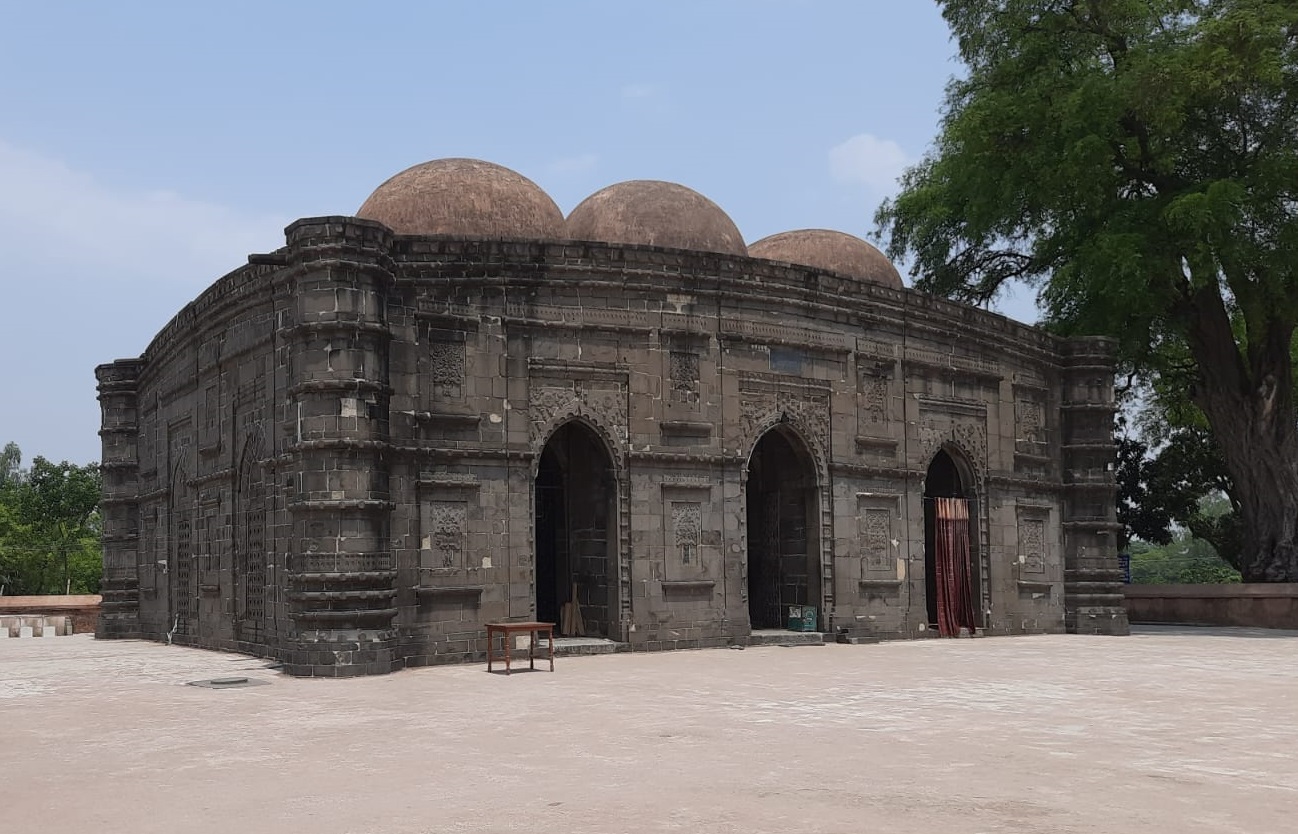
Among the many historic structures scattered across Bangladesh, the Kusumba Mosque in Manda Upazila of Naogaon is one that immediately catches your attention. Its dark stone exterior, detailed carvings, and centuries-old history make it one of the most interesting examples of medieval architecture in Bengal.
Built in 1558–1559 AD, the mosque has stood through centuries of political change, natural disasters, and the gradual transformation of the surrounding landscape. Today, it remains both a place of worship and an important reminder of Bengal's architectural and cultural history.
🌍 1. Geographical Location and Surrounding Environment
The Kusumba Mosque stands in Kusumba village under Manda Upazila of Naogaon District in northwestern Bangladesh. It is close to the Rajshahi–Naogaon highway and sits on the western bank of the Atrai River. The location is important when you consider how people traveled in medieval Bengal. Rivers were major transportation routes, so building an important structure beside a river was both practical and strategic.
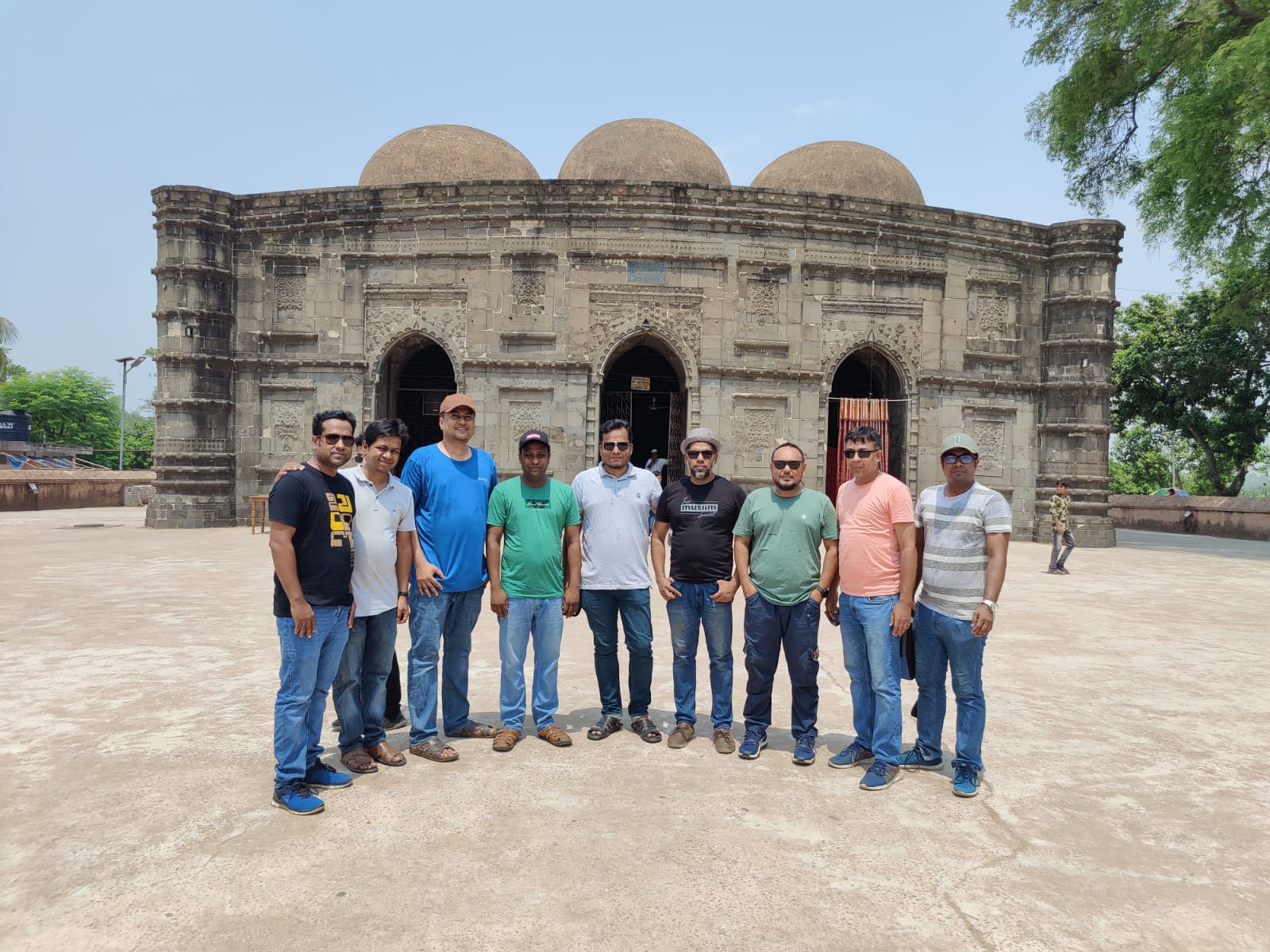
At the Kusumba Mosque premises with colleagues.
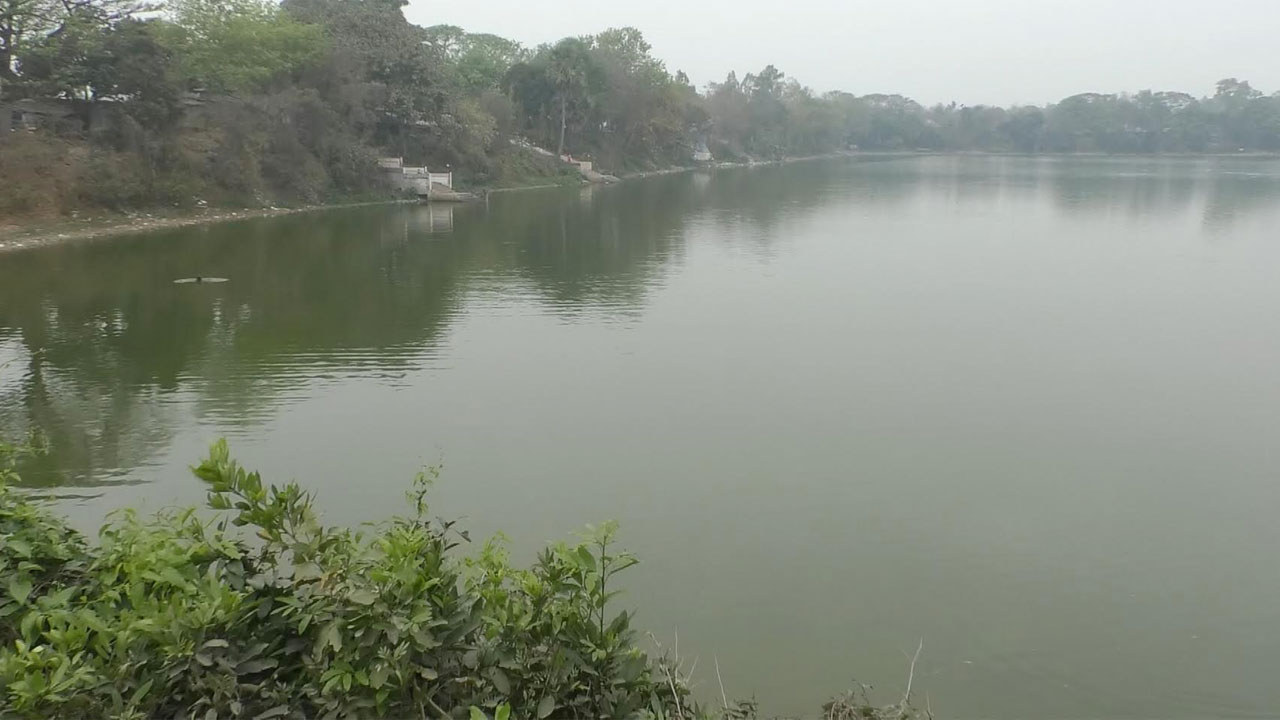
There is also a large old dighi immediately to the east of the mosque. Large ponds like this were common around important mosques and settlements in Bengal. They provided water for the surrounding community and for ablution before prayer, while also helping to keep the area cooler. Standing beside the dighi today, it is easy to imagine how different the surroundings must have looked centuries ago, with the mosque reflected in the water and the river nearby.
Dighi adjacent to Kusumba Mosque, Naogaon.
📜 2. Historical Background and Chronology of Construction
The construction date of the Kusumba Mosque is known from a Persian inscription preserved on the building. According to the inscription, the mosque was built between 1558 and 1559 AD, corresponding to 966 AH.
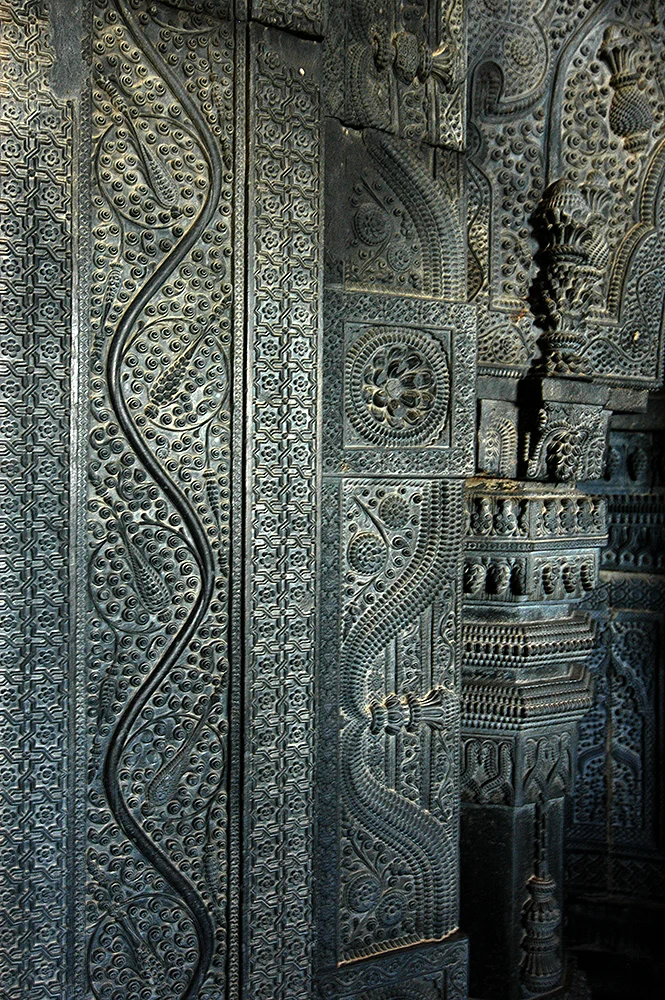
Carved pillar of the mosque
This was a period of political change in Bengal, when the region was passing through the final years of the independent Sultanate and Afghan rule. Despite the political uncertainty of the period, architecture and artistic patronage continued to develop.
The inscription records the involvement of Sultan Sulaiman in the construction of the mosque. It gives us an important link between the building we see today and the political and social world of sixteenth-century Bengal.
💎 3. History and Mystery Behind the Naming of "Black Gem of Bengal"
The Kusumba Mosque is popularly known as the "Black Gem of Bengal". The name comes mainly from the dark stone used so prominently throughout the building and the way that stone sets the mosque apart from the surrounding architecture.
🪨 A. Source and Use of Stone
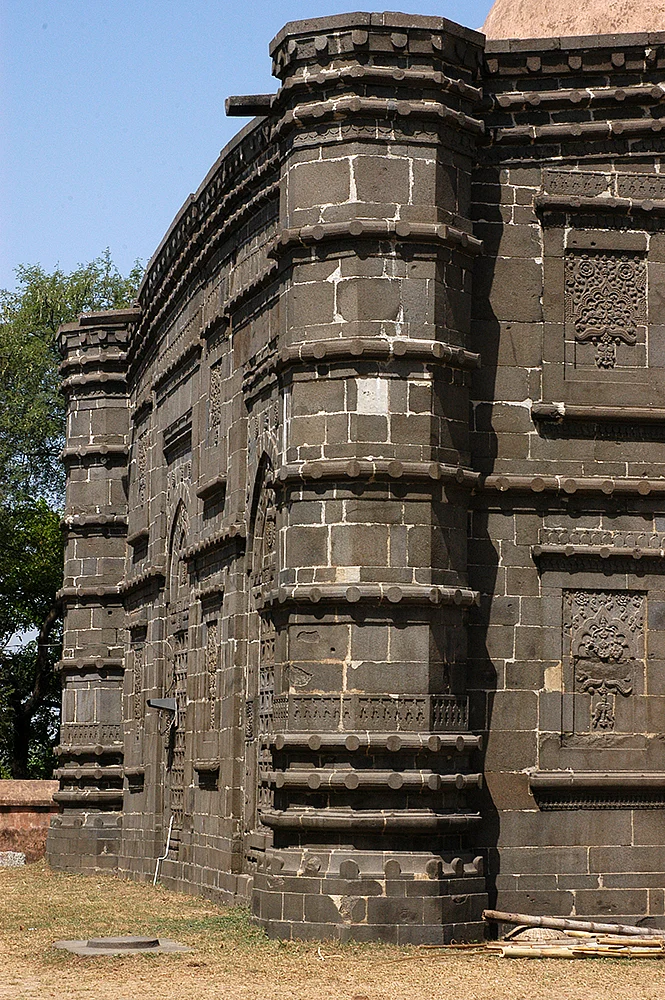
From a distance, the mosque can look as if it was built entirely from black stone. In reality, the main structure is made of brick, while much of the exterior surface, parts of the interior, pillars, and veranda are covered with dark stone. The material was not readily available in this part of Bengal and is believed to have been brought through the region's river network from the Rajmahal Hills area.
Wall adorned with beautiful leaf and vine carvings
✨ B. Scenic Radiance
The dark stone gives the mosque a distinctive appearance. When sunlight falls across its polished surfaces and carved details, the stone takes on a subtle shine. Against the surrounding greenery and the lighter tones of traditional brick architecture, the building really does stand out like a dark jewel. That distinctive appearance is the reason the name "Black Gem of Bengal" has stayed with it.
⚙️ 4. The Earthquake of 1897 and Archaeological Conservation
After more than four centuries, the Kusumba Mosque has naturally seen its share of damage and change. One of the most significant events was the devastating 1897 earthquake, which damaged many historic buildings across Bengal. The Kusumba Mosque was also affected, with cracks and structural damage appearing in parts of the building.
One of the three entrances of the mosque.
Over the years, conservation work has been carried out to keep the mosque standing while retaining its historic character. The Department of Archaeology of Bangladesh has been involved in its preservation and restoration. The aim has been to repair damaged sections without turning the building into something that looks completely new or disconnected from its original form.
💵 5. Glorious Place in National Symbols: Kusumba Mosque on the 5-Taka Note
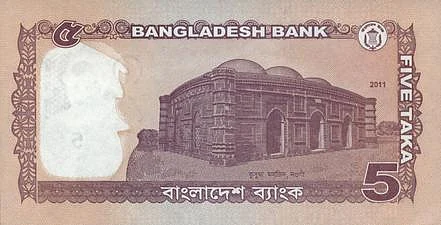
The Kusumba Mosque is familiar to many Bangladeshis for another reason: its image was once featured on the country's 5-taka note.
Kusumba Mosque on the five-taka note
For people who used the 5-taka notes issued in earlier decades, the mosque was not simply an archaeological monument somewhere in Naogaon. Its image was something they regularly saw in their hands during everyday transactions. For many people, especially those who remember the currency of the 1980s and 1990s, that connection gives Kusumba Mosque a certain nostalgic value.
Putting a historic mosque on national currency also helped introduce its architecture to people who might otherwise never have heard of it. In that sense, the image on the 5-taka note became another part of the mosque's place in Bangladesh's cultural memory.
🏛️ 6. Architectural Style and Other Unique Features
The architecture of Kusumba Mosque reflects the way Islamic architectural ideas were adapted to the local traditions and materials of Bengal. Its proportions, brick construction, stone decoration, domes, and detailed carvings all come together to give the building its distinctive character.
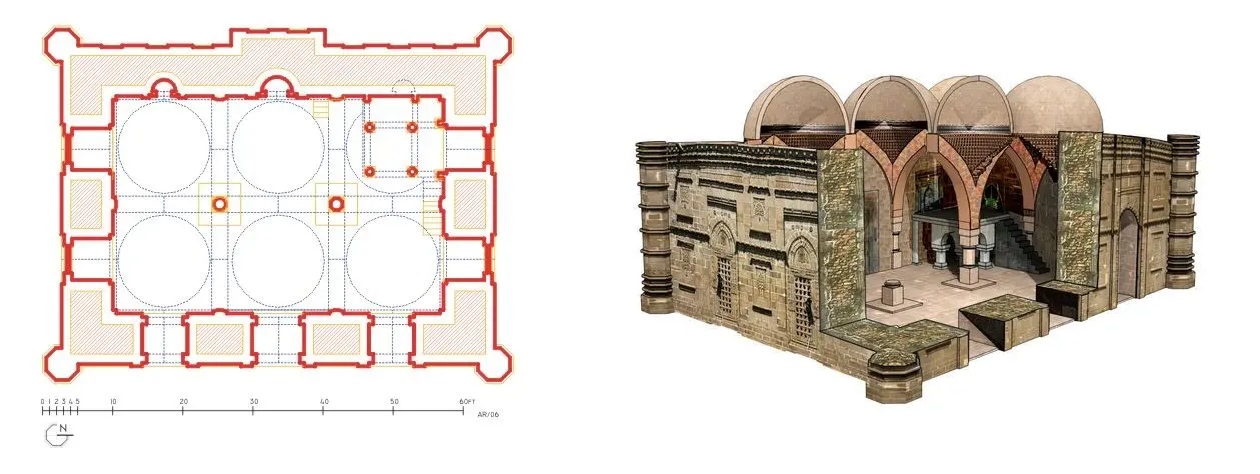
Master plan and cross-section of the mosque
Six-domed Roof
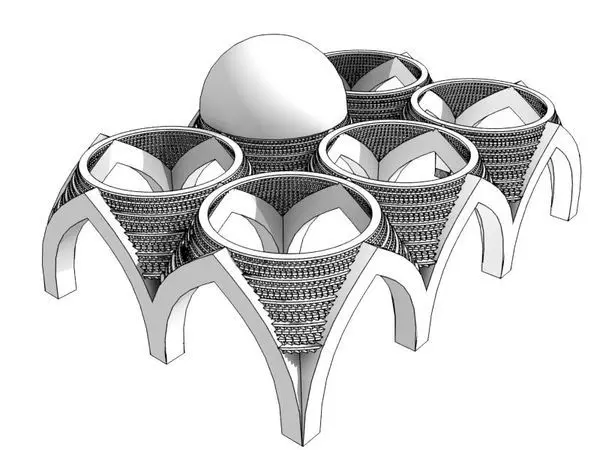
The Kusumba Mosque is a rectangular building with six domes arranged in two rows of three. The arrangement gives the roof a strong sense of balance and makes the relatively compact structure look more substantial.
Three-dimensional view of the domes
Exquisitely Carved Stone Mihrabs
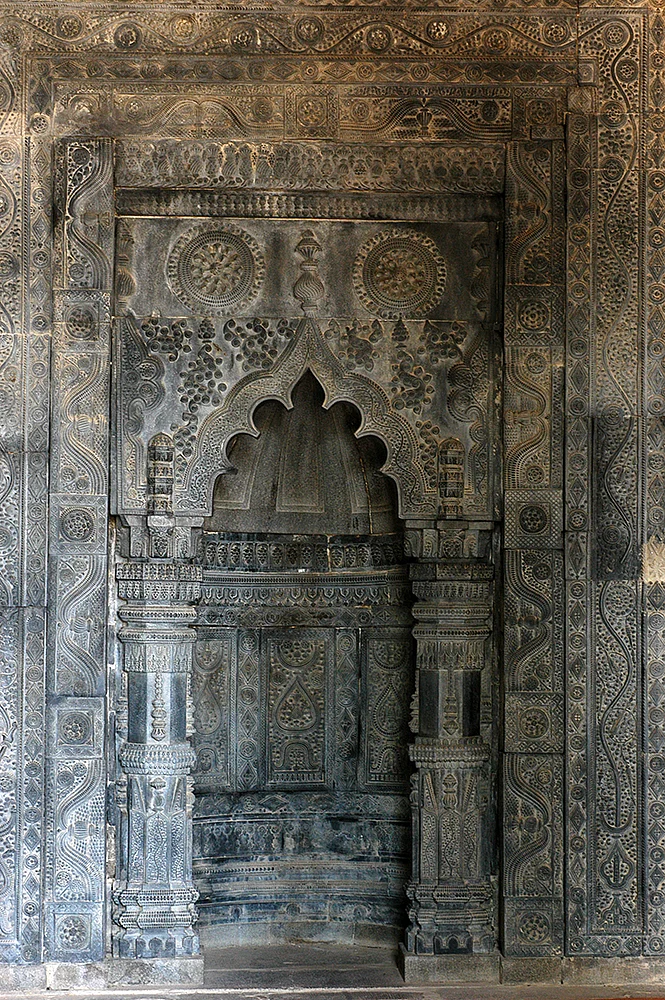
One of the most impressive details inside the mosque is its three mihrabs on the qibla wall. The dark stone around them is covered with carefully carved designs, including leaves, flowers, hanging chains, and grape-like clusters. These details were produced by craftsmen working with the tools and techniques available at the time, which makes the precision of the work even more remarkable.
Mihrab carved with motifs of drop-shaped water-vessels, flora, roses, and grape clusters
Badshah ka Takht or Kazi's Platform
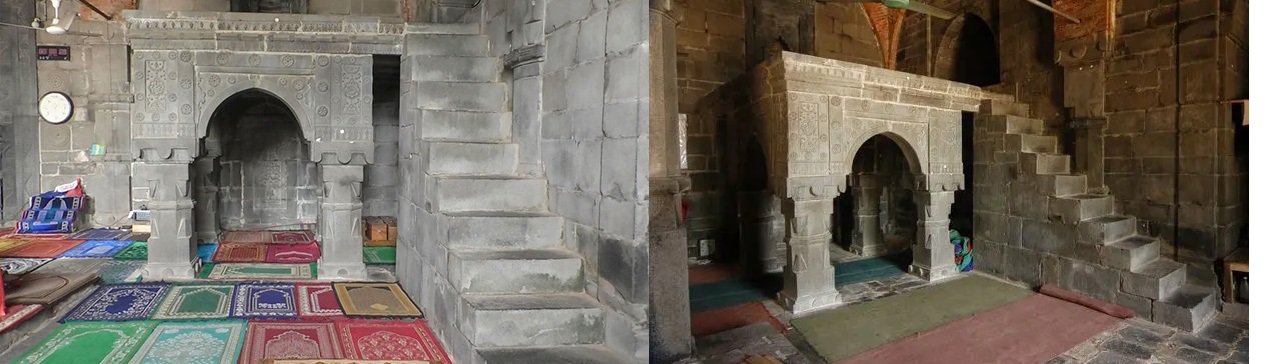
Inside the mosque, in the northwestern corner, there is a raised stone platform or gallery commonly known as 'Badshah ka Takht' or the Kazi's platform. Historical interpretations suggest that a member of the ruling class, a senior official, or the local Kazi could use this elevated space during prayer or official proceedings. There is also a small passage beneath the platform, adding another interesting feature to the building.
Badshah ka Takht or Kazi's platform.
🌄 7. Surrounding Environment and My Experience
What I found particularly enjoyable about Kusumba Mosque was not only the building itself but also the quietness of its surroundings. Away from the noise of the main roads and modern city life, the mosque sits in a landscape shaped by the river, trees, fields, and old water bodies.
Walking through the stone arches and into the shaded interior changes the atmosphere completely. The outside heat gives way to a cooler, quieter space, and the carved stone details become much easier to appreciate. Standing there, it is hard not to think about the people who built this mosque more than four centuries ago and the generations who have used and cared for it since then.
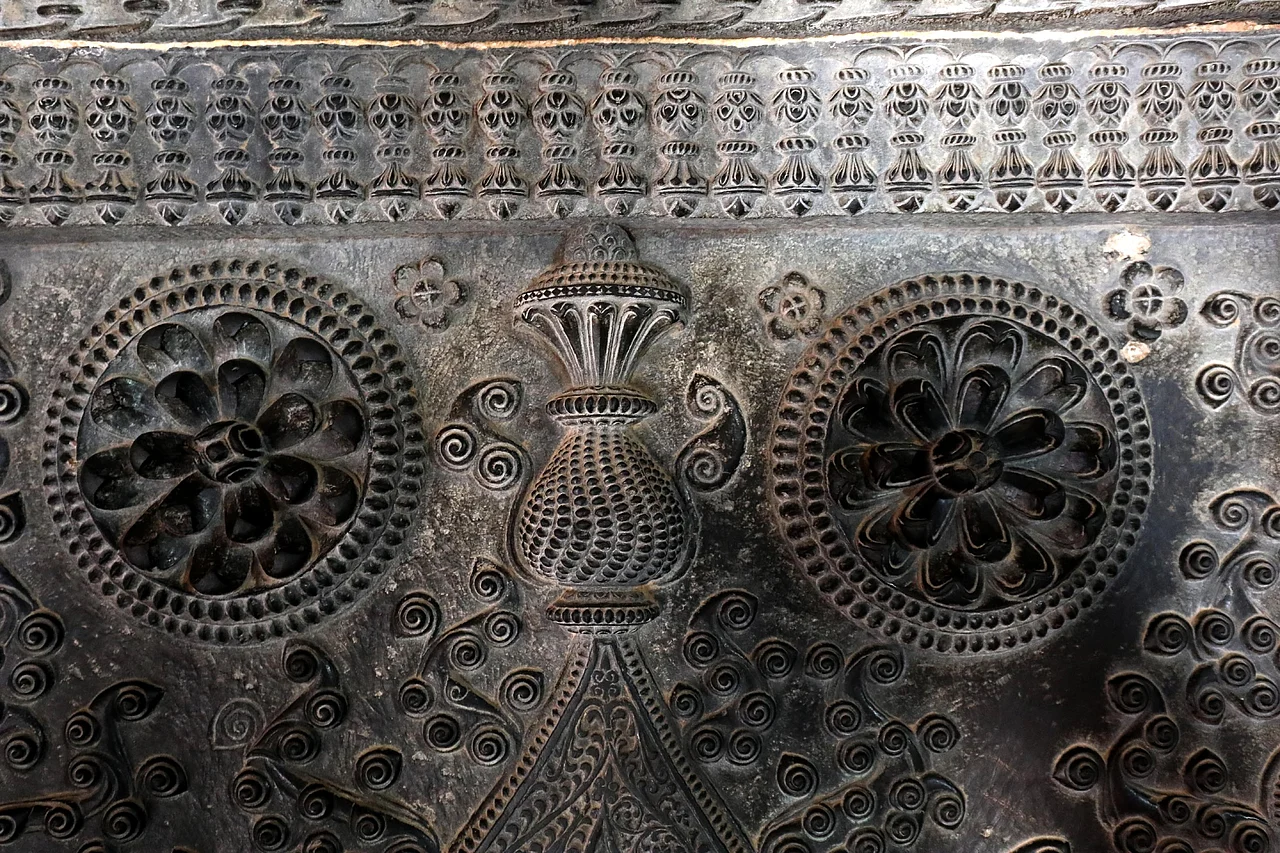
Delicate craftsmanship on the walls of the mosque.
📌 Conclusion: A Humble Tribute to Past Heritage
The Kusumba Mosque is much more than an old place of worship. It is a surviving piece of Bengal's Sultanate-era history and an example of how local building traditions, Islamic architecture, and skilled craftsmanship came together in sixteenth-century Bengal.
Its dark stonework, six domes, detailed mihrabs, historic inscription, and survival through the 1897 earthquake all add to its importance. Its former appearance on the 5-taka note also helped make the mosque familiar to generations of Bangladeshis.
For me, visiting Kusumba Mosque was a reminder that history is not always found in museums or books. Sometimes it is standing quietly beside a river, surrounded by ordinary village life, waiting for someone to stop and look closely. Buildings like this deserve careful preservation, not only because they are old, but because they connect us with the people, skills, beliefs, and stories that shaped the Bangladesh we know today.