Mahasthangarh: The Oldest City of the East in the Depths of History
If you walk along the banks of the Karatoa River at dawn, the dew-covered grass and the dust beneath your feet seem to become part of the same landscape. The village around you is quiet, broken only by the occasional call of a bird. Somewhere in the distance, it feels as though the remains of a forgotten city are still breathing. As you turn with the river, a high mound of ancient brickwork comes into view. This is Mahasthangarh, one of the oldest urban sites in the heart of Bengal.
Here, history is not preserved only in inscriptions carved into stone. It seems to remain in the soil, in the old brick walls, and in the traces of the people who once lived here. Every brick and ruined structure hints at a story that stretches back thousands of years.
Introduction — A City of Light and Shadow in the Mirror of History
Long before Bangladesh appeared on the modern map, a major city grew in the northern part of Bengal, at the meeting point of important rivers and ancient trade routes. That city was known as Pundranagar. Today, we know its archaeological remains as Mahasthangarh.
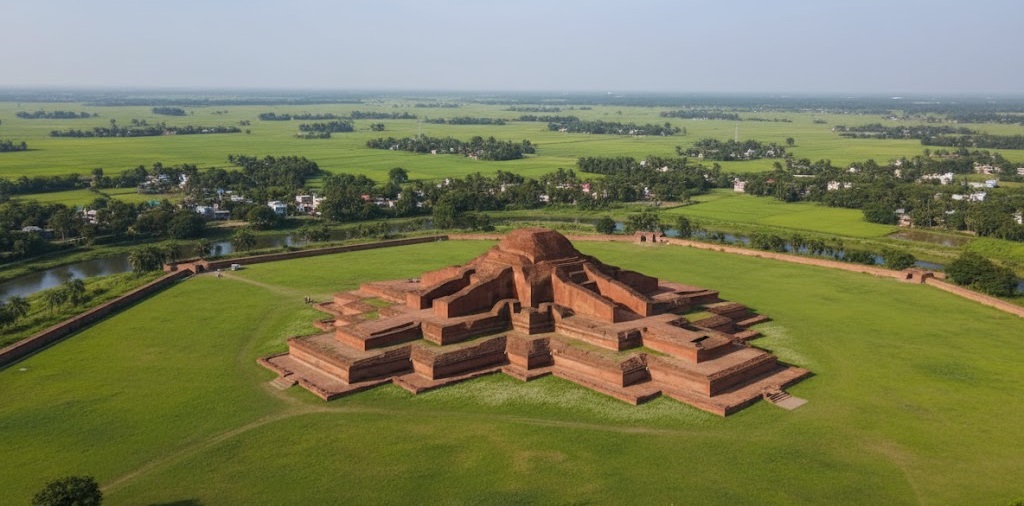
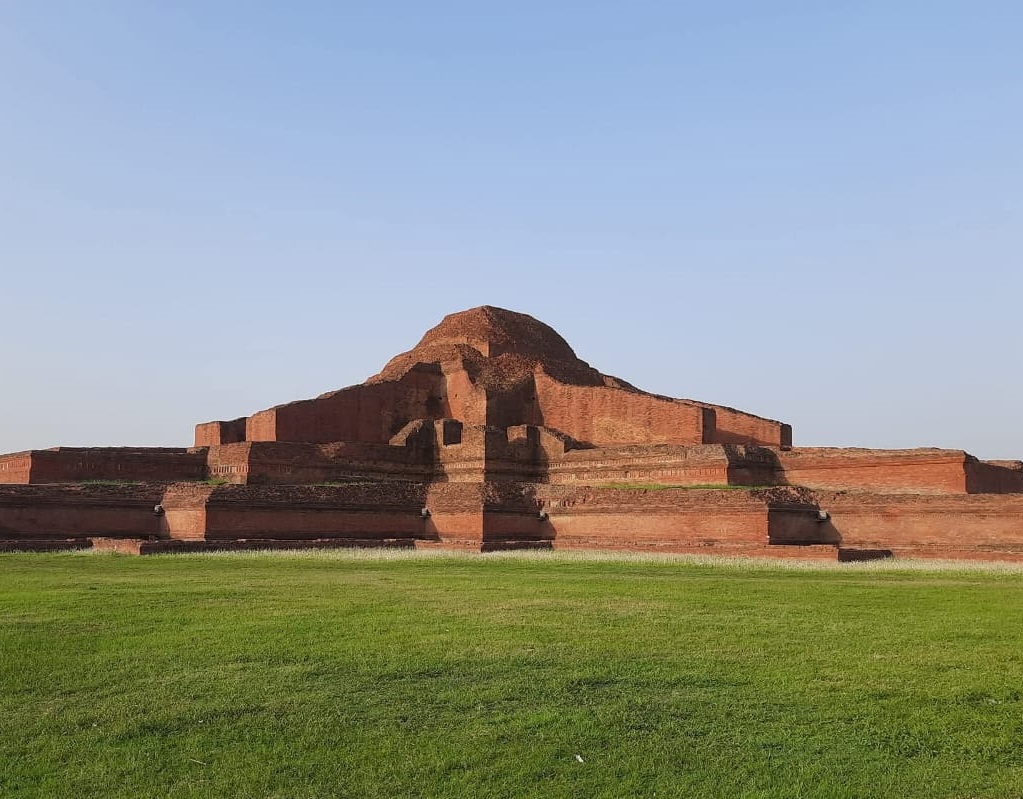
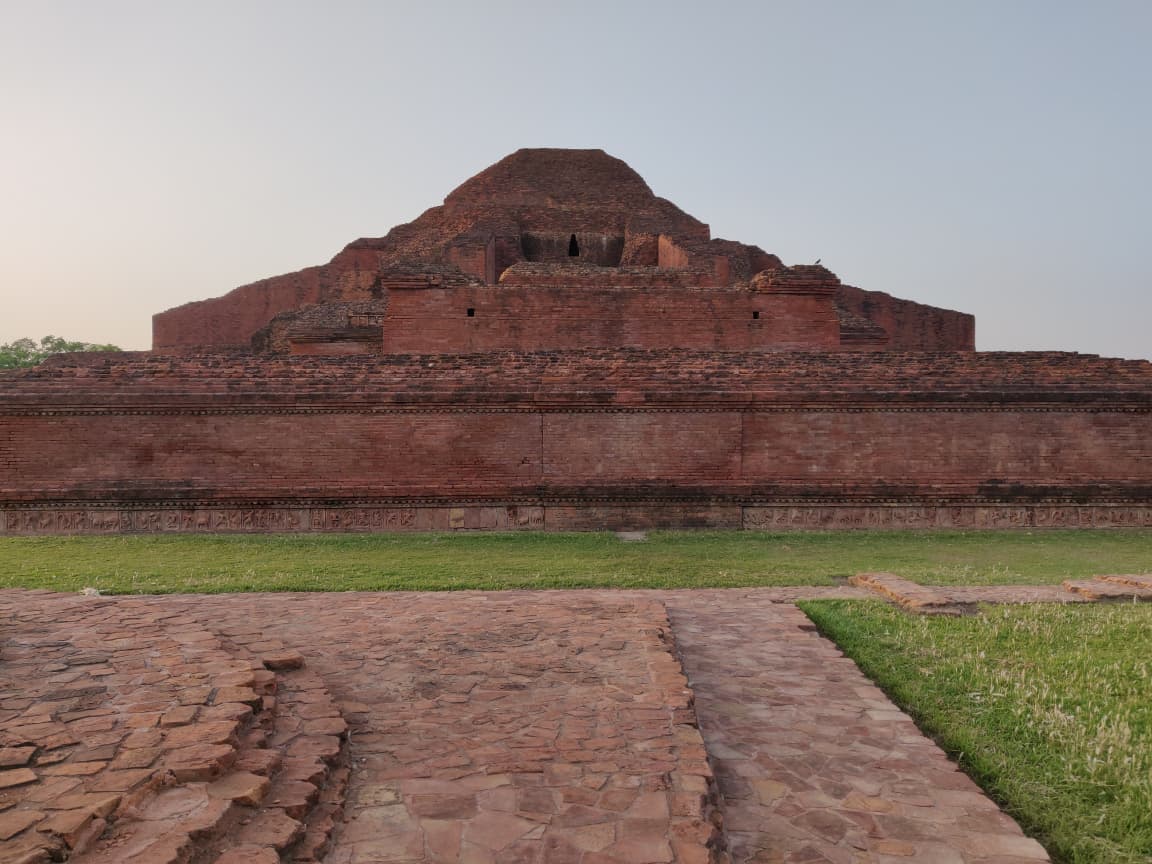
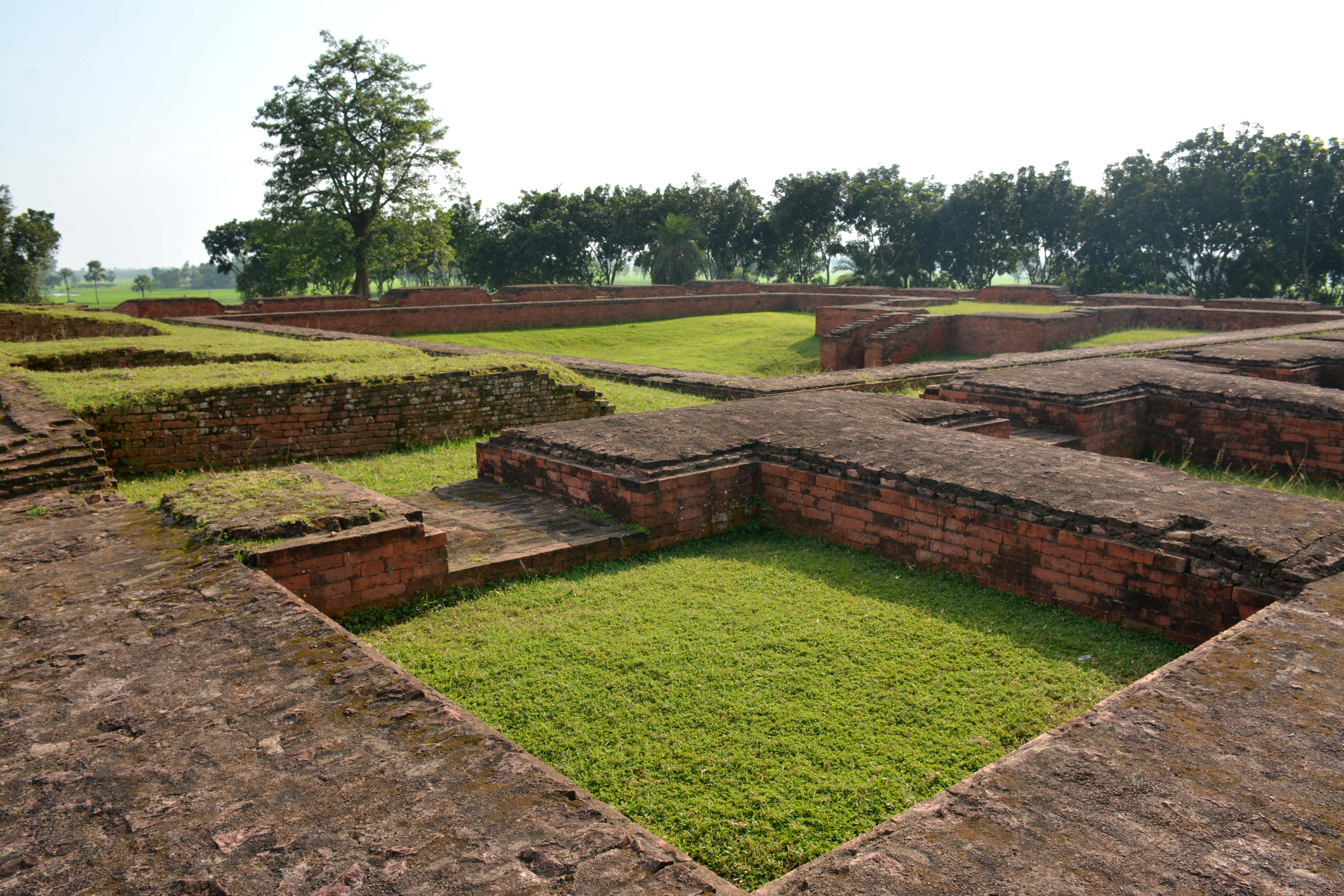
Paharpur Bihar, Mahasthangarh, Bogura.
This ancient city, built around a raised fortified area, is much more than a collection of old bricks, walls, and earthen structures. Its remains tell the story of thousands of years of trade, warfare, administration, religious change, settlement, and cultural development. Few archaeological sites in Bengal are as old or as historically significant.
Naming of Mahasthangarh — From ‘Maha–Sthan’ to ‘Garh’
The word “Mahasthan” comes from the Pali or Sanskrit “Mahasthan”, meaning ‘great place’, ‘large settlement’, or ‘holy land’.
And ‘Garh’ means fort. In that sense,
Mahasthangarh = Fort of a great place.
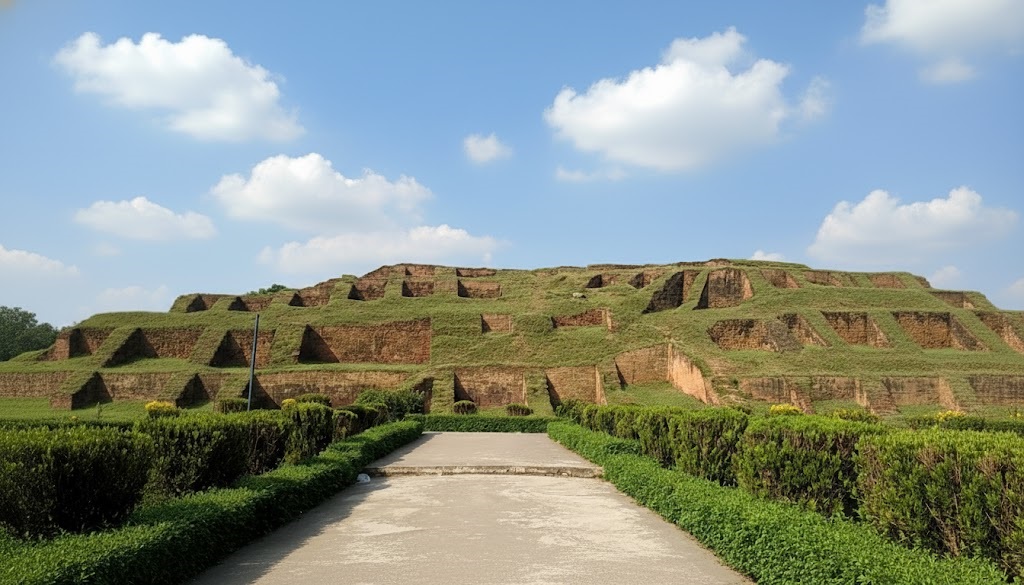
Mahasthangarh, Bogura.
Another view suggests that the area became an important religious center after the Gupta period, which may have contributed to the name ‘Mahasthan’.
Ancient Pundranagar — The First Capital of Bengal
The history of Mahasthangarh goes back at least 2500 years. In the 4th century BCE, the
provincial capital of the Maurya Empire was established here. Pundra or Pundravardhan was a major settlement in North Bengal, inhabited by a mixture of communities.
Maurya Period (4th–2nd century BCE)
During the Maurya period, particularly in the time associated with Ashoka, there are references to the appointment of ‘Dharma Mahamatras’ in the region. The ‘Mahasthan early stone inscription’ contains an order concerning the distribution of rice to a famine-affected area along the Karatoa River.
Gupta Era (4th–6th century)
Under the Gupta rulers, Pundranagar became an important center of administration and trade. Coins, seals, and the remains of religious structures found around the city provide evidence of this period of prosperity.
Paharpur Bihar, Mahasthangarh, Bogura.
Pala Empire (8th–12th century)
During the Pala period, Buddhism received strong royal support. Monasteries, stupas, residential quarters for monks, and centers of learning spread across the region.
“Gobinda Vita”, “Bairagir Vita”, and “Khaddal Raja’s House” are among the archaeological remains associated with this period.
Sena Dynasty (11th–13th century)
Under the Sena dynasty, Buddhist influence declined while Brahmanical traditions became stronger. During the reign of Lakshman Sena, parts of Pundranagar's fortifications were rebuilt.
Religious and literary works connected with Hindu traditions also became increasingly prominent during this period.
Mahasthangarh, Bogura.
⛏️ Excavation History of Mahasthangarh
Archaeological investigation and systematic excavation of Mahasthangarh began in the late nineteenth century, when
British archaeologists recognized that the large raised area beside the Karatoa River was more than an ordinary village mound. It contained the remains of an ancient urban civilization. Since then, both Bangladeshi and foreign archaeologists have continued to investigate the site, gradually turning Mahasthangarh into one of the country's most important archaeological landscapes.
🔹 1879: Preliminary Survey by Sir Alexander Cunningham
British archaeologist Sir Alexander Cunningham identified Mahasthangarh as the remains of
Pundravardhan city. The brick structures, archaeological finds,
and local traditions recorded during his survey helped strengthen the connection between the site and ancient Pundravardhan.
Excavation work of the last century, Mahasthangarh, Bogura.
🔹 1928–29: Dr. Grayson and Archaeological Survey of India
In 1928–29, the Archaeological Survey of India (ASI) began systematic scientific excavation at the site.
Researchers identified sections of the north–south boundary wall, habitation layers, mud-built drainage pipes, and
parts of the ancient road network. These findings gave archaeologists a clearer picture of the city's size and layout.
🔹 1961–64: Large-scale Excavation by Pakistan Archaeology Department
In the 1960s, excavation expanded considerably. Researchers discovered:
Large sections of the ancient fort walls
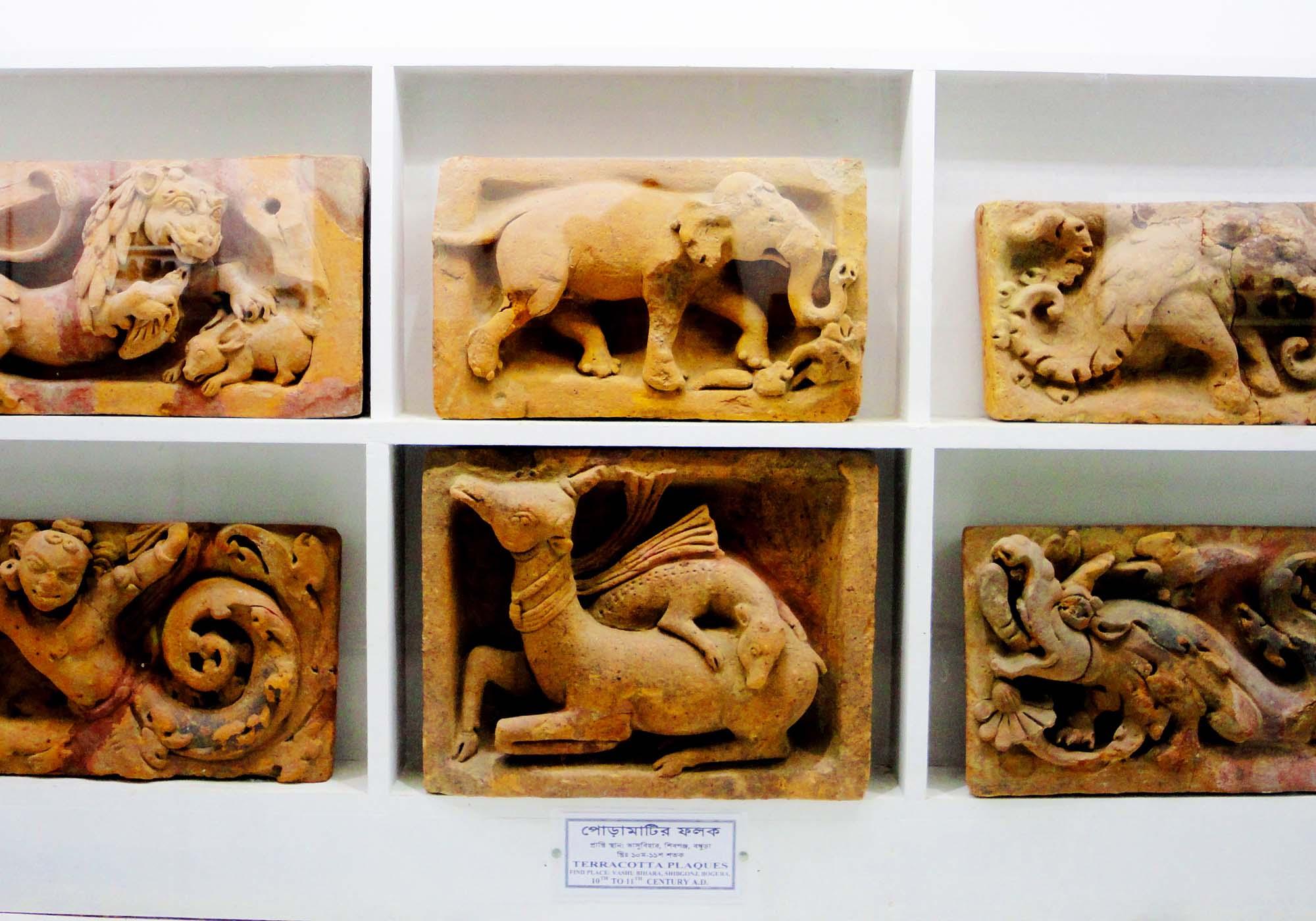
Terracotta plaques
Maurya–Gupta era pottery
Ruins of religious structures
This phase of excavation brought Mahasthangarh into the wider study of ancient urban centers in the Indian subcontinent.
Gokul Medh, Mahasthangarh, Bogura.
🔹 1993–2004: Joint Excavation by Bangladesh and France
The Department of Archaeology of Bangladesh and French archaeological teams carried out joint excavations for almost ten years.
This work uncovered:
The central royal area of Mahasthangarh
Coins, inscriptions, and revenue-related artifacts
Two-compartment rooms and long, narrow roads
Gokul Medh, Mahasthangarh, Bogura.
The findings provided evidence of a planned and organized ancient urban settlement.
🔹 2010–Present: Modern Research and 3D Mapping
Modern methods such as ground-penetrating radar (GPR), drone surveys, and soil-layer analysis
are revealing more previously unknown structures around Mahasthangarh. Habitation areas and road networks discovered
outside the main city walls suggest that Mahasthangarh was a central urban hub connected to surrounding settlements.
Gokul Medh, Mahasthangarh, Bogura.
Overall, the excavation history of Mahasthangarh is not simply a story of digging through old soil. It is a long process of research that has gradually brought a major ancient city of Bengal back into view.
Time
Event
Importance
1808
Hamilton’s observation
First modern documented reference
1928–31
British excavation
Maurya–Gupta–Pala layers revealed
1960–70
Excavation during Pakistan period
Buddhist monasteries and city structures
1989–2004
International mission excavation
Earliest layers of the city identified
2004–Present
Technology-based excavation
3D mapping and preservation
The Map of the Fort City — A Priceless Document of Eastern Urban Planning
Today, the main fortified area of Mahasthangarh covers about 5 square kilometers. The ancient city was surrounded by fortifications and included water bodies, temples, monasteries, shrines, and gateways such as the ‘Kajla Gate’, along with roads connecting different parts of the settlement.
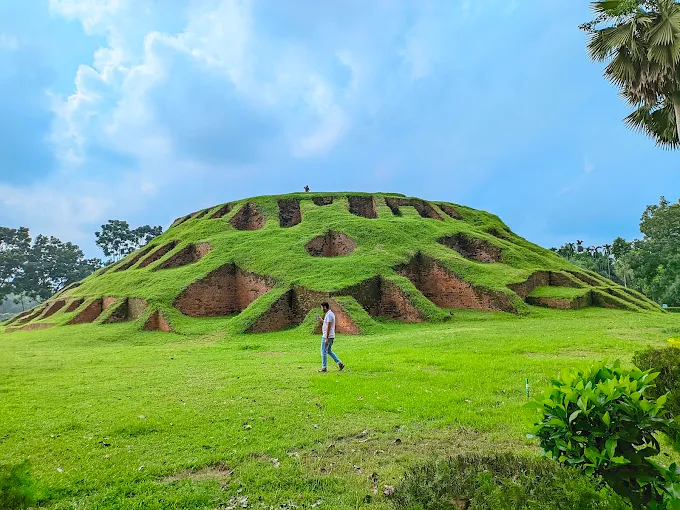
Gokul Medh: A large brick structure traditionally associated with the story of Behula and Lakhindar and the legend of Mansa.
Gokul Medh, Mahasthangarh, Bogura.
Vasu Bihar: A Buddhist monastic settlement associated with monks, religious practice, and learning.
Vasu Bihar, Mahasthangarh, Bogura.
Bhagbanpur Wall: Rows of ancient brick walls that preserve traces of the settlement's earlier structures.
Bhagbanpur Wall, Mahasthangarh, Bogura.
Dargah of Shah Sultan Balkhi Mahisawar: A religious site associated with the spread of Islam in the region during the medieval period.
Dargah of Shah Sultan Balkhi Mahisawar, Mahasthangarh, Bogura.
Medieval Period and the Fall of Mahasthangarh
After the 13th century, following Turkish–Afghan expansion, the center of political power gradually shifted toward the Padma–Jamuna basin.
Flooding, river erosion, and changes in administration also contributed to the decline of Pundranagar's importance.
Description of Paharpur Vihara
Later, the Sufi saint Shah Sultan Balkhi Mahisawar became associated with the region and helped establish it as an important spiritual center.
His shrine remains an important part of the religious history and identity of Mahasthan.
Archaeology — The Lost Civilization Sleeping Beneath the Soil
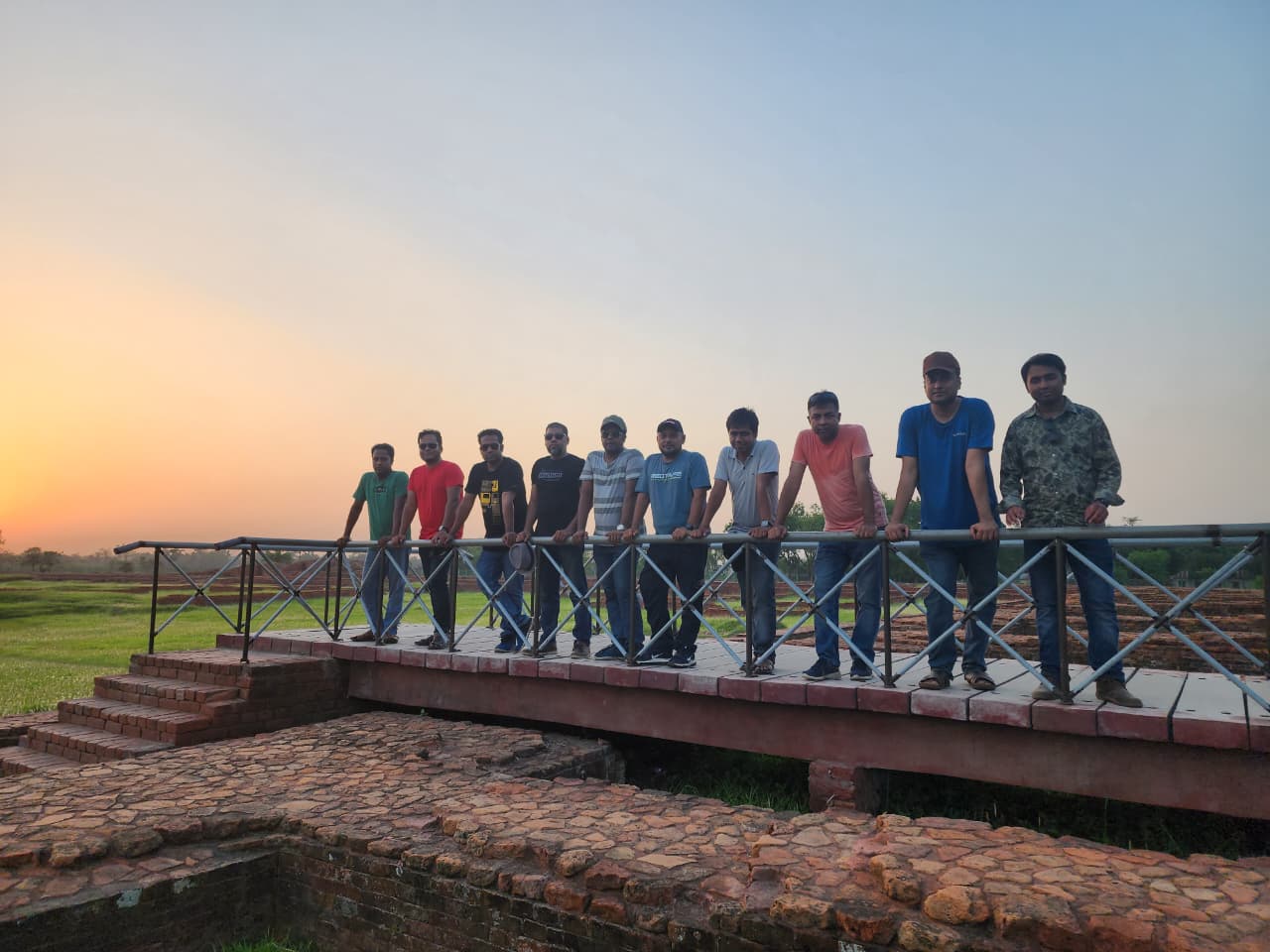
With travel companions, Mahasthangarh, Bogura.
In 1808, one of the earliest detailed modern accounts of Mahasthangarh appeared in the travel writings of Buchanan Hamilton.
Later, in 1928, archaeological excavation began under the leadership of Colonel Codrington.
Remains from several periods of Bengal's history—including the Pala, Sena, Gupta, and Maurya periods—were uncovered.
At present, under the supervision of the Department of Archaeology of Bangladesh and with UNESCO involvement, Mahasthangarh is being considered as a
potential nomination for the World Heritage List.
Behula–Lakhindar — The Folklore of Mahasthangarh
The daughter of Lord Shiva, the goddess Mansa, was not widely worshipped because she was regarded as the serpent goddess. Even the other gods were said to have opposed her worship. Because of this, she went to her father, Lord Shiva, and asked him to establish her worship. Shiva replied, “If my devoted follower and worshipper Chand Saudagar agrees to worship you, then your worship will become established in the world.” But Chand Saudagar refused to worship Mansa and even chased her away with a stick. In anger, Mansa increased the number of snakes around Chand’s Champak Nagar. One by one, six of Chand’s sons died from snakebites. Later, while returning to Champak Nagar after a profitable trading journey, Chand was caught in a storm created by Mansa, and his ships sank. He barely survived and took refuge on an island, but he still refused to worship her.
Returning to Champak Nagar, Chand began a new life. A son was born to him, and he was named Lakhindar. Mansa declared that if Chand continued to refuse her worship, Lakhindar would die from a snakebite on his wedding night. Knowing this, Chand arranged Lakhindar’s marriage to Behula, the daughter of his business associate Saha. To protect the couple, Chand had an iron bridal chamber built by the god Vishwakarma. But under pressure from Mansa, Vishwakarma left a small opening in the iron structure. Through this tiny opening, a black snake entered and bit Lakhindar, killing him.
Bridal chamber of Behula-Lakhindar or Lakhindar’s Medh
According to tradition, a person who died from a snakebite was not cremated. Instead, the body was placed on a raft and floated down the river, as people believed that the dead person might somehow return to life. Following this belief, Lakhindar’s body was placed on a raft, and Behula accompanied her husband. For six months, she drifted from one ghat to another. At one point, Behula came to believe that she could save Lakhindar if she could appease the gods. Eventually, she reached the divine realm and succeeded in pleasing them through her dance and singing.
At the request of the gods, Mansa agreed to restore Lakhindar’s life, but she placed one condition: “You will get Lakhindar back only if you can make your father-in-law become my worshipper.” Behula explained everything to her mother-in-law. With her help, she persuaded Chand Saudagar to accept the worship of Mansa. Chand could no longer refuse, although he still could not forgive Mansa for the suffering she had caused. He performed the worship while turning his face away from the idol and using his left hand. Mansa accepted this. Through divine power, the decayed body of Lakhindar was restored, and he opened his eyes. He looked at Behula and smiled. By divine power, Behula and the revived Lakhindar were taken to heaven in an instant. Mansa also restored the lives of Chand’s six sons and returned all fourteen of Chand Saudagar’s sunken ships intact. Chand Saudagar and his family then lived in peace and happiness.
After this, the worship of Mansa spread more widely among the people. She became especially associated with protection from snakebites and with blessings for children.
Conclusion — Mahasthangarh Is the Navel-Center of Our Civilization
Mahasthangarh is not simply an archaeological site. It preserves evidence of the development of Bengali civilization, one of the region's earliest urban settlements, early systems of administration, and centuries of cultural and religious change. The legends of Behula remain connected to its landscape, while the remains of ancient Buddhist settlements remind us of another chapter of its long history.
In the larger story of Bengal, Mahasthangarh represents one of our deepest roots—a place where the remains of an ancient city still connect us with the people, cultures, and civilizations that came before us.