The Journey to Mars: Humanity’s Red Planet Odyssey
Mars, the Red Planet, has fascinated humanity for centuries. Its reddish color, visible even to the naked eye, along with myths and speculation about life on Mars, has long inspired scientists and explorers to reach for it. From early telescopic observations to advanced robotic missions, the exploration of Mars reflects human curiosity, ingenuity, and ambition.
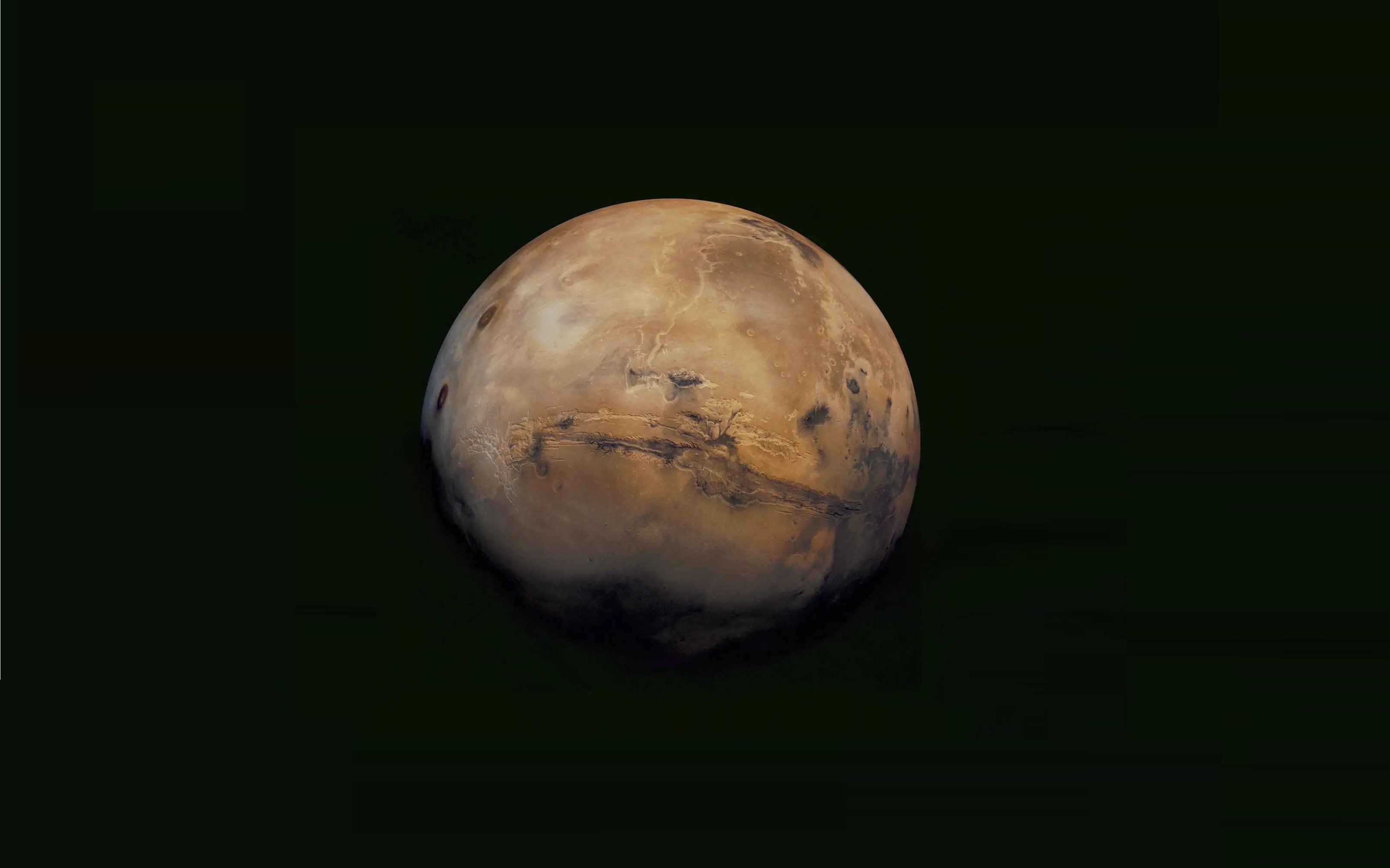
The Red Planet is the fourth planet from the Sun. Known for its rust-colored surface, polar ice caps, and dramatic landscapes such as Olympus Mons and Valles Marineris, Mars has remained a major focus of scientific exploration for centuries.
Mars has two small moons: Phobos and Deimos. Discovered in 1877 by astronomer Asaph Hall, their names come from Greek mythology. They were the names of the two sons of Ares, the Greek god of war, and mean fear (Phobos) and terror (Deimos).
Unlike Earth’s large, spherical Moon, Phobos and Deimos are tiny, irregularly shaped bodies that resemble captured asteroids. Phobos is about 22 km across and orbits very close to Mars, rising and setting several times during a Martian day. Deimos is smaller, about 12 km across, and follows a more distant and slower orbit.
The Earth and Mars orbit the Sun along with their moons
Phobos is slowly spiraling inward and may eventually break apart or collide with Mars tens of millions of years from now, while Deimos is gradually drifting away. Despite their small size, both moons are scientifically valuable. They may contain clues about Mars’s history, asteroid capture, and the early solar system, while also serving as potential stepping stones for future human exploration.
History of Mars Exploration
Mars exploration began in the 1960s with the Soviet Union’s early attempts, including Marsnik 1 and Marsnik 2, although the initial missions failed. Mars 3 became the first spacecraft to land on Mars in 1971, though it operated only briefly. NASA’s Mariner missions achieved the first successful flybys, revealing a cratered surface and mapping the planet’s polar regions.
From the 1970s through the 1990s, NASA’s Viking landers studied Martian soil and searched for signs of life, while Mars Pathfinder deployed the first rover, Sojourner. Orbiters such as Mars Global Surveyor and Mars Odyssey mapped the terrain and detected evidence of water ice.
6 decades of Missions to Mars
The 21st century brought greater international participation. India’s Mangalyaan (2013), China’s Tianwen-1 (2021), the UAE’s Hope probe (2021), along with ESA’s Mars Express and Trace Gas Orbiter, expanded our understanding of Mars. Over the decades, robotic missions have revealed much about the planet’s geology, climate history, and potential for life, helping prepare the way for future human missions.
🌌 Early Ambitions: 1960s–1970s
The Soviet Initiatives
Marsnik 1 & 2 (1960): The Soviet Union’s earliest attempts were intended to fly by Mars. Unfortunately, both spacecraft failed to leave Earth orbit. These early failures showed just how difficult interplanetary travel would be.
Mars 1 (1962): The spacecraft successfully transmitted data during its journey but lost contact before reaching Mars.
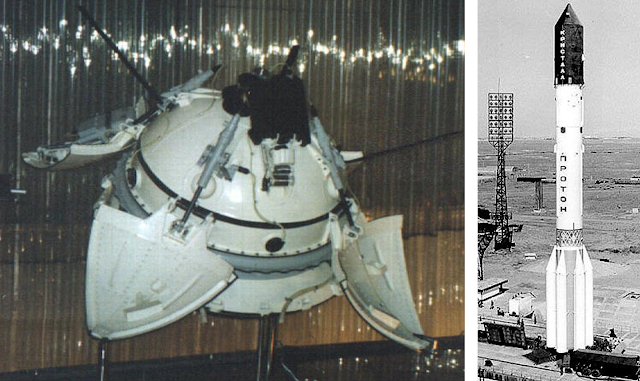
Mars 2 & 3 (1971): These spacecraft attempted to land on Mars. Mars 3 made history as the first lander to reach the Martian surface, but it operated for only 14.5 seconds because of the harsh conditions.
The Mars 2 lander and a Proton-K rocket similar to the one that launched it
The Soviet missions demonstrated both the ambition of the era and the technological limits of the time.
NASA’s Mariner Program
Mariner 4 (1964): NASA’s first successful Mars flyby returned 21 images, revealing a cratered, Moon-like surface and overturning earlier expectations that Mars might be a world somewhat like Earth.
Mariner 6 & 7 (1969): These missions conducted detailed flybys, mapped the polar regions, and provided unprecedented data about Mars’s thin atmosphere.
A diagram of an early series Mariner spacecraft and launch vehicle. Mariner spacecraft explored Mars.
Source: NASA/JPL-Caltech
These early missions changed our view of Mars from a possible Earth twin into a challenging and seemingly barren world.
🧪 Scientific Exploration: 1970s–2000s
As technology improved, Mars missions increasingly focused on understanding the planet’s geology, climate, and potential for life.
Viking Missions
Viking - 1 : Lander shell (top) and orbiter
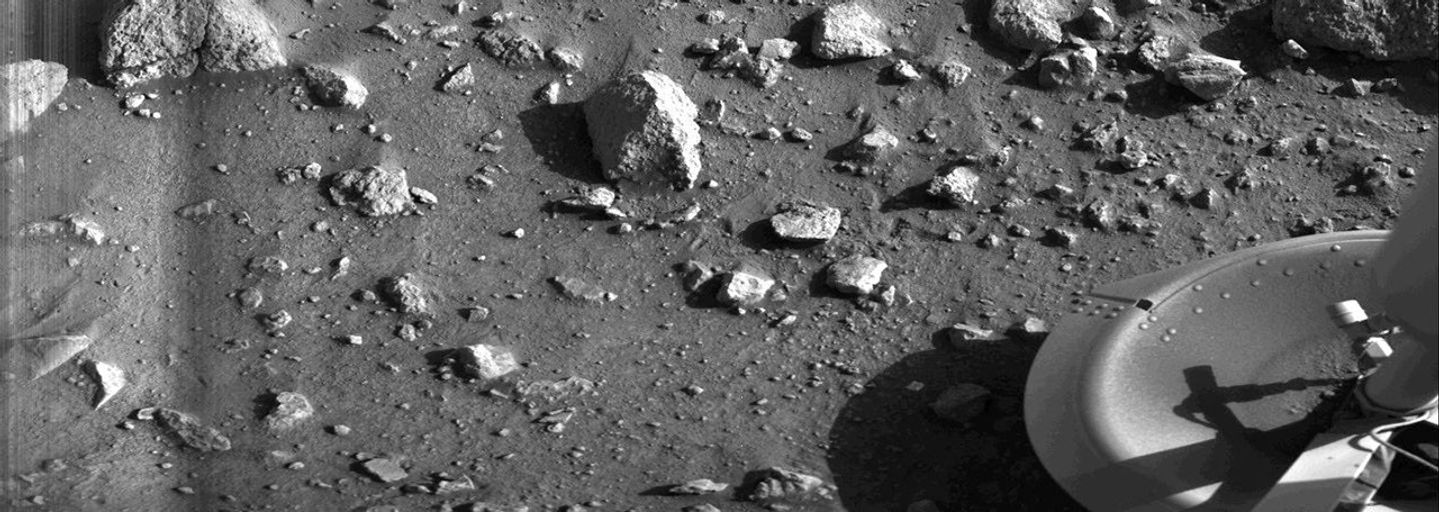
Viking 1 & 2 (1976): These landers carried out the first experiments designed to search for life, analyzed Martian soil chemistry, and returned high-resolution images of the planet’s surface. They established a baseline understanding of Mars’s atmosphere and surface conditions.
Taken by the Viking 1 lander shortly after it touched down on Mars, this image is the first photograph ever taken from the surface of Mars. It was taken on July 20, 1976.
Mars Pathfinder and Sojourner Rover
This eight-image mosaic was acquired during the late afternoon on Sol 2 as part of the predeploy 'insurance panorama' and shows the newly deployed rover sitting on the Martian surface.
Mars Pathfinder (1997): This mission landed the Sojourner rover and pioneered autonomous rover operations on Mars. It examined rocks and soil, demonstrating that mobile exploration on the planet was practical.
Large boulders are visible in this enlargement of pictures taken by the Imager for Mars Pathfinder (IMP) lander camera on July 4, 1997.
Mars Global Surveyor and Mars Odyssey
An illustration of Mars Global Surveyor & Mars Odyssey
Mars Global Surveyor (1996): Orbited Mars for nine years, producing detailed topographic maps and confirming the presence of vast ancient riverbeds.
Mars Odyssey (2001): Detected hydrogen beneath the surface, pointing to the presence of widespread water ice.
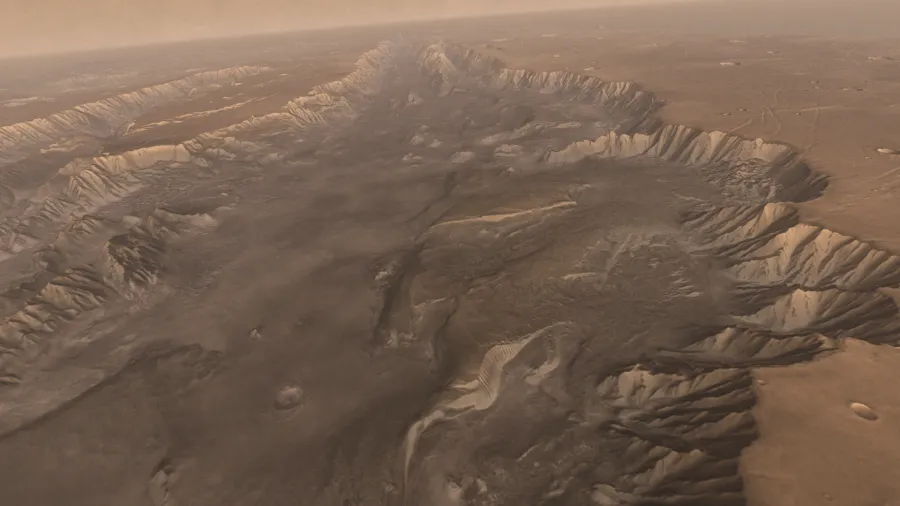
A view of the biggest canyon in the solar system, captured by NASA's Mars Odyssey orbiter.
🚀 International Contributions: 2000s–2020s
Mars exploration gradually became a global effort, with more countries joining the search for answers.
India’s Mars Orbiter Mission (Mangalyaan)
Mangalyaan (2013): ISRO became the first Asian agency to reach Mars orbit on its maiden attempt. Its primary goals included studying the planet’s surface features, morphology, and atmosphere.
India's Mars Orbiter Mission launched successfully from Satish Dhawan Space Center on November 5, 2013 at 14:38 IST (9:08 UTC).
China’s Tianwen Program
Tianwen-1 (2020): China’s CNSA successfully landed the Zhurong rover, which explored surface geology, water-ice deposits, and the Martian climate, marking China’s rise as a major interplanetary player.
Tianwen-1: China successfully launches probe in first Mars mission.
Other Contributions
Japan: JAXA’s Nozomi mission (2003) was designed to study Mars’s atmosphere, although it ultimately failed to enter orbit.
Europe: ESA’s Mars Express (2003) and Trace Gas Orbiter (2016) mapped surface minerals and studied gases in the Martian atmosphere, including methane.
Russia: Post-Soviet Mars missions continued attempts at flybys and orbiters, reflecting the country’s continued interest despite budget constraints.
🔭 Key Rover Achievements
Rovers have completely changed how we study Mars.
Spirit and Opportunity (2004): These twin rovers explored ancient riverbeds and found evidence of past water activity and potentially habitable conditions.
Mars Exploration Rovers: Spirit and Opportunity
Curiosity (2012): Explored Gale Crater, finding organic molecules and confirming that freshwater environments suitable for life existed in the past.
Mars Exploration Rovers: Spirit and Opportunity
Perseverance (2020): Collects samples for possible future return to Earth and tests new technologies such as the Ingenuity helicopter, the first powered aircraft to fly on another planet.
Perseverance's Selfie with Ingenuity NASA's Perseverance Mars rover took this selfie with the Ingenuity helicopter in the background on the 46th Martian day, or sol, of the mission.
🌍 Collaborative and Future Missions
ESA’s Rosalind Franklin Rover
Artist's concept of ExoMars rover on Mars in near future.
Launch planned 2028: Part of the ExoMars program, this rover will search for biosignatures beneath the surface, focusing on water-rich regions where evidence of past life may be preserved.
Countdown of ExoMars Rover launching.
Mars Sample Return
NASA & ESA (late 2020s–2030s): A collaborative effort to return Martian soil samples to Earth for detailed laboratory analysis.
Overview of the ESA–NASA Mars Sample Return mission.
Private Sector Initiatives
SpaceX Starship: Plans include uncrewed missions in the near future, with the long-term goal of sending humans to Mars and eventually supporting settlement.
Starship ignition during launch on its fifth flight
Other Notable Missions
mars-ice.jpg
International Mars Ice Mapper: NASA, JAXA, CSA, and ASI aim to identify accessible water ice deposits for future human missions.
A vertically exaggerated view of Mars' north polar cap
Analog Training Missions: Programs such as India’s Ladakh Human Analogue simulate Martian conditions to help prepare astronauts for future missions.
Parameter
HOPE (India)
Mars Desert Research Station (USA)
Flashline Mars Arctic Research Station (Canada)
BIOS-3 (Russia)
Country
India
United States
Canada
Russia
Agency / Organisation
ISRO (Human Space Flight Centre)
Mars Society
Mars Society / NASA collaboration
Institute of Biophysics, Russian Academy
Location
Tso Kar Valley, Ladakh
Utah Desert
Devon Island, Canadian Arctic
Krasnoyarsk, Siberia
Environment Simulated
Moon and Mars-like conditions (high-altitude, permafrost, radiation)
Martian terrain and isolation
Mars-like extreme cold, isolation, and remoteness
Closed ecological systems (biosphere)
Main Focus Areas
Human health, habitability, life-support validation, astrobiology
Crew behavior, isolation, EVA drills
Long-duration habitation, engineering & robotics
Closed-loop life support and food production
Crewed Missions
short-term analog astronauts
2–4 weeks per mission
limited and seasonal
fully enclosed for months
Notable Features
First Indian analog station; high UV, low pressure
Mars-like topography + high-altitude Indian terrain
Accessibility and low-cost operations
Harsh Arctic isolation mimics Martian remoteness
Longest closed ecosystem experiments
Global analog missions: Comparison
🧠 Why Mars Matters
Exploring Mars helps answer some fundamental questions:
Origins of Life: Could life have existed on Mars? Organic molecules and ancient riverbeds point to the possibility.
Climate History: Mars preserves a record of its climate evolution, helping us understand how planets change over time.
Human Exploration: Studying resources such as water ice is essential for future human missions and possible settlement.
Technological Innovation: Mars missions drive advances in robotics, AI, materials, and space travel.
Overview of Missions on Mars
🧭 The Road Ahead: Human Exploration
NASA, ESA, CNSA, and private companies such as SpaceX envision humans setting foot on Mars within the coming decades. The challenges include:
Radiation protection
Life support systems
Sustainable habitats
Reliable propulsion for interplanetary travel
Human Settlement on Mars : Future of the Huminity
Programs such as Artemis, which uses lunar missions as a stepping stone, and SpaceX’s Starship development are important milestones on the road toward these goals.
From early telescopic observations to sophisticated rovers and orbiters, the story of Mars exploration reflects human curiosity, perseverance, and collaboration. Every mission, whether successful or not, has deepened our understanding of the Red Planet and helped prepare the way for future discoveries and, eventually, human settlement.
Mars continues to inspire scientists, engineers, and dreamers around the world, symbolizing humanity’s determination to explore beyond Earth.