The Nuclear Horizon of Bengal: Infrastructural and Technical Landscape of Rooppur Nuclear Power Plant
Published:
On the eastern bank of the Padma River in Ishwardi Upazila, Pabna, the landscape looks very different from what it once did. What was once largely a rural, riverine area is now home to the Rooppur Nuclear Power Plant, one of the most technically demanding industrial projects ever undertaken in Bangladesh.
The project covers more than a thousand acres of secured land. But Rooppur is not simply a power station. It is a large industrial complex with its own roads, buildings, cooling systems, transmission infrastructure, security facilities, and residential areas. At its center is the VVER-1200 reactor technology supplied by Russia, supported by a huge network of civil and mechanical infrastructure built around it.
🌍 1. The Macro-Landscape: Delta Horizons Meets Heavy Engineering
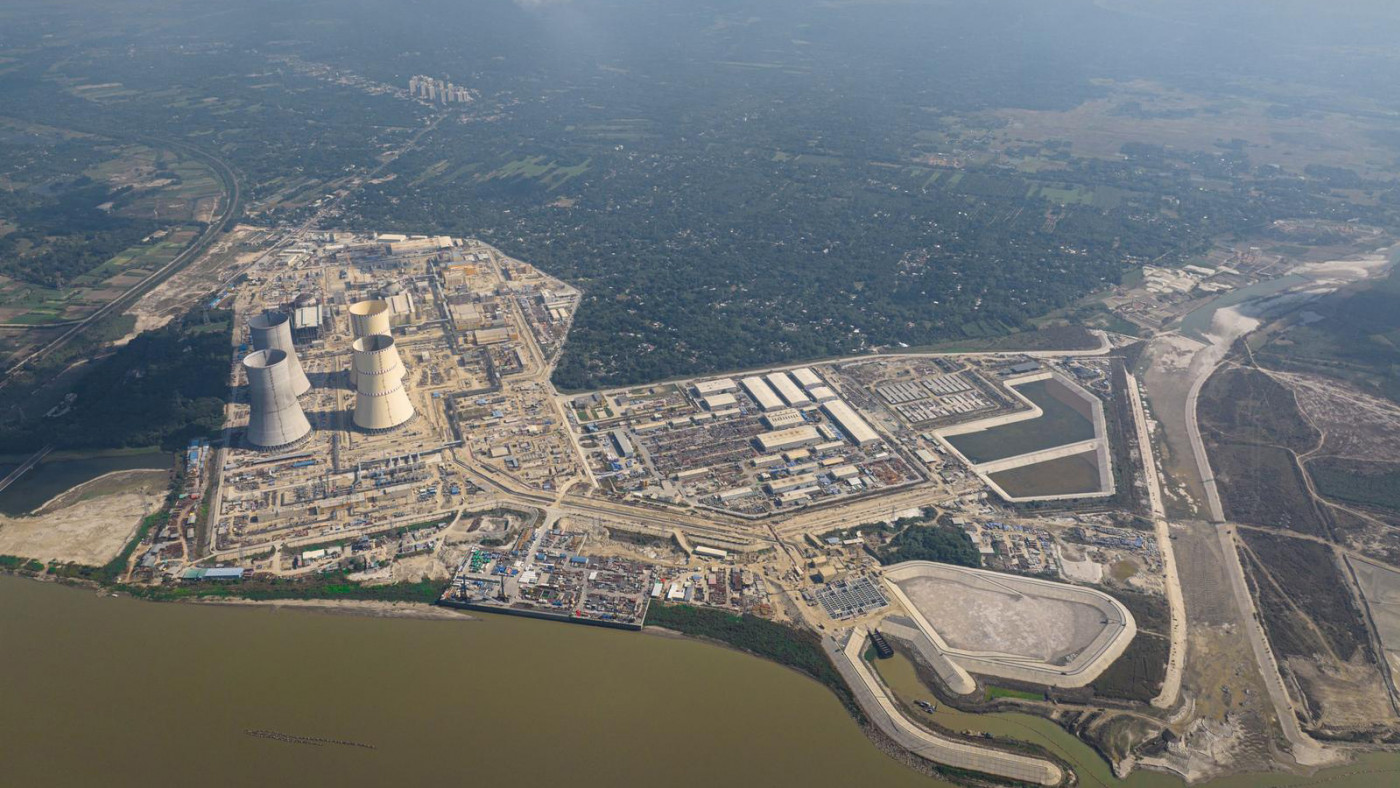
The Rooppur Nuclear Power Plant (RNPP) sits on the alluvial eastern bank of the Padma River, in a landscape that is typical of the Bengal delta. Agriculture, villages, and open low-lying land once dominated the area. Building the plant meant reshaping much of that landscape into a tightly controlled heavy-industrial site.
Observing the massive industrial layout of the plant site.
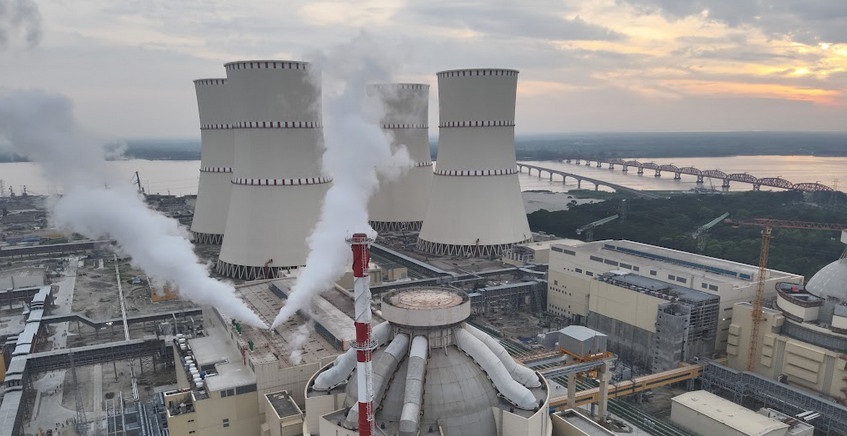
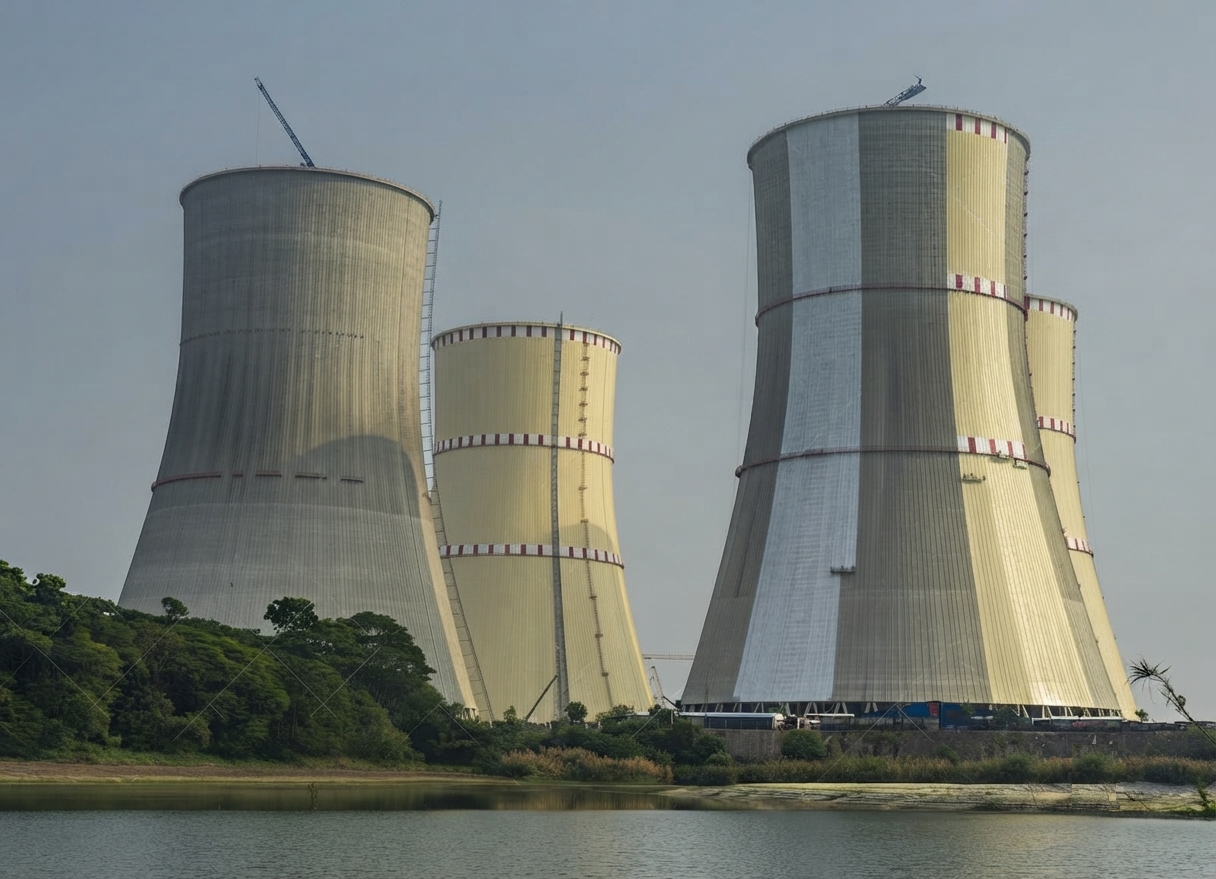
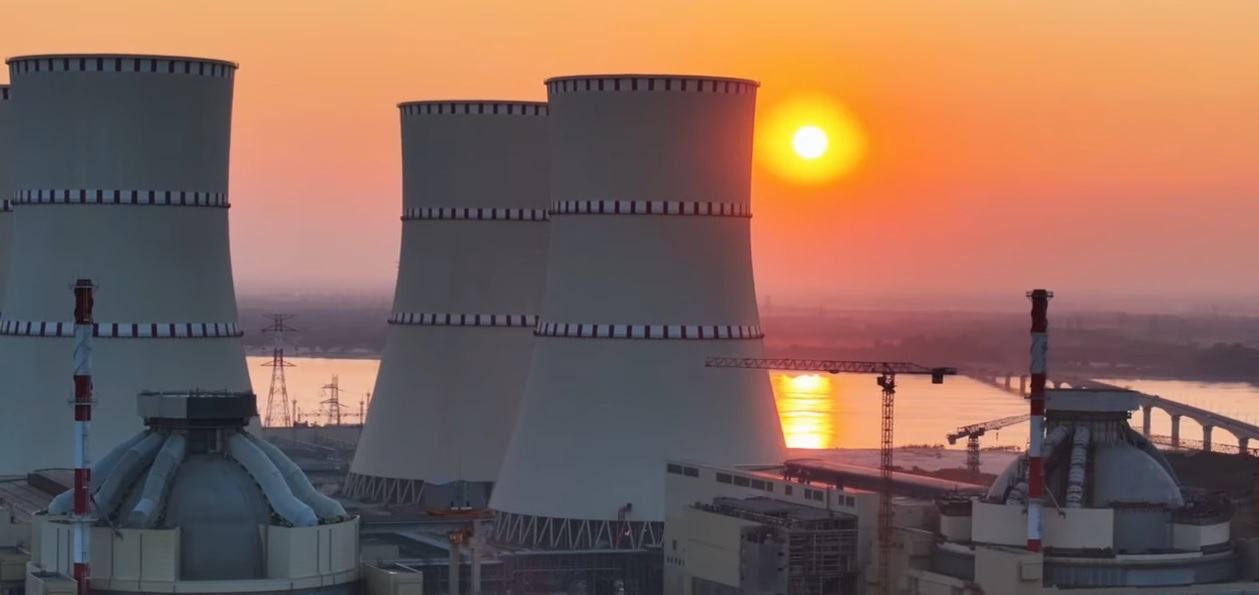
Today, the site includes security checkpoints, administrative buildings, technical facilities, and residential areas for thousands of workers and specialists, including Russian engineers and technicians. The biggest structures are hard to miss. The two reactor units sit inside massive double-shell containment structures, while four large natural-draft cooling towers rise above the surrounding landscape and release visible plumes of water vapor into the humid Bengal air.
Natural draft cooling towers shaping the local skyline.
🏗️ 2. Logistical and Civil Infrastructure: A City From the Ground Up
Building a $2.4\text{ GW}$ nuclear power plant in the middle of a river delta required much more than constructing the reactor buildings. Roads, transport routes, river facilities, substations, transmission lines, and other supporting infrastructure all had to be developed alongside the plant itself.
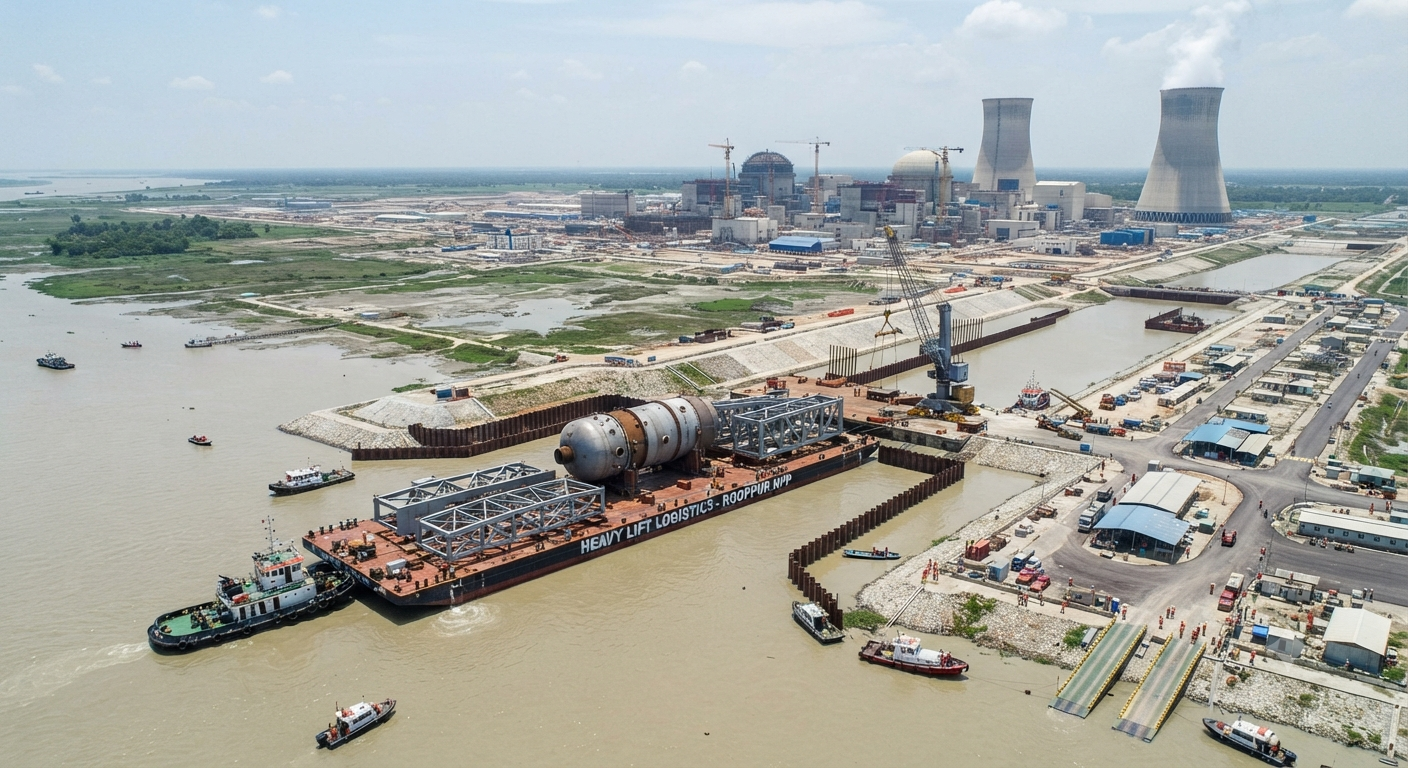
Riverine transport channels for heavy structural components
Some of the equipment is simply too heavy to move through the country's conventional road network. Reactor pressure vessels weighing more than 300 tons and large steam generators are examples. For such loads, the Padma River provides an important transport route. Specialized barges can carry the equipment through prepared and dredged channels before unloading it at dedicated facilities near the plant.
Inside the plant, high-capacity Gas Insulated Switchgear (GIS) substations and dedicated transmission infrastructure connect the generated electricity to the national grid. These systems are essential for moving the plant's output beyond the site and into the wider power network.
At the center of Rooppur's two generating units are Russian Generation III+ Pressurized Water Reactors, based on the VVER-1200 / V-523 design.
🔥 A. Thermal and Electrical Output
Each reactor produces about $3,200\text{ MW}$ of thermal power in the reactor core. After that heat is converted into electricity through the steam cycle, each unit is designed for roughly $1,200\text{ MW}$ of gross electrical output. Together, the two units give the plant a nameplate capacity of about $2,400\text{ MW}$.
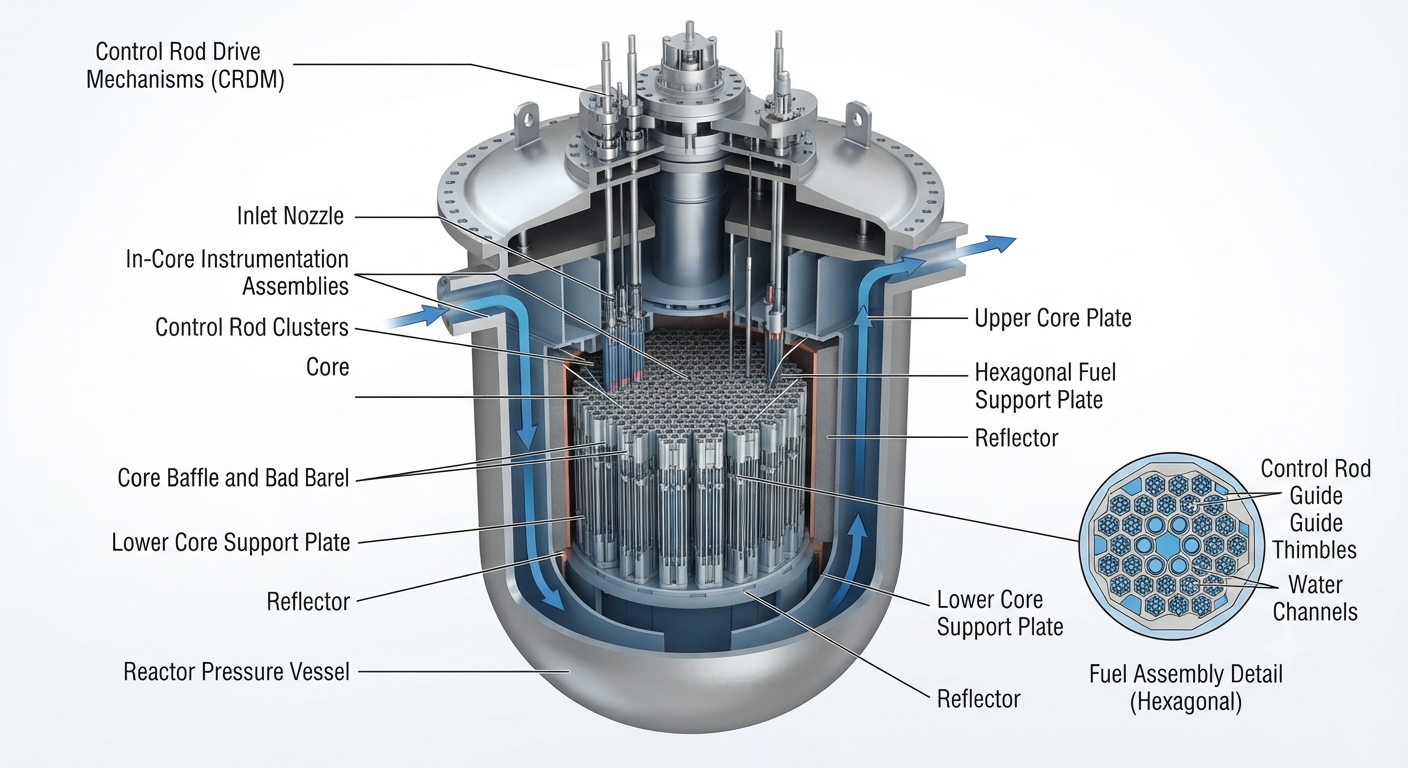
Model of the VVER-1200 core and horizontal steam generators
🌊 B. Primary Loop & Horizontal Steam Generators
One of the features that distinguishes the VVER design is its use of large horizontal steam generators. The primary coolant circuit operates at roughly $16\text{ MPa}$, keeping the water from boiling inside the reactor circuit. The pressurized water carries heat away from the reactor core through the primary coolant loops and transfers that heat to the secondary circuit through the steam generators.
🛡️ 4. Defense-in-Depth: Active and Passive Safety Systems
Safety at Rooppur is built around several layers of protection. The design combines active systems, which rely on mechanical equipment and power, with passive systems that can operate using natural physical processes. This combination is intended to keep the reactor and its cooling systems under control even during serious emergencies, including situations where normal external AC power is unavailable.
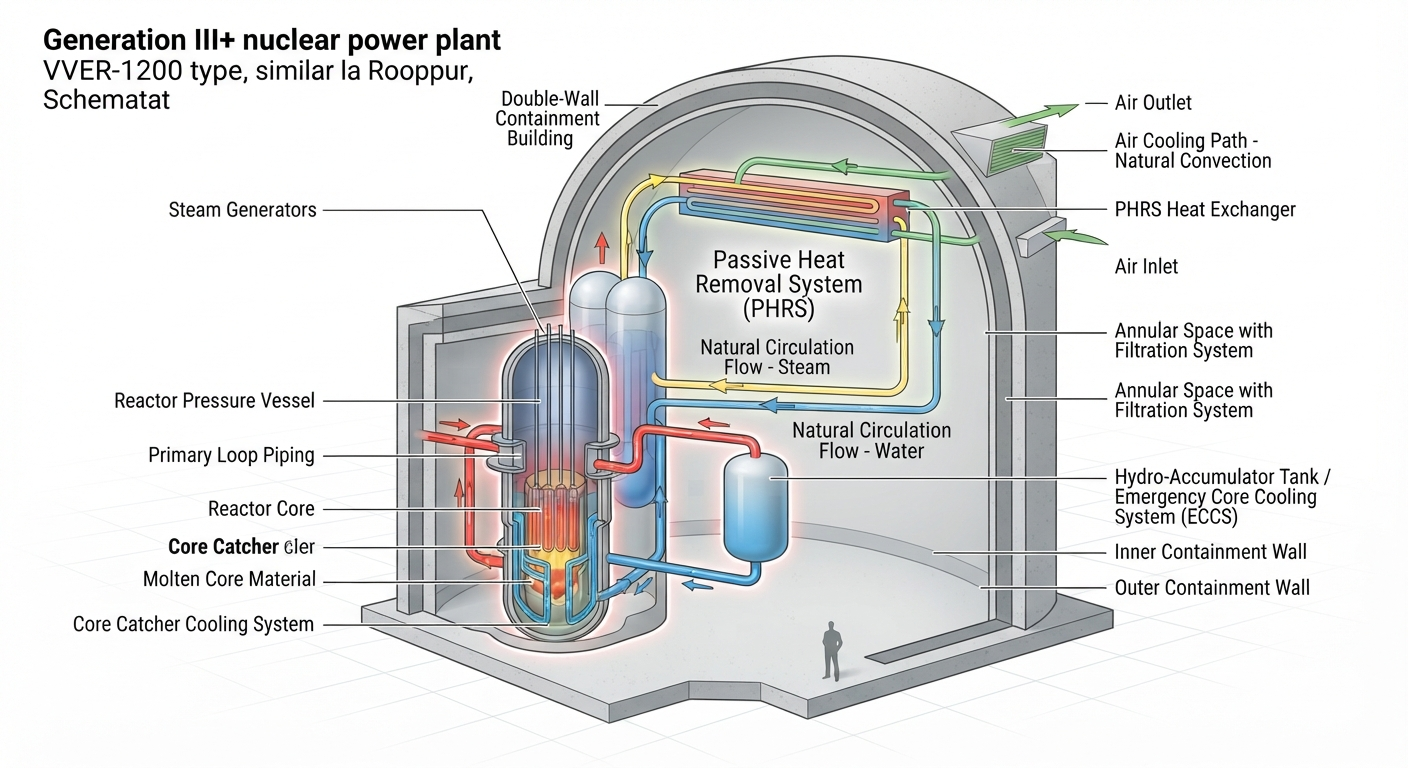
Schematic layout of passive safety and core containment systems
One important system is the Passive Heat Removal System (PHRS), which uses natural air circulation to remove heat from the steam generators during a station blackout. The reactor also has multi-stage hydro-accumulators that can automatically inject borated water into the reactor system if the primary pressure falls below a specified level.
Another major safety feature is the cone-shaped Core Catcher installed beneath the reactor vessel. In an extremely severe accident involving damage to the reactor core, it is designed to collect, spread, and cool molten core material, helping prevent further damage to the containment structure.
⚛️ 5. Fuel Cycle and Operational Mechanics
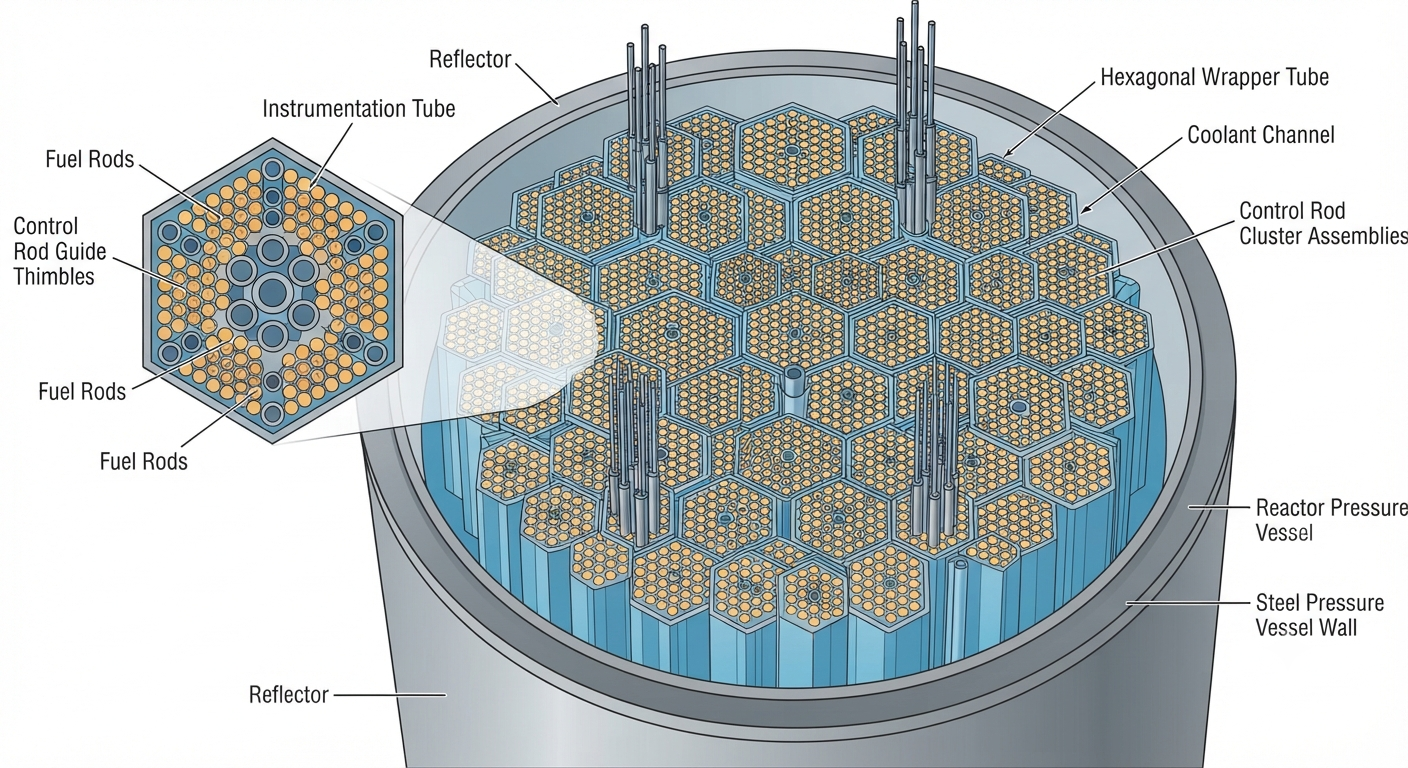
The reactors use low-enriched uranium fuel contained in dense hexagonal fuel assemblies. The fuel is designed to support long operating periods, with the reactors typically planned around extended fuel cycles of about 18 months between scheduled refueling outages.
Hexagonal fuel assembly matrix configuration
Handling nuclear fuel does not end when the fuel is removed from the reactor. The site therefore includes controlled spent-fuel pools and other facilities for managing radioactive material. These systems are designed to keep radioactive materials contained and controlled throughout handling, storage, and eventual long-term management, with safety requirements built into each stage of the process.
🌊 6. Hydrological Works and Cooling Mechanisms
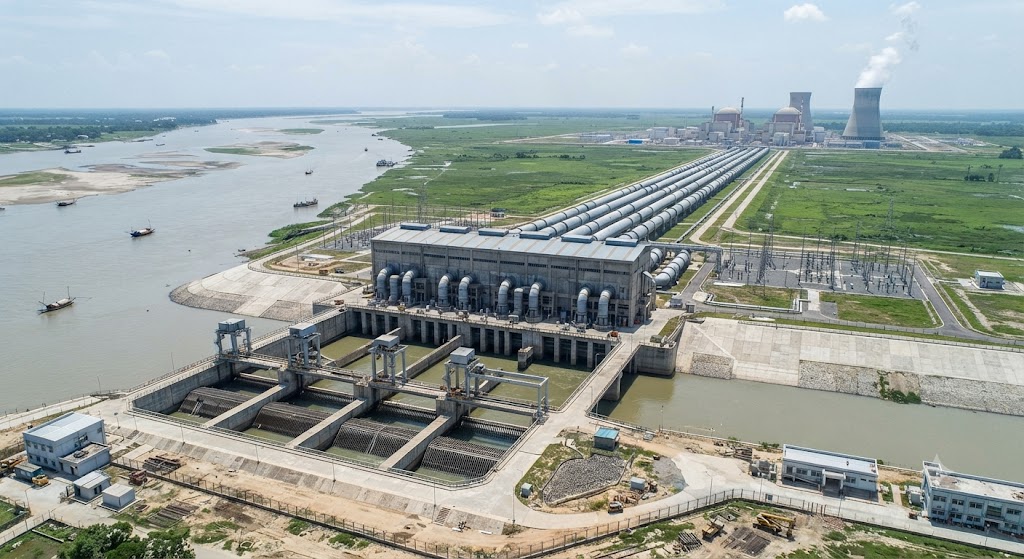
Water is an important part of the plant's operation. The facility uses large water-intake structures connected to the Padma River to supply the cooling systems needed for heat removal and condensation.
Water intake and pumping facilities along the Padma River
Millions of Liters per Hour
The cooling infrastructure handles very large volumes of water as part of the plant's heat-transfer and condensation processes. After passing through the relevant systems, water is discharged through dedicated channels. The discharge has to remain within regulated temperature and environmental limits so that the plant's operation does not cause unacceptable thermal effects on the river ecosystem.
🌄 7. Environmental Impact and Regional Transformation
The arrival of a gigawatt-scale nuclear project has changed Ishwardi in ways that go beyond the plant boundary. New roads, buildings, services, accommodation, training programs, and technical activities have brought a much larger industrial and international presence to an area that was previously known mainly for its rural and agricultural character.
Standing beside the Padma and looking toward the plant, the scale is difficult to miss. Behind those large containment structures is a complicated network of equipment: sensors, high-pressure pipes, pumps, steam systems, electrical equipment, control systems, and layers of radiation shielding. All of them have to work together to convert the heat produced by nuclear fission into electricity that can be supplied to the national grid.
Rooppur against the Bengal sunset.
📌 Conclusion: Powering the Future of Bangladesh
The Rooppur Nuclear Power Plant marks Bangladesh's entry into commercial nuclear power and brings a level of engineering that is new to the country's power sector. The VVER-1200 reactors, passive safety systems, heavy industrial infrastructure, and specialized logistics all had to come together to make the project possible.
From reactor physics and metallurgy to fluid systems, electrical engineering, control systems, and radiation protection, the plant brings many different areas of engineering into one operating system. Once the reactors are fully operational, their electricity will become an important part of Bangladesh's national grid and could provide a large source of steady, low-carbon generation for many years.
Rooppur also represents a major change in Bangladesh's industrial landscape. Building and operating a nuclear power plant requires a different level of technical knowledge, safety culture, regulation, training, and long-term planning. How well Bangladesh manages those responsibilities will ultimately matter just as much as the technology itself.